STOCKHOLM — American economists Robert E. Hall and Michael Woodford have won the 2026 Sveriges Riksbank Prize in Economic Sciences for research that reshaped how central banks and governments think about stabilizing economies during recessions, inflation shocks and financial crises.
The Royal Swedish Academy of Sciences announced the award on Monday, October 12, citing the pair “for microeconomic foundations of macroeconomic stabilisation.” The 12 million Swedish kronor prize will be shared equally.
Why their research matters
Hall and Woodford helped build macroeconomic models from the decisions and expectations of households and businesses. That approach gave policymakers a more rigorous way to examine how people may respond to interest-rate changes, government spending and communications about future policy.
The work moved economic stabilization away from a purely top-down exercise. A central bank’s decision can have different effects depending on what consumers and companies expect inflation, income and borrowing costs to do next. Those expectations can shape spending, saving, hiring and price-setting before a policy change has fully worked through the economy.
Hall, 83, is associated with Stanford University. His influential 1978 work linked household consumption decisions to expectations about future income, providing an important building block for later policy models. He has also advised the U.S. Treasury Department, Justice Department and Federal Reserve Board.
Woodford, 70, of Columbia University developed a framework showing how central banks can influence economic activity through interest-rate policy and credible communication, rather than focusing only on the quantity of money in circulation. His work helped establish concepts now familiar in central banking, including forward guidance, inflation persistence and the output gap—the difference between actual economic activity and an economy’s sustainable capacity.
From theory to central-bank practice
Forward guidance became especially important after the 2008 financial crisis, when interest rates in several advanced economies approached zero and conventional rate cuts offered less room to support demand. Central banks increasingly used public statements about the likely future path of policy to influence longer-term borrowing costs and expectations.
The laureates’ models are also relevant when policymakers confront supply shocks, such as sharp changes in energy costs. In those episodes, raising rates may restrain inflation but can also weaken demand and employment. The frameworks do not eliminate that trade-off; they help policymakers analyze it more systematically.
The models remain debated and are regularly revised. Critics question how well highly structured assumptions capture sudden crises, financial instability or changes in public behavior. Even so, the Academy said the laureates’ work supplied a stable theoretical foundation for models used by central banks and governments around the world.
The economics award is formally named the Sveriges Riksbank Prize in Economic Sciences in Memory of Alfred Nobel. It was established by Sweden’s central bank and first awarded in 1969, rather than being one of the five prizes created under Alfred Nobel’s will.
Sources: Royal Swedish Academy of Sciences; Reuters.
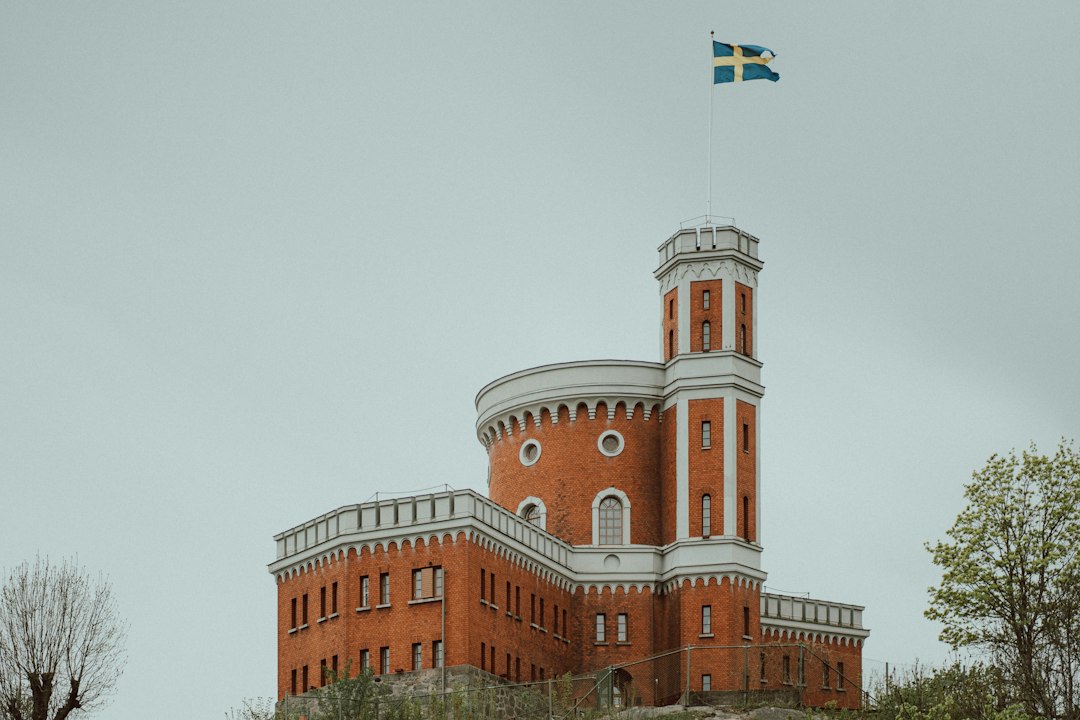
Featured image: Photo by Marcel Strauß via Unsplash. The image shows Stockholm and is illustrative.