WASHINGTON — A fragile 60-day truce between the United States and Iran is unraveling for the second time in a week. On Saturday, U.S. forces struck Iranian military sites for the second time in three days after an Iranian drone hit an oil tanker in the Strait of Hormuz; within hours, Iran’s Revolutionary Guard fired drones and ballistic missiles at Bahrain and Kuwait. President Donald Trump accused Tehran of violating the ceasefire “AGAIN!” and warned that “the Islamic Republic of Iran will no longer exist” if the fighting continues.
Why it matters
The Strait of Hormuz is the world’s most important energy chokepoint, and attacks on commercial shipping there threaten it directly. Bahrain hosts the U.S. Navy’s Fifth Fleet, and Kuwait is home to a major U.S. Army base — Tehran is now striking at America’s partners and hosts directly, the escalation pattern that precedes wider war. Trump is also openly weighing a massive reinforcement of U.S. naval power in the region that could place three carrier strike groups off Iran’s coast for the first time since April.
What we know
- U.S. Central Command said an Iranian one-way attack drone hit the Panamanian-flagged tanker M/T Kiku at 4:30 a.m. ET on Saturday in the Strait of Hormuz. The ship was carrying crude oil for Qatar’s state-run energy company, according to The Associated Press.
- CENTCOM said it struck Iranian “surveillance infrastructure, communication systems, air defense sites, drone storage facilities and minelayer capabilities” in response, and launched a second round of strikes on Saturday at Trump’s direction.
- The same pattern played out two days earlier: an Iranian drone struck a merchant vessel off Oman on Thursday, and the U.S. retaliated, according to wire reports.
- Kuwait’s military said its air defenses intercepted Iranian drones and two ballistic missiles just after the U.S. strikes inside Iran, reporting no injuries or damage. Bahrain’s interior ministry said Iranian strikes damaged a residential building near the country’s international airport — the top floor of an eight-story building destroyed, windows blown out — but said no one was killed. Bahrain’s foreign ministry denounced “a dangerous escalation” and “a systematic pattern of repeated aggression.”
- Iran’s paramilitary Revolutionary Guard claimed responsibility, saying it targeted locations of the U.S. military in the region.
- In a Truth Social post, Trump wrote the U.S. had struck Iranian missile and drone storage locations and coastal radar sites for “violating the Cease Fire Agreement, AGAIN!” — adding the U.S. may be “forced to militarily complete the job” and that the Islamic Republic “will no longer exist.”
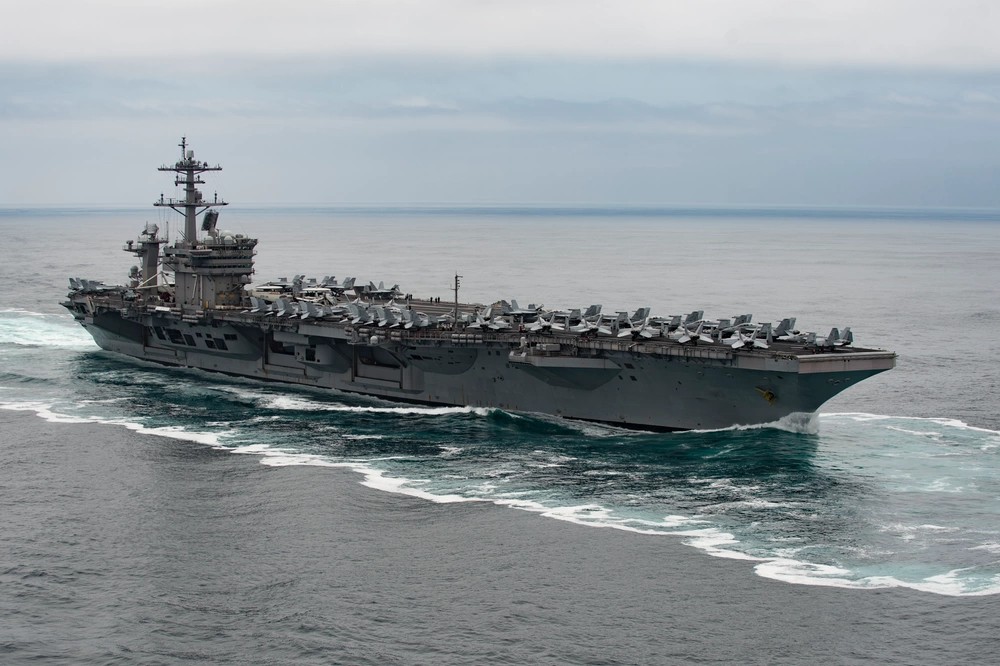
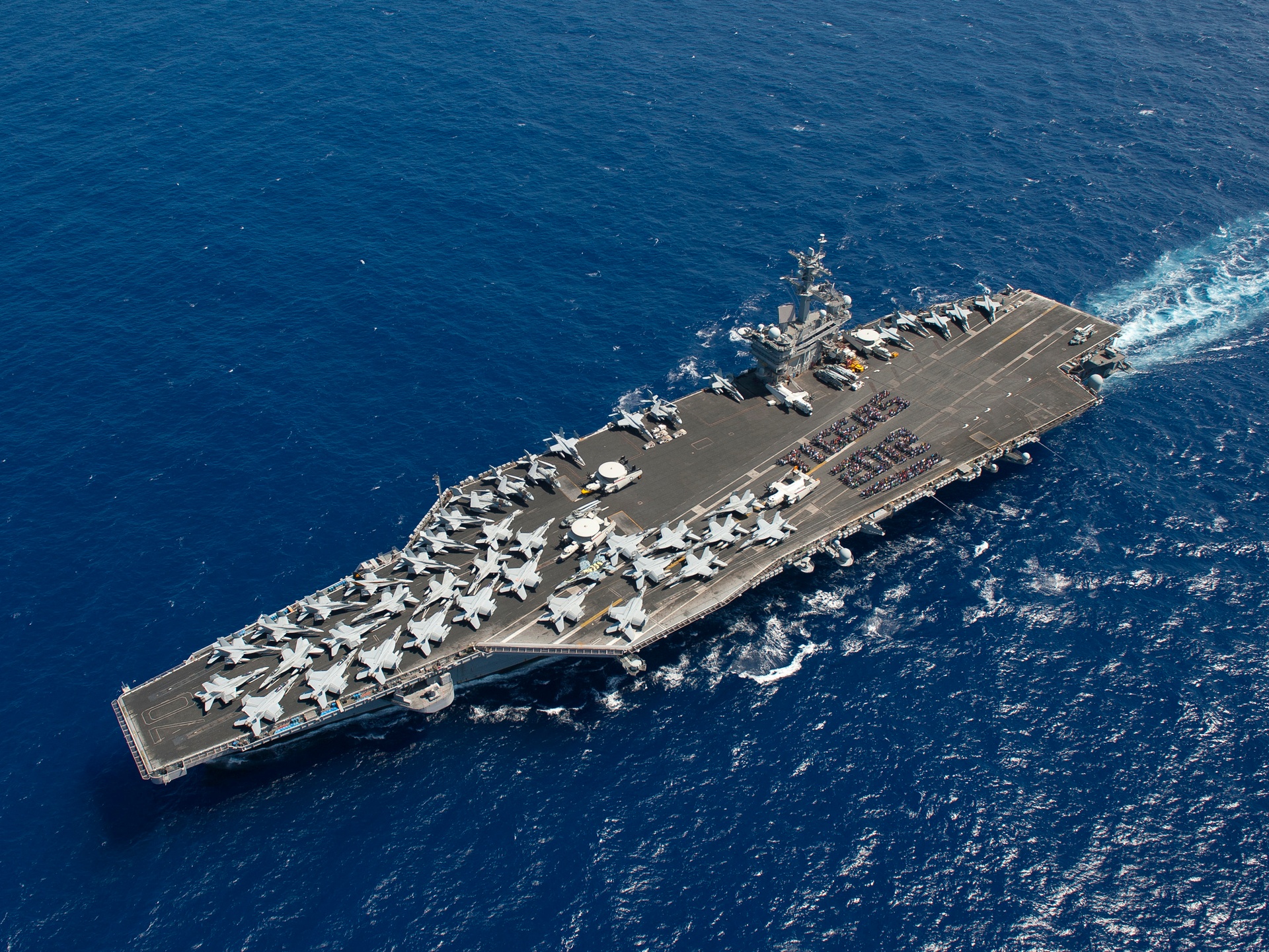
- The Pentagon buildup is real and underway. The Washington Post reported Friday that the Pentagon is planning a surge that could place up to three carrier strike groups in the region. The Wall Street Journal reported that a third carrier group and a Marine expeditionary unit, plus 9,000 to 10,000 additional troops, are deploying, with arrivals expected by the end of November. The USS Theodore Roosevelt has sailed from San Diego and the USS Makin Island amphibious ready group has departed; the USS George H.W. Bush and USS George Washington are already in the Middle East, alongside the USS Boxer amphibious ready group. Three carriers in the region at once would be a first since April.
- Trump told Time magazine in an interview published Oct. 1 that renewed bombing of Iran after the Nov. 3 midterm elections was “possible” or “likely,” and he has turned down Tehran’s latest ceasefire proposal — which included an offer to reopen the Strait of Hormuz — calling the terms insufficient.
- Reuters has reported that Iran’s leaders have instructed allied armed groups to prepare a coordinated response in the event of new American strikes.
- Qatar said Sunday that a civilian was killed and another person hurt by shrapnel related to “military operations in the area” after a vessel did not return at its scheduled time on Saturday. The statement gave no further details.
What we still don’t know
- Whether Trump considers the 60-day interim deal dead. In a previous exchange he said the agreement was “over”; this weekend he accused Iran of violating it “AGAIN!” — two positions that point in different directions.
- What “militarily complete the job” would actually mean. Trump did not define the scope of any new campaign.
- Exactly how the weekend’s exchanges began and in what order. Each side accuses the other of firing first, and independent verification of the sequence is limited.
- Whether the Qatari civilian death was caused by an Iranian or an American munition. Qatar’s statement did not say.
- Whether the carrier deployments are a negotiating signal or preparation for a wider campaign. Officials have not said.
What’s next
Pakistan, a key mediator, said talks would resume on Tuesday, and the Trump administration said technical talks remained on track — though the weekend’s strikes raise the question of whether diplomacy is keeping up with the fighting. A U.S.-Navy-overseen maritime body said Saturday it would expand a shipping route near Oman, likely setting up a new flashpoint with Tehran. And the military timeline stretches past the Nov. 3 midterms, with the surge of carriers and troops arriving by the end of November. Whether the next big move happens at the negotiating table or in the Strait of Hormuz will be decided in the coming days.
Timeline
- Feb. 28, 2026: The U.S. and Israel open the war against Iran; Iran’s longtime supreme leader is killed in the opening hours, according to The Associated Press.
- Early September 2026: The U.S. and Iran sign an interim deal giving both sides 60 days to negotiate a lasting arrangement.
- Oct. 1: Trump tells Time magazine that renewed bombing of Iran after the Nov. 3 midterms is “possible” or “likely.”
- Oct. 2: The Washington Post reports the Pentagon is planning a surge of up to three carrier strike groups toward Iran.
- Oct. 3: An Iranian drone hits the tanker Kiku at 4:30 a.m. ET; U.S. forces strike Iranian military sites, then launch a second round of strikes at Trump’s direction; Trump posts his Truth Social warning; Iran’s Revolutionary Guard strikes Bahrain and Kuwait.
- Oct. 4: Kuwait and Bahrain confirm interceptions and damage; Qatar reports a civilian killed by shrapnel; Pakistan says talks resume Tuesday.
Related Zark News reporting: Pentagon Weighs Surge of Three Carrier Groups Toward Iran as Trump Mulls Renewed Strikes | Trump Accuses Iran of Violating Ceasefire After Strikes Hit Bahrain and Kuwait