
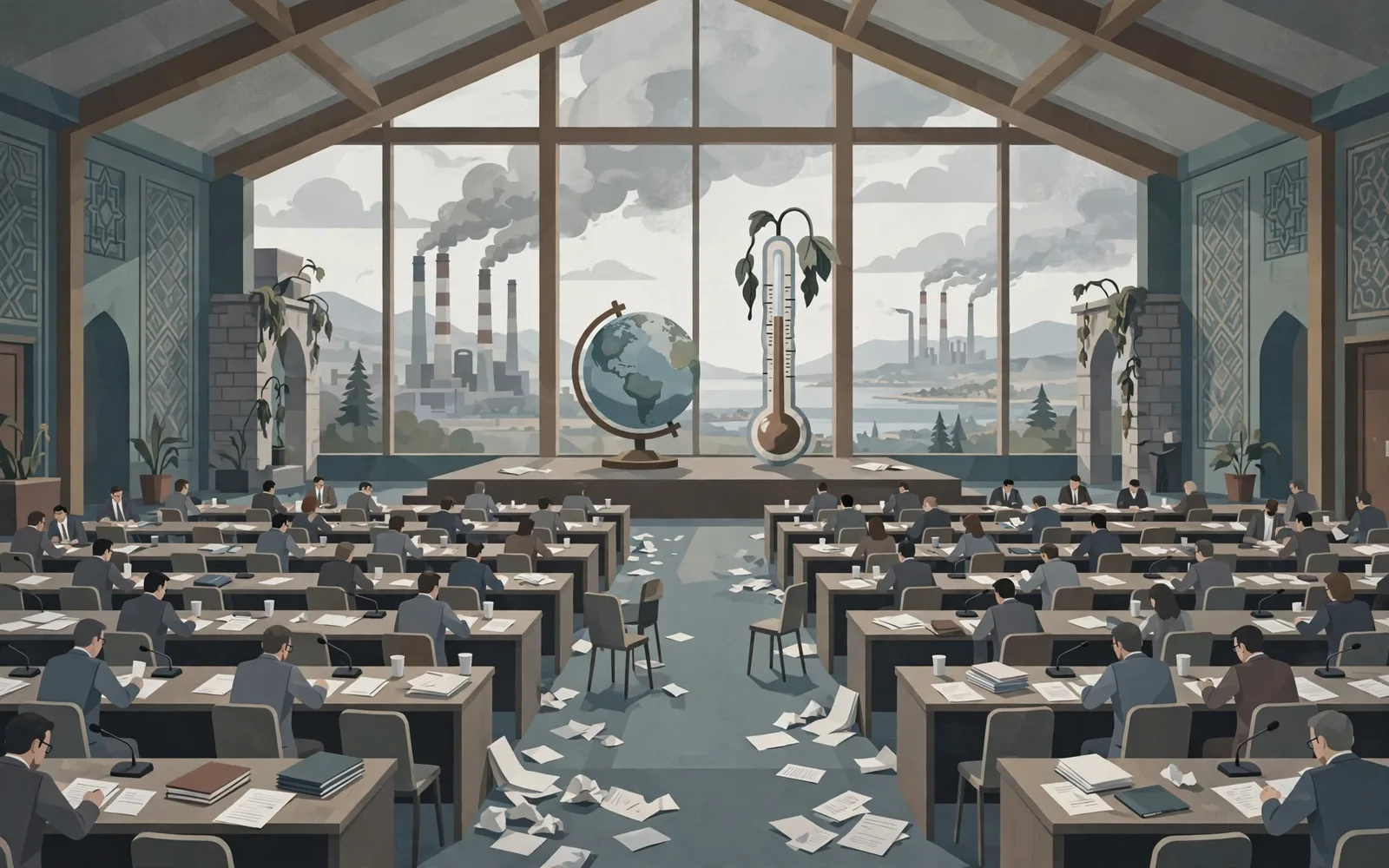
ANTALYA, Turkey — The COP31 United Nations climate talks collapsed on Sunday with no overarching deal, after countries failed to agree on language about moving away from fossil fuels, according to CNN and Reuters reporting from the summit. The conference, held in Antalya, ran two days past its scheduled close and became the longest climate summit in history.
The proposed cover decision, known as the Antalya Pact, was meant to set the political direction for global climate action. Early drafts called for an immediate transition away from fossil fuels in energy systems. That language was removed from later drafts, and the final text did not mention coal, oil or gas at all, according to reporting by CNN, Reuters and The Times.
The European Union, Panama, the Marshall Islands and Norway were among the countries that refused to endorse the final text. Darragh O’Brien, Ireland’s climate minister, who helped lead negotiations for the EU, said the bloc would not endorse a deal that does not even mention fossil fuels, and said the talks had been hijacked by some oil states, according to Reuters. Britain’s energy secretary, Miatta Fahnbulleh, called the outcome immensely disappointing and said the draft moved backwards on the science, according to The Times.
COP31 President Murat Kurum acknowledged that support was not there to adopt the pact. He said the presidency had done its utmost, but it was clear that some parties opposed the text and there was no consensus, according to CNN. Mohamed Adow, director of the think tank Power Shift Africa, called it the worst ever COP and said its collapse should be a wake up call for the world, according to CNN.
The failure marks the first major breakdown of the annual talks since COP15 in Copenhagen in 2009, and, according to The Times, the first failure to adopt a main decision since COP6 at The Hague in 2000. The United States, which under President Donald Trump has pulled out of international climate action, was not part of the consensus effort, according to CNN.
The result is a sharp contrast with COP28 in Dubai in 2023, when countries agreed for the first time to call for a transition away from fossil fuels. More than 100 countries had pushed to keep that language in Antalya, according to CNN, while petrostates including Saudi Arabia and Russia have long opposed any reference to fossil fuels. Disagreement also remained over finance for countries already facing climate disasters, and over a proposed push for electrification and carbon capture.
What happens next is unclear. Some smaller agreements were approved, but the main decision that gives the process its direction was not adopted. Negotiators and climate vulnerable countries said the gap between those seeking faster action and oil rich nations resisting it was laid bare in Antalya. The next round of talks will inherit the same unresolved question that ended this one: whether a global deal can name fossil fuels as the cause of the crisis it exists to address.
For the summit record, see the United Nations Framework Convention on Climate Change.