WASHINGTON — President Donald Trump on Thursday called on Senate Republican leaders to pass a $350 billion military spending bill right away, in the short window before Democrats take control of Congress in January.
In a post on Truth Social at 12:24 p.m., Trump said he rebuilt the military in his first term and is doing it again, "bigger and better than ever before." He accused the incoming Democratic majority of planning to block the money. "They want to leave our Warriors weak, and unguarded, but the American People want their Warriors SAFE and STRONG," he wrote. "That's why TODAY I am calling on Senate Leadership to IMMEDIATELY move on the 350 Billion Dollar Reconciliation Bill to give our brave Warriors the DECISIVE ADVANTAGE they deserve." He closed with: "Republicans must deliver for our Warriors. The Democrats never will. The time is now."
What the money would pay for
The $350 billion is one piece of the administration's $1.5 trillion defense budget request for fiscal 2027. About $1.15 trillion of that request would go through the regular yearly spending process. The other $350 billion would come through this separate bill. The request includes $47 billion to expand munitions production, $17 billion for the Golden Dome missile defense system, and more than $48 billion for critical minerals, along with a wider expansion of the defense industrial base, the network of factories that builds weapons and supplies.
The push follows a year of heavy weapons use in the war with Iran. A Congressional Research Service report found that munitions fired in Operation Epic Fury, the U.S. campaign against Iran, "has resulted in strategic inventory shortfalls" and exposed bottlenecks in resupply.
Why this process, and why now
The bill would move through budget reconciliation. In plain terms, reconciliation is a special budget process that lets the Senate pass a bill with a simple majority, 51 votes, instead of the 60 votes usually needed to overcome a filibuster. Democrats' votes are not needed. What Republicans need is agreement among themselves, and time.
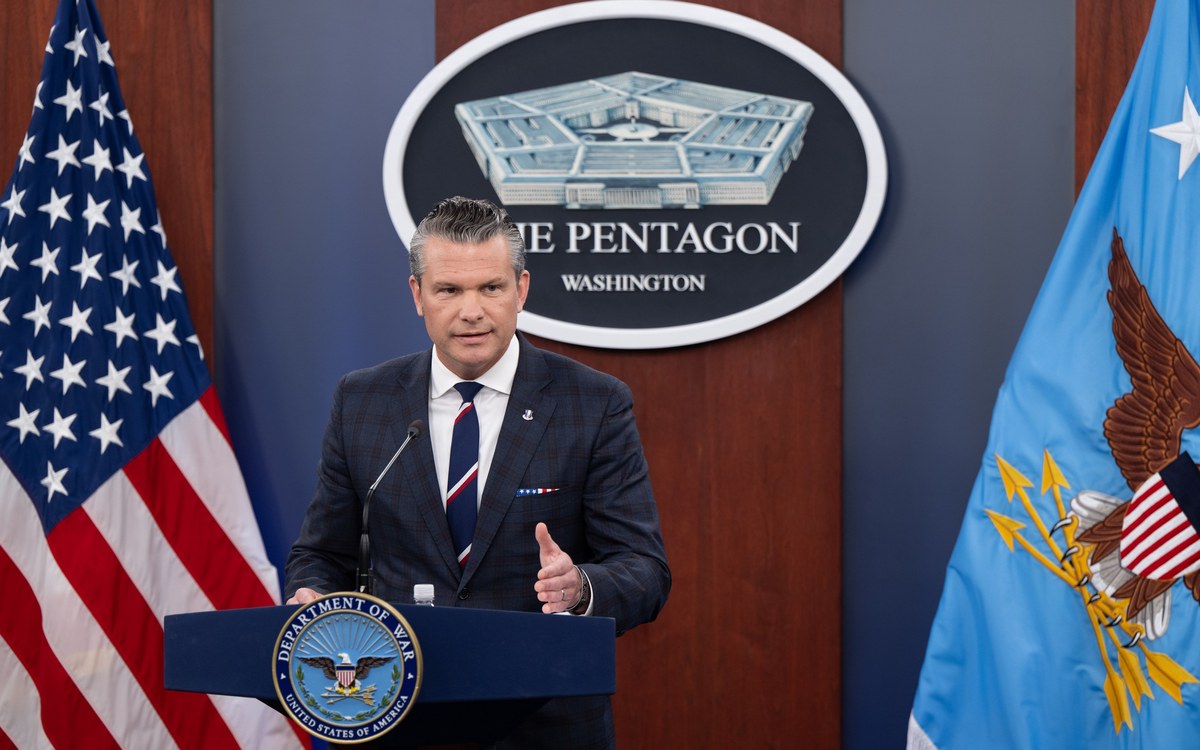
War Secretary Pete Hegseth made the same ask at a Pentagon press briefing on Tuesday, his first in six months. "$350 billion, at a minimum, for reconciliation is what we believe is needed to make a generational and historic investment in this department, something our warfighters need," he said. He called the lame duck period "critically important" for the department's funding and said he is working with Senate Majority Leader John Thune and House Speaker Mike Johnson. "We know the Democrats won't do it, sadly. I wish they would," he added.
The clock is the problem. Democrats won control of both the House and the Senate in the November 3 midterms, and the new Congress is sworn in on January 3, 2027. After that date, Republicans lose the majority this process depends on.
Doubts inside his own party
Publicly, the loudest doubts have come from Republicans. Thune has said this week that he is unsure the votes exist, and Republicans can afford to lose only three senators. Senator Rand Paul of Kentucky called the bill "tone-deaf" and vowed to oppose it, according to Semafor. Senator Josh Hawley of Missouri said, "I can't imagine why we would do that." The push has supporters, too. Senator Roger Wicker of Mississippi, who chairs the Armed Services Committee, said, "We need to get reconciliation done," and Senator Tom Cotton of Arkansas said Republicans would do "everything humanly possible."
Democrats, who were never going to be asked for their votes, say the bill is dead anyway. "There is no path forward on defense reconciliation. There never has been," Senator Chris Coons of Delaware, the top Democrat on the defense spending subcommittee, told Defense Daily on Tuesday. Representative Adam Smith of Washington, the incoming House Armed Services chairman, has called for a defense budget under $1 trillion.
What happens next
Congress has moved only a fraction of the money so far. A House budget plan in July carried $60 billion for defense, far below the White House ask, and the Senate never voted on one before the midterms. Lawmakers also face a December 11 deadline to keep the government funded. If the reconciliation bill stalls, some Republican appropriators want to attach emergency defense money to a stopgap funding bill instead, though it is not clear Democrats would agree once their leverage grows.
Should Congress approve another $350 billion for the military before the new Congress takes over in January, or should a decision this large wait for the lawmakers voters just elected? Tell us what you think.
Reporting note: This story is based on President Trump's Truth Social post of November 12, 2026, as carried by the Daily Caller, Newsmax and Newsweek; War Secretary Pete Hegseth's remarks at his Pentagon press briefing on November 10, 2026, as reported by the Wall Street Journal and Newsmax; reporting by Semafor on Senate Republicans' internal debate, as carried by Newsweek and Newsmax; Defense Daily's interview with Senator Chris Coons; and a Congressional Research Service report on munitions use in Operation Epic Fury, quoted by the Daily Caller. No wire service report on the president's post had been published at the time of writing.