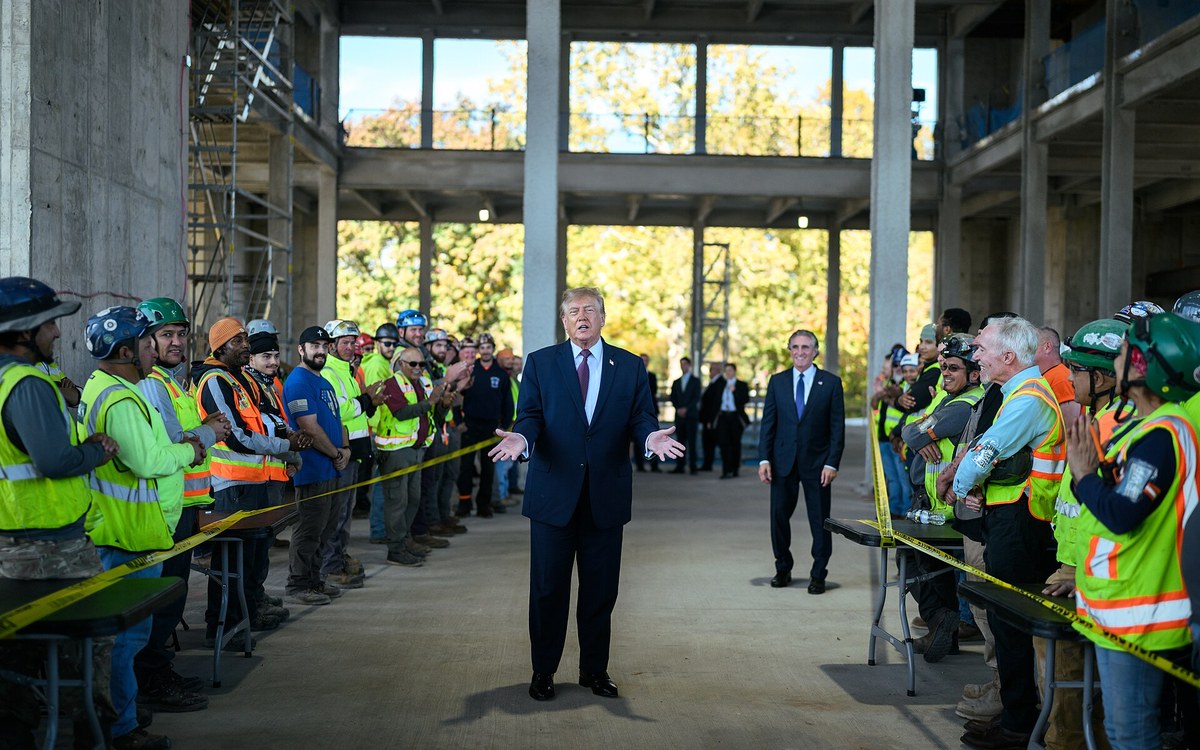
WASHINGTON — President Donald Trump said on Thursday night that he wants to "get Cuba done" before he leaves office, and that he would "certainly consider" using American military force against the island, including a campaign that lasted about a week.
The remarks came in an interview with the conservative radio host Hugh Hewitt, released on Thursday. Politico reported that it was the first time Trump had put a timeline on possible action against Cuba. His term ends in January 2029.
Hewitt put the question to him directly. "If freeing Cuba requires military force before you leave office, will you order that military force?" he asked.
"Well, I want to get Cuba done before I leave, yeah," Trump said. "And we have a very good, talented guy for Cuba named Marco."
Hewitt pressed him on what that could mean in practice. "So if it took a little bit of military force, a week campaign, you'd be okay with that?" he asked.
"I would be, I would certainly consider that, yes," Trump said.
Trump announced no order, no decision and no operation, and he did not explain what "done" would look like. The White House has announced no military planning for Cuba. In March, the commander of U.S. Southern Command, Gen. Francis Donovan, told senators that American troops were not rehearsing for an invasion of Cuba.
The "Marco" Trump named is his secretary of state, Marco Rubio. "Marco's parents are from Cuba, as you probably know," Trump said. "And he would love to do that." Rubio is the son of Cuban immigrants and has argued for a hard line against Havana throughout his career in politics. Trump described the island in bleak terms. "It's doing very poorly," he said. "It's essentially a failed, you know, place, nation, whatever you want to call it. It's failed." He said his administration was "watching it very closely," and he pointed to his support among Cuban American voters, saying he won the Cuban vote in Florida by 94 percent, a figure he has cited before.
The comments land on top of a pressure campaign that has been running all year. After American forces seized Venezuela's president, Nicolás Maduro, in January, Venezuelan oil shipments to Cuba were cut off. On January 29, Trump signed an executive order that threatened tariffs on countries that supply oil to Cuba. The island has faced severe fuel shortages since then. On Monday of this week, Trump said Cuba "will fall fairly soon" and that the United States would help "on a humanitarian basis."
There was no public response from Cuba's government to the interview by early Friday. After Trump's remarks on Monday, President Miguel Díaz-Canel wrote on X that "the future of Cuba will never be decided in the north," and he called the American fuel blockade collective punishment. On Thursday, Cuba's foreign minister, Bruno Rodríguez, rejected a statement by G7 foreign ministers that had called for political and economic reform in Cuba. He said the statement ignored "the cruel impact of the blockade, the economic war and the energy siege" imposed by Washington. In October, the United Nations General Assembly voted 130 to 17 to call for an end to the American embargo on Cuba.
A harder line on Iran
The same interview brought a harder line on Iran than the one Trump had struck earlier in the week. On Monday, he told reporters at the White House that taking military action against Iran "won't be necessary" at this point, and on Sunday he told the CBS program "60 Minutes" that he was "not looking" to escalate the war. On Thursday morning, he wrote on Truth Social that the United States does not "need a deal" with Tehran, and he said he was pulling Vice President JD Vance away from the talks to focus on crime and corruption in American cities.
By Thursday night, the tone had changed. "We won Venezuela, and we control the Gulf in terms of the Hormuz Strait," Trump told Hewitt. "We control it. Totally control it." Asked whether he would hesitate to use military force against Iran, he said, "No. No hesitation." He added: "If I saw things going the other way, I would do that. And it's possible I would do it right now."
Trump said he would keep the naval blockade of Iran in place even if, as Hewitt put it, it took 26 months to collapse the regime there. He said Iran's economy was gone and put its inflation rate at 301 percent, a figure he offered without evidence.
Near the end of the interview, Hewitt asked whether it would be a defeat for Trump if Iran's current leaders were still in power when he left office. "Yes, that would be a defeat," Trump said. "Yeah, I would say that would be a defeat. Absolutely." His last answer was about what would happen if Iran killed a senior American official. "They will not exist very long any longer," he said.
For now, nothing has been set in motion by the interview itself. There is no announced plan for Cuba and no announced decision on new strikes against Iran. What Trump added on Thursday was a deadline of his own making: whatever he intends to do about Cuba, he says it will happen before he leaves the White House.
Reporting note: This story is based on the full transcript of President Trump's interview with Hugh Hewitt, published at hughhewitt.com on November 12, 2026; on CNN's report of the interview and of the president's Truth Social post of November 12; on Politico's report that the interview was the first time Trump had set a timeline for action on Cuba; on the text of Executive Order 14380 of January 29, 2026; on Reuters and other wire reports of Gen. Francis Donovan's Senate testimony in March 2026; and on statements by Cuban President Miguel Díaz-Canel and Foreign Minister Bruno Rodríguez carried by Granma, Cuba's Foreign Ministry and Xinhua.