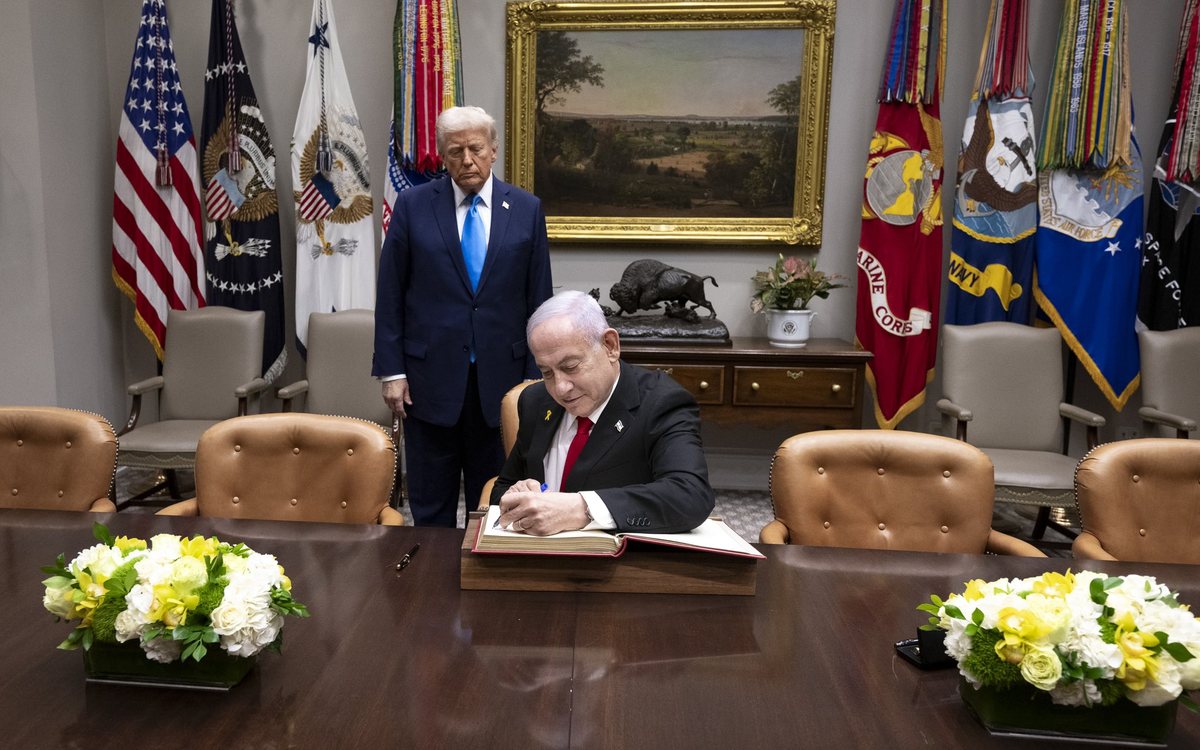
WASHINGTON — President Donald Trump said on Tuesday that the United States will stop paying Israel about $4 billion a year at the end of this year, under a deal he says he reached months ago with Israeli Prime Minister Benjamin Netanyahu. Israel has not confirmed any such deal, no document has been released, and the current aid agreement runs through 2028. Zark News first reported the remarks here.
Why it matters
Israel is the largest single recipient of American aid, and the $3.8 billion a year it receives is the backbone of the military relationship between the two countries. Ending it early would be the biggest change in that relationship in decades — during Israel’s coalition talks, a war with Iran, and a U.S. Election Day that chooses the Congress that must approve the money.
What we know
- What Trump said. In a phone interview on Fox News’s “Fox & Friends” on Tuesday, Trump said: “Bibi Netanyahu and I have made a deal that we give Israel $4 billion a year, and we made a deal months ago that we’re stopping,” according to Reuters. “We’ve already agreed that by the end of this year we won’t be paying Israel. Now we’ll help Israel if they need it.” He said Netanyahu raised the idea himself, and that Israel could still buy American weapons.
- What the current deal says. The U.S. provides Israel $3.8 billion a year under a 10-year memorandum of understanding signed in 2016 — $3.3 billion a year to buy military equipment and $500 million a year for missile defense, according to Reuters. It runs through fiscal year 2028. Trump’s “$4 billion” is a rounded figure.
- Congress holds the money. The aid is paid out of spending bills passed by Congress each year, so ending the agreement early would involve lawmakers. No formal step — no order, budget request or bill — had been announced by Tuesday afternoon.
- Netanyahu has talked about ending the aid, on a slower timeline. In January, he told The Economist he wanted to “taper off” U.S. military aid to zero over the next 10 years, according to Reuters. In May, the U.S. and Israel began formal talks on a new agreement to replace the current one, according to CNN. Days before the Oct. 27 election, Netanyahu told an Israeli news channel that voters should get used to the aid not continuing at past levels.
- The first reactions in Israel were hostile. Gadi Eisenkot, Netanyahu’s main rival, wrote on X that Israel’s defense establishment learning of the change “through the media” showed Netanyahu “can no longer be trusted,” according to CNN. Former U.S. officials told CNN they doubted the administration would follow through, especially if operations against Iran resume.
What we still don’t know
- Whether Netanyahu agreed to this timeline. Netanyahu’s office has not confirmed any deal. A spokesman said he knew nothing about the remarks and would check, and the White House gave Reuters and CNN no details. The claimed deal is, so far, Trump’s word alone — it is unverified.
- What exactly would stop. Pressed on whether he meant military aid or cash, Trump said, “Any way you want to define it.” Whether a cutoff would cover the equipment grant, the missile-defense money, or both is not clear.
- What “the end of this year” means in practice. Aid flows by fiscal year and appropriation. No document sets out how a Dec. 31 cutoff would work.
- What happens to the replacement talks. Whether the May talks produced a framework — and whether that framework is what Trump described — is unknown.
- How big the exception is. Trump said, “Now we’ll help Israel if they need it.” With the Iran war in its ninth month, it is not clear what need would restart the payments, or whether the exception would swallow the cutoff.
What’s next
Watch for a statement from Netanyahu’s office or the White House confirming or correcting the deal, and for a formal step in Washington, such as language in a spending bill. Until then, the accurate description is narrow: the president said the payments will stop. Whether they will is still open.
Timeline
- September 2016: The U.S. and Israel sign a 10-year memorandum of understanding: $38 billion in military aid for fiscal years 2019–2028.
- January 9, 2026: Netanyahu tells The Economist he wants to taper U.S. military aid to zero within 10 years.
- May 2026: The U.S. and Israel begin formal talks on a new agreement to replace the current one; no framework has been made public.
- October 27, 2026: Israel’s election leaves no party with a majority; Netanyahu and Eisenkot both try to form a government. Days earlier, Netanyahu had warned the aid would not continue at past levels.
- October 31, 2026: The last reported call between Trump and Netanyahu, according to CNN. Whether they have spoken since is unclear.
- November 3, 2026: Trump tells Fox News the payments will stop at the end of this year under a deal agreed “months ago.” Israel has not confirmed it.
Reporting based on the original Zark News story, Reuters and CNN. This explainer will be updated if Netanyahu’s office or the White House confirms or corrects the president’s account.