For the first time, one of Pakistan’s own astronauts will live and work aboard a space station, and China will open its station to a foreign guest for the first time in its history.
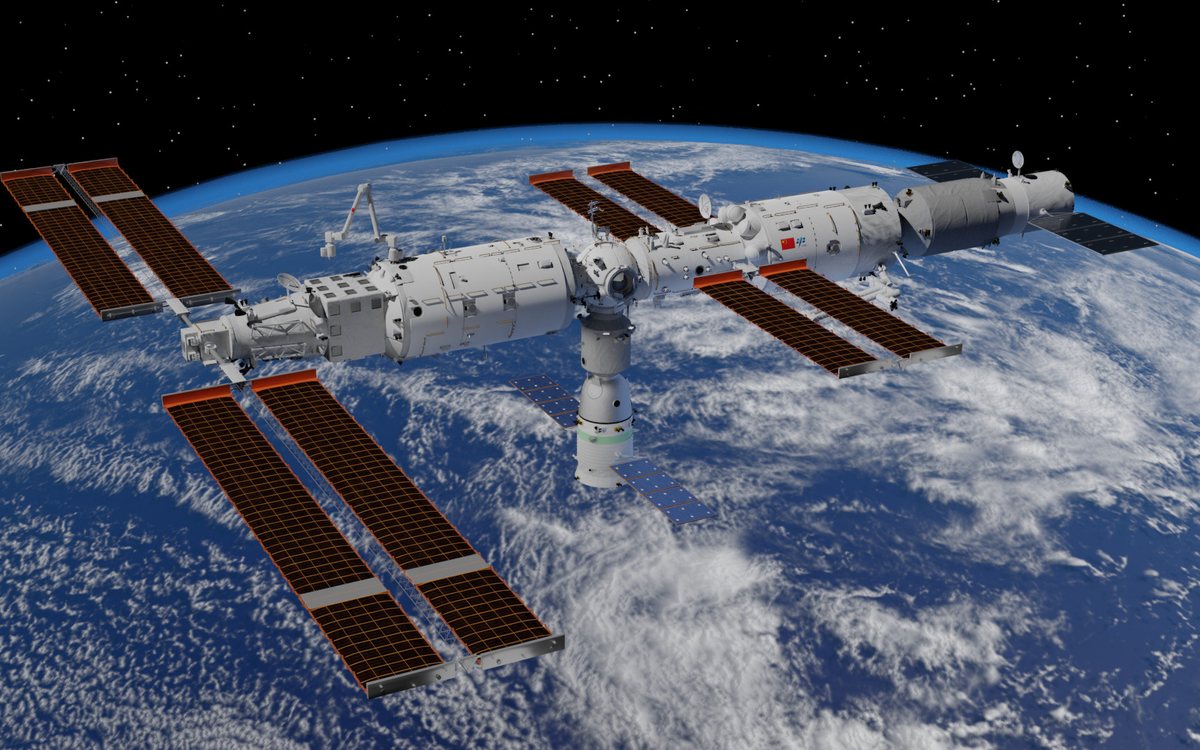
China’s space agency announced on Saturday that a Pakistani astronaut will fly to the Chinese space station aboard the Shenzhou-24 mission. He will travel as a payload specialist, the crew role given to the person who runs the science work and the equipment carried on the flight.
The plan is simple to follow. The astronaut rides up on Shenzhou-24, spends a short time in orbit, and then comes home aboard Shenzhou-23, the ship that is already docked at the station, the China Manned Space Agency said. The flight will be the first time Chinese and foreign astronauts have flown together in the history of China’s manned space program.
The agency did not name the astronaut, and it did not give a launch date. Reuters reported that the flight is part of this year’s Shenzhou-24 mission, and that the astronaut will be the space station’s first foreign visitor.
Two men are in line for the seat. Reporting by Reuters and the Associated Press names them as Muhammad Zeeshan Ali and Khurram Daud, Pakistani pilots who have spent months training at the China Astronaut Research and Training Center in Beijing. One will fly. The other will serve as the backup. The agency has not said which of them gets the flight.
The flight grows out of a deal the two countries signed in Islamabad in February 2025, when China and Pakistan agreed to select and train Pakistani astronauts for missions to the Chinese station. The selection ran in three stages, and both candidates finished their training in China and passed their final checks, according to the agency’s statement, which was carried by Xinhua, China’s state news agency.
Pakistan’s space agency, SUPARCO, is the Pakistani partner in the program. A Pakistani space agency official told Reuters in September that the two pilots had spent months training in Beijing for a mission.
For Pakistan, the stake is national. Its space program has launched satellites with Chinese help, but it has never placed one of its own astronauts aboard a space station. For China, the flight deepens a partnership that already runs through roads, ports and power projects under the Belt and Road program, and now reaches into orbit.
Plenty is still unknown. There is no launch date yet. There is no public word on which pilot will fly. And the agency has said only that the stay in orbit will be short, without giving a number of days.