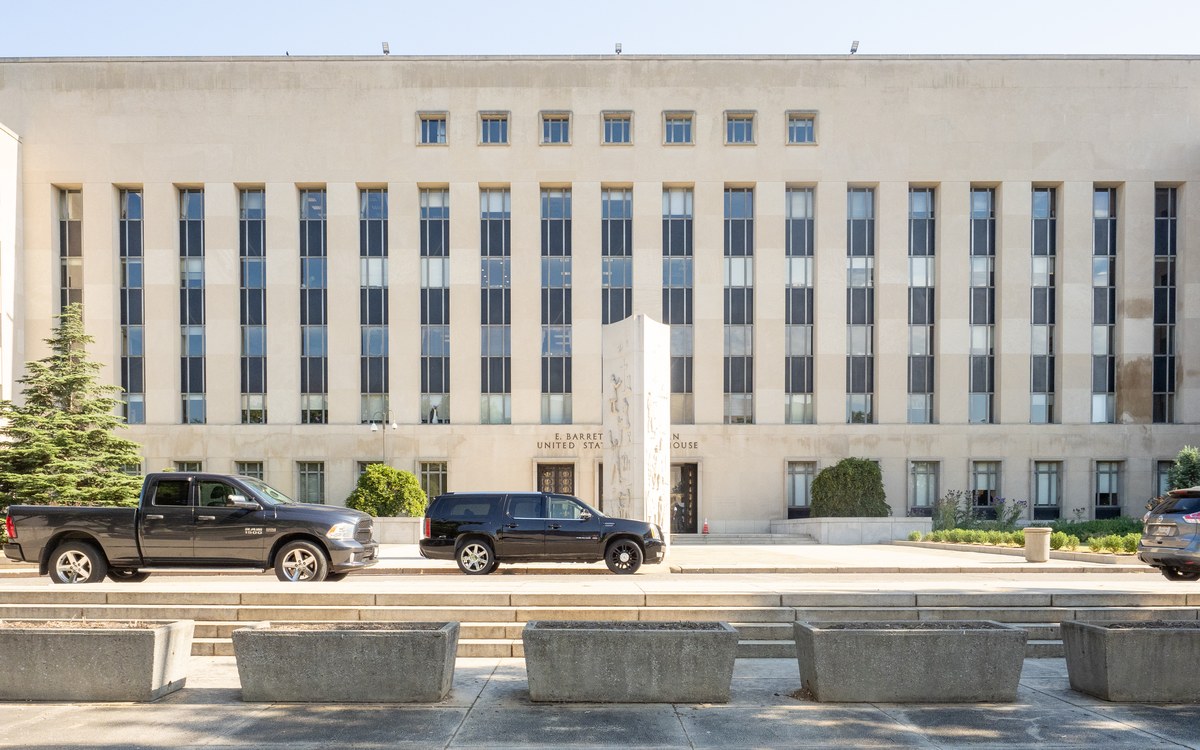
WASHINGTON — If you are a California voter, the federal government cannot make election officials pull your ballot aside just because your name turned up on a federal list of suspected noncitizens. A federal judge in Washington ruled Monday — one day before Election Day — that the Trump administration’s demands to California rested on a flawed list and power the executive branch does not have.
Chief Judge James E. Boasberg granted a preliminary injunction in a lawsuit brought by the Coalition for Humane Immigrant Rights (CHIRLA) and Pedro Trujillo, a naturalized U.S. citizen. The order bars the government from “issuing demands to California elections officials to compel the segregation of ballots, or other deviations from existing state elections procedures, based on voters’ inclusion on the lists of suspected non-citizens.”
“California may decide for itself what procedures to use for verifying the citizenship of registered voters,” Boasberg wrote. “The Executive Branch lacks authority to unilaterally impose its preferred procedures.” He also held that pressing those demands through threats of criminal prosecution of state election officials is unconstitutional.
The order is narrow and it is not a final ruling on the merits. It does not destroy the government’s list, does not stop California from checking citizenship under its own law, and does not bar the federal government from prosecuting actual noncitizen voting. What it stops is the demands — while voters are already casting ballots.
Central to the ruling was the list itself, which names more than 20,000 California registrants. “The lists are flawed,” Boasberg wrote. On October 30 he ordered the government to hand the list to the plaintiffs’ lawyers, and their expert’s analysis — which the judge found credible — confirmed that at least 22 CHIRLA members who are U.S. citizens fully match entries on it, with many more likely matches. The plaintiffs’ review also found that more than 40 percent of the names do not appear on California’s voter file at all.
CHIRLA and Trujillo sued in September, after the Justice Department gave California officials 48 hours to confirm the citizenship of listed voters and demanded that officials withhold or segregate — “not cancel” — the mail ballots of anyone whose status could not be confirmed, warning that officials who refused could face legal consequences. The Justice Department has defended the list’s accuracy, saying it was built from state registration records and federal citizenship databases, and it has argued in court that federal law bars noncitizens from voting in federal elections — and that once a ballot is mixed in with all the others, it cannot be taken back.
That last argument is at the center of a separate case, and the two should not be mixed up. In United States v. California, the Justice Department is the plaintiff: it sued California in Los Angeles to force officials to set those same ballots aside. Judge David O. Carter refused on October 28, a divided Ninth Circuit panel refused again on October 30, and on Monday the department asked the U.S. Supreme Court to step in. The Supreme Court denied the emergency request Monday evening, in a brief order with no noted dissents, leaving the lower-court refusals in place. The underlying lawsuit continues, but California will process its ballots under its existing procedures on Election Day. Boasberg’s ruling comes in a different lawsuit, in a different court, where voters and an immigrant-rights group — not the government — asked the court to act.