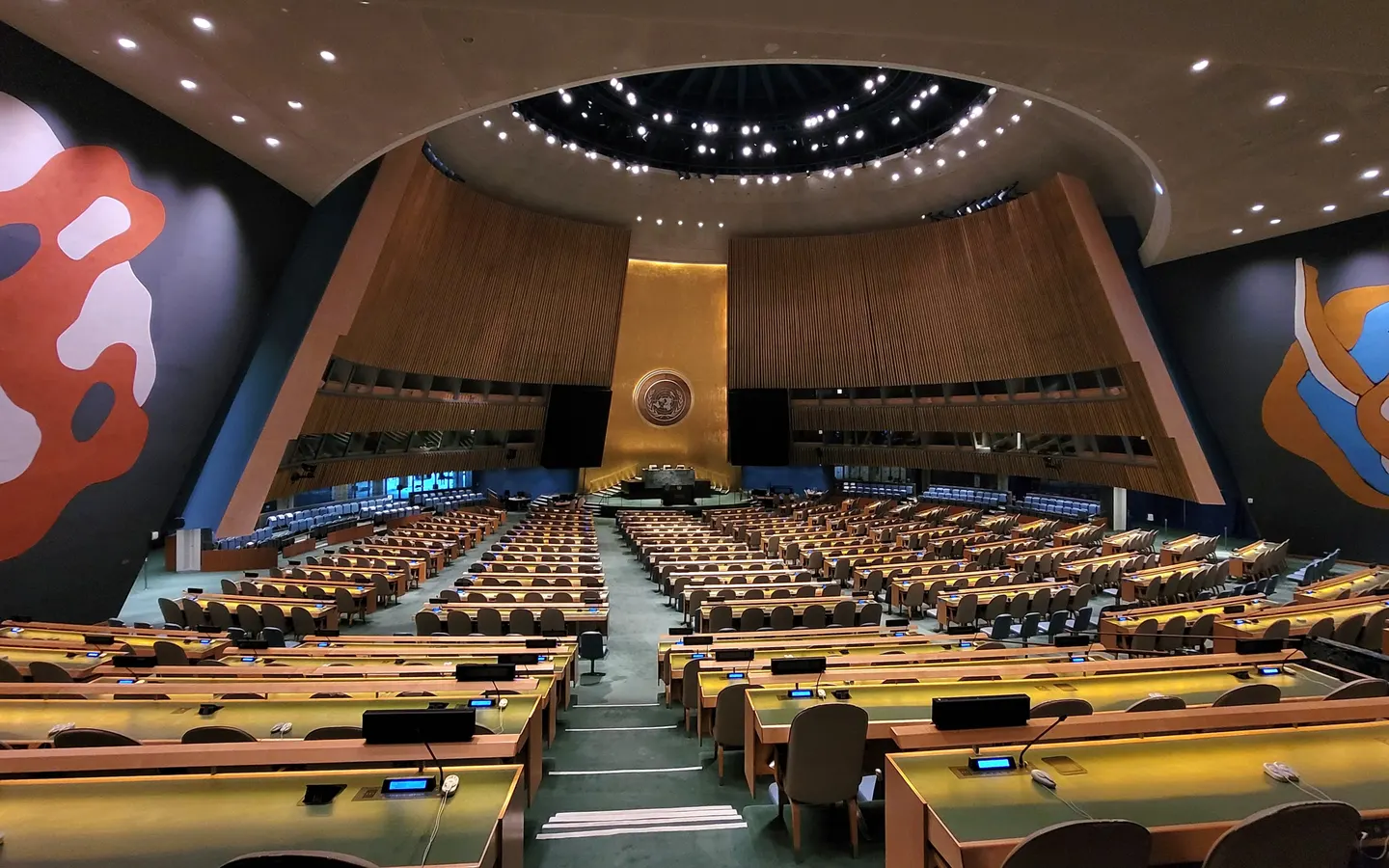
UNITED NATIONS — The United Nations peacekeeping mission in Western Sahara ended its work on Sunday, Nov. 1, after 35 years, because the Security Council could not agree to keep it in place. For the first time since 1991, no international mission is watching the territory.
Based on the original Zark News story, checked against Reuters and UN News.
Why it matters
Western Sahara has been disputed for about 50 years. Morocco claims it and controls most of it. The Polisario Front, backed by Algeria, wants an independent state. The U.N. mission, MINURSO, was set up to watch a ceasefire and hold a vote on the territory’s future. That vote never happened. Its end does not settle the dispute. It removes the outside watch, after fighting already resumed when the ceasefire broke down in 2020.
What we know
- The mandate ran out. It expired at midnight on Saturday, Oct. 31, after the Council failed on Friday to agree on its future, according to UN News. Secretary-General António Guterres said Nov. 1 began a “liquidation phase,” in which a smaller team will return equipment and dispose of U.N. equipment.
- Two rival drafts both failed. Russia vetoed a U.S. draft that, according to Reuters, would have backed Morocco’s autonomy plan under Moroccan sovereignty and scaled back the force. A rival Russian draft, for a one-year extension to Oct. 31, 2027, then failed to win the nine votes needed, according to UN News.
- Each side blamed the other’s text. The U.S. delegate said the American draft would have supported self-determination and moved the conflict forward, according to UN News. The Russian delegate said it would have imposed one-sided solutions and called the veto “a life-saving veto, so to speak.”
- What the mission was at the end. MINURSO was based in Laayoune, with nine team sites — four west of the sand wall known as the berm and five east of it — and a liaison office in Tindouf, according to UN News. It had about 200 staff from more than 35 countries; it was authorized for 534 personnel with a budget of more than $62 million, according to Associated Press reporting cited by Zark News. Twenty of its personnel died in 35 years, according to the United Nations.
- The parties reacted as expected. Morocco welcomed the end of the mission, according to Reuters. Foreign Minister Nasser Bourita told state media the referendum in the mission’s name was an “anachronism.” The Polisario Front said it was concerned at the deadlock, and Algeria expressed “deep regret,” blaming U.S. bias toward Morocco, according to Reuters.
- The U.N. says the right to self-determination stands. Guterres said the departure “does not abrogate” the people’s “inalienable right” to self-determination, and urged “maximum restraint,” according to UN News.
What we still don’t know
- How long the wind-down will take. The United Nations has given no end date for the liquidation phase and no date for the last staff to leave.
- Whether anything will replace the monitors. No new observer force has been announced. Without MINURSO, there is no agreed outside presence to report on either side’s movements.
- Whether fighting will grow. Guterres said he is concerned about the risk of hostilities rising. Whether the exit changes the low-level fighting seen since 2020 is not yet known.
- What happens to the referendum idea. Morocco’s foreign minister calls it out of date. The United Nations still speaks of self-determination. No plan both sides accept has been put forward.
- Whether talks will restart. The Secretary-General’s personal envoy, Staffan de Mistura, will keep the diplomatic work, according to UN News. No new round of talks has been announced.
What’s next
The liquidation team will finish the withdrawal. The political work moves to the personal envoy, with no mission behind it. The next test is whether both sides keep restraint with no observers watching, and whether the Council can agree on a new approach.
Timeline
- 1976: Spain leaves Western Sahara. The Polisario Front has sought an independent state there since then, according to Reuters.
- April 29, 1991: Resolution 690 sets up MINURSO to watch the ceasefire and organize a referendum, according to the United Nations.
- Sept. 6, 1991: The ceasefire between Morocco and the Polisario Front takes effect.
- 2007: Morocco puts forward its Autonomy Proposal, for self-government under Moroccan sovereignty, according to UN News.
- 2020: Hostilities resume and the 1991 ceasefire breaks down.
- 2025: The Council adopts a U.S.-drafted resolution accepting Morocco’s autonomy plan as the “most feasible” solution, according to Reuters. Russia abstains.
- Oct. 30, 2026: Russia vetoes a new U.S.-backed draft. A rival Russian one-year extension fails to win nine votes.
- Oct. 31, 2026: The MINURSO mandate expires at midnight.
- Nov. 1, 2026: The mission ceases operations and the liquidation phase begins, according to the United Nations.