
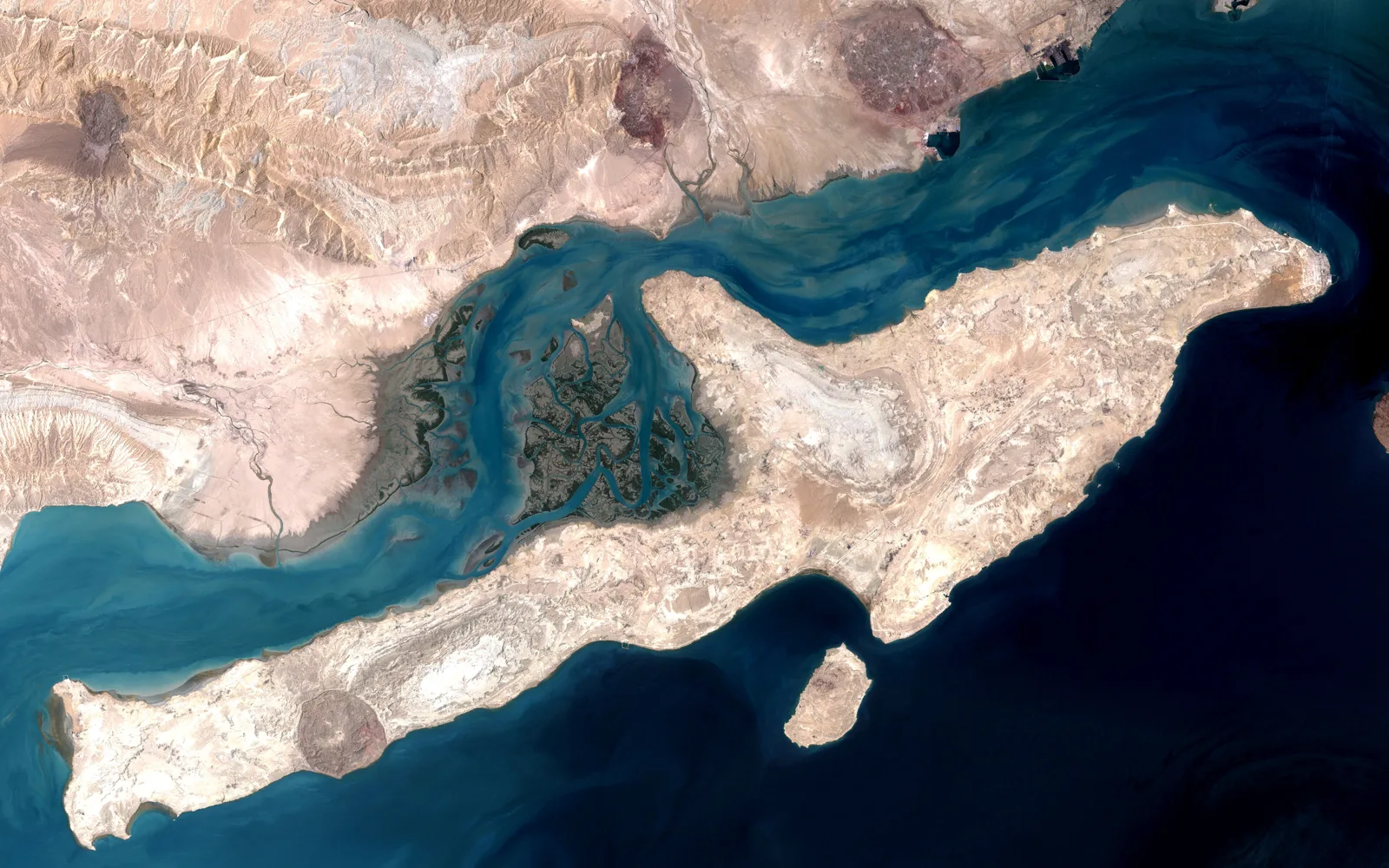
DUBAI — Gulf countries said on Wednesday that they had intercepted missiles and drones from Iran and its Houthi allies in Yemen, after the United States struck a Revolutionary Guards missile launch site on Qeshm Island in the Strait of Hormuz, in an uptick of hostilities despite efforts to end the nine-month-old war, according to Reuters.
On Tuesday, U.S. fighter jets fired on the missile site on Qeshm, the large Iranian island at the narrow entrance to the Gulf, a U.S. military official said, speaking on condition of anonymity. The official said the strike was in response to Iran’s attacks on U.S. personnel and assets. Iranian media reported five to six explosions on the island, and an Iranian official said the attack caused no damage to vital infrastructure, while Iran’s official news agency, citing the deputy governor of Hormozgan province, said residential, commercial and infrastructure areas were not damaged.
Iran answered across the Gulf. Its army said it had targeted U.S. drone and missile installations at Kuwait’s Ali Al Salem air base, after Kuwait said its air defences were countering hostile drone attacks and that explosions people heard were interceptions. Kuwait named no origin for the drones and reported no casualties or damage. Neighbouring Bahrain said it intercepted Iranian aerial attacks for the third time this week, after the Revolutionary Guards said they had launched drones at a U.S.-operated radar system at Sheikh Isa Air Base. U.S. Central Command said the drones aimed at the radar were intercepted, with no damage to American equipment and no injuries to U.S. personnel.
The exchanges widened further when the Saudi-led coalition fighting the Iran-aligned Houthis in Yemen said it had destroyed a cruise missile launched by the militia toward the Saudi capital, Riyadh. Taken together, the overnight attacks touched four Gulf states and both shores of the strait, through which about a fifth of the world’s oil passed before the war sharply cut traffic.
The fighting comes as American naval power in the region reaches its highest level in months. A third U.S. aircraft carrier, the USS Theodore Roosevelt, has entered the Middle East alongside the USS George H.W. Bush and the USS George Washington, with more than a dozen destroyers in the wider force. Diplomacy, meanwhile, remains stalled: Iran has proposed a process to end the war and reopen the strait, Pakistan has been mediating, and an American reply has been pending. The latest strikes also land a day before President Donald Trump is due to meet China’s President Xi Jinping and Russia’s President Vladimir Putin in Shenzhen, where the Iran war is expected to be among the flashpoints discussed.
Why it matters: each round of strikes and counter-strikes raises the risk that a miscalculation draws Gulf host states deeper into a war they did not start, and keeps the world’s most important oil waterway under threat. What happens next depends on whether the Shenzhen meeting produces any opening on Iran, and on whether the overnight pattern of drone attacks on bases in Bahrain and Kuwait is repeated in the coming nights.
Sources: Reuters, November 18, 2026.
