WASHINGTON — The United States has lost its measles elimination status, a public health milestone it had held since 2000, after international health experts decided that the virus has spread continuously in the country for more than a year, according to the Associated Press.
The decision was announced on Tuesday, November 17, by the Pan American Health Organization, the World Health Organization’s regional office for the Americas, following a meeting of its independent verification commission in Washington. The commission concluded that the United States, Mexico and Bolivia had each lost their verification as free from endemic measles transmission, because the same virus had circulated uninterrupted in each country for at least 12 months. For the United States, the relevant outbreak began on January 20, 2025, and the 12-month threshold was reached in January 2026. PAHO Director Dr. Jarbas Barbosa received and agreed with the commission’s report.
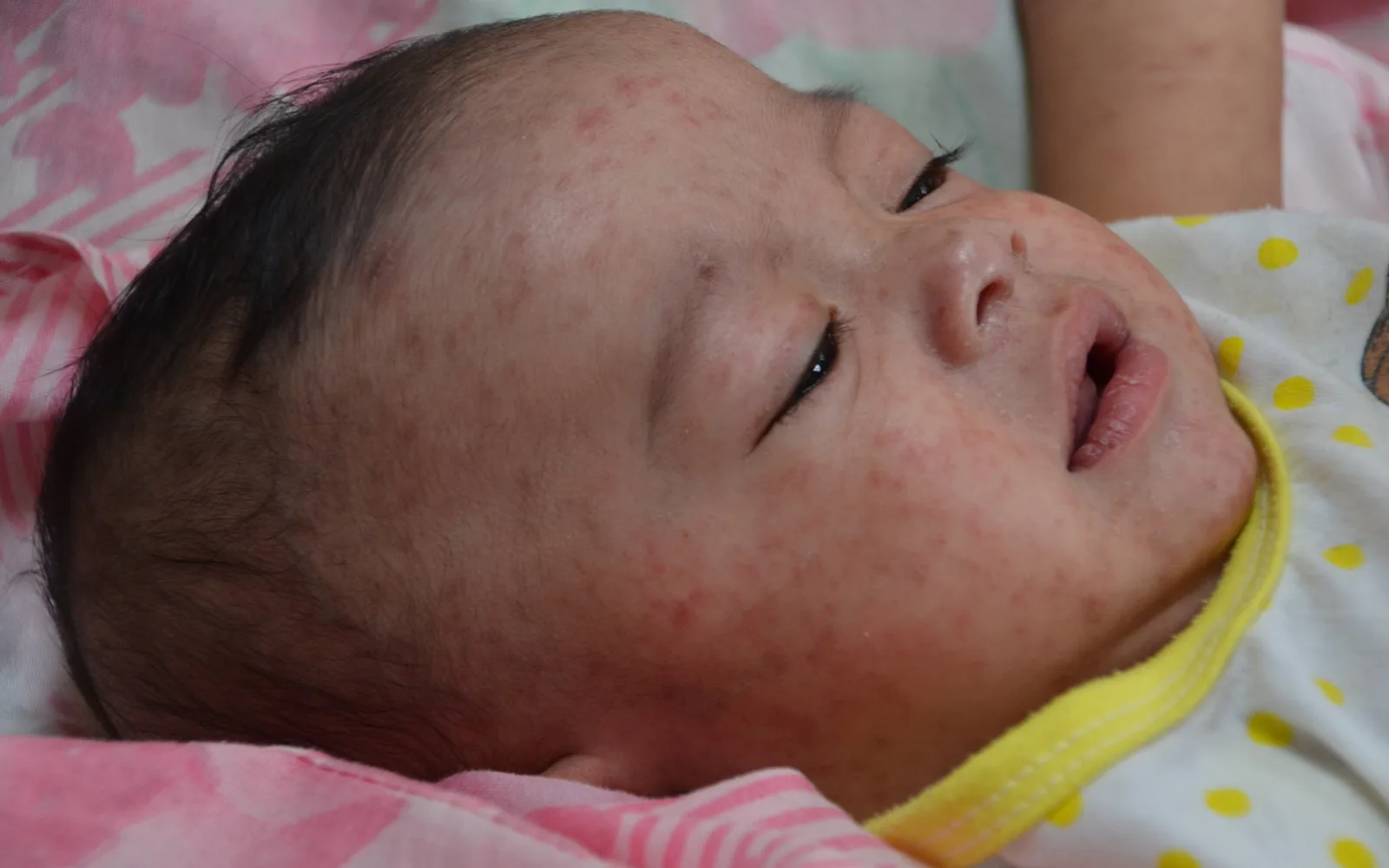
The numbers behind the decision are the worst in a generation. The U.S. has recorded 5,412 confirmed measles cases in 2026 as of November 12, according to the Centers for Disease Control and Prevention, the highest annual total since 1991, across 45 states. Health officials have reported 10 measles deaths this year in three states, and hundreds of hospitalisations. About 96 percent of this year’s cases were in people who were unvaccinated or whose vaccination status was unknown, according to reporting on the CDC data.
Elimination never meant zero cases. It meant no continuous transmission for at least 12 months, with imported cases quickly contained. Falling vaccination coverage has steadily weakened that defence: 92.4 percent of kindergartners received their required measles, mumps and rubella shots in the 2025-26 school year, down from 95.2 percent in 2019-20, the level public health experts consider necessary for herd protection. In August, scientists with Utah’s public health laboratory published evidence that the same strain of measles had been circulating in that state for more than a year, accounting for more than 95 percent of its cases.
The federal response will not change with the label, officials said. CDC Director Erica Schwartz said the measles elimination designation is not what protects Americans, adding that vaccination does. Health Secretary Robert F. Kennedy Jr. promised in a social media post on Tuesday that the administration will stop measles outbreaks and work to regain the lost status. PAHO expects the United States, along with Mexico and Bolivia, to submit a corrective action plan in the coming weeks setting out how it will stop transmission for at least a year, the step required to win the status back. Nearly 150 health care organisations wrote to Kennedy and Schwartz on Tuesday urging stronger action.
Why it matters: the ruling follows the loss of the Americas’ regional elimination status last year after Canada’s verification was removed, and it confirms that measles, a disease the U.S. declared eliminated 26 years ago, is again endemic in the country. Zark News reported on Monday that 13 babies were born with congenital measles during the recent outbreaks. What happens next is the corrective plan, and whether vaccination coverage in the hardest-hit communities recovers enough to interrupt transmission for a full year.
Sources: Associated Press, November 17, 2026; Pan American Health Organization, via ReliefWeb, November 2026; NPR, November 17, 2026.