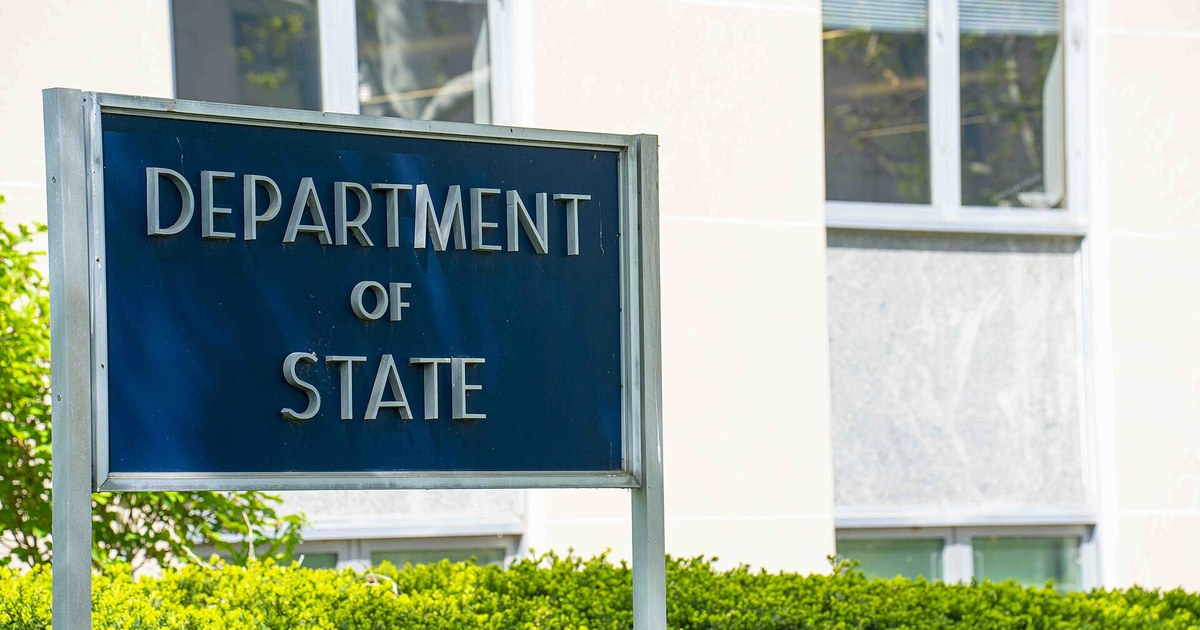
WASHINGTON — The United States has revoked more than 300,000 visas since President Donald Trump returned to office in January 2025, the State Department said on Tuesday, October 20, as the administration’s immigration crackdown reached what officials described as the fastest pace of visa revocations in American history.
The figure is a cumulative total for Trump’s second term, not a single new action, and it marks a sharp acceleration in recent weeks: the department put the total at more than 100,000 in January, more than 175,000 on August 10, and about 250,000 in late September, before passing 300,000 on Tuesday, Reuters reported.
“With over 300,000 revocations, the Trump administration has revoked more visas at a faster pace than any administration in history,” State Department spokesman Tommy Pigott said in announcing the figure on X. “Let the message be clear: we have zero tolerance for foreigners here on visas who break the law, commit fraud, or undermine our national security. We are taking, and will continue to take, action to keep our borders, and our nation, secure.”
What officials say drove the revocations
A State Department official said the revocations were imposed for criminal activity, threats to public safety, or immigration violations such as fraud and misrepresentation. Of those carried out in 2025, officials said about 25 percent involved assault or related crimes, 22 percent driving under the influence, 7 percent theft and 7 percent substance abuse or distribution.
More than 4,000 of the revocations involved people who, in the department’s words, “engaged in or facilitated birth tourism” — traveling to the United States to give birth so the child acquires U.S. citizenship — up from about 2,300 in September. Administration figures also say a Birth Tourism Prevention Task Force established in August 2026 has revoked more than 700 visas held by Chinese nationals, and in September the department opened a public portal for reporting suspected visa fraud.
Student visas are part of the total. In 2025, the department said it had revoked more than 6,000 student visas, citing overstays and legal violations; roughly 4,000 were tied to offenses such as assault, burglary and driving under the influence, and about 200 to 300 were revoked over alleged terrorism-related activity. Secretary of State Marco Rubio has defended the policy, saying there is no right to a student visa and that revocation is appropriate when disqualifying information emerges.
The campaign may widen further. According to State Department documents obtained by the Associated Press and reported by the New York Post, the department is expected to revoke B1 and B2 visitor visas issued between 2016 and 2026 to holders who have sought asylum or are now seeking it, in coordination with the Department of Homeland Security.
Revoked is not the same as deported
A visa is a travel document: it allows a foreign national to travel to a U.S. port of entry and request admission. Revoking it cancels that document, so the holder cannot use it to travel to or re-enter the United States. But a revocation does not, by itself, deport anyone: a person already inside the country does not automatically lose their immigration status, because deportation is a separate process run by the Department of Homeland Security, generally through immigration court. The 300,000 figure therefore counts cancelled documents — the government has not said how many of those affected were inside the United States, how many were abroad, or how many have actually been removed. Nor does a revocation, by itself, establish wrongdoing: a visa can be revoked for reasons ranging from a serious criminal conviction to an eligibility issue.
What is not known, including the impact on Pakistanis and South Asians
The State Department has not published a breakdown of the 300,000 revocations by nationality, visa category or reason, and officials said the nationalities of those affected were “not immediately clear.” There is, at this stage, no verified data showing how many Pakistani, Indian, Bangladeshi or other South Asian visa holders are included, and no official figure for any single nationality beyond the birth-tourism cases involving Chinese nationals. Claims on social media about specific national totals should be treated with caution until the department publishes checkable data. What is documented is that the revocations span many categories — students, workers, visitors and others — and have been paired with tighter screening, including expanded social media vetting.
Criticism and legal challenges
Rights advocates say the crackdown has violated due process and free speech rights and created an unsafe environment, particularly for ethnic minorities, who have raised concerns about racial profiling, according to Reuters. Among the revocations most condemned by advocates are those of foreign pro-Palestinian protesters who demonstrated against Israel’s war in Gaza, and of foreigners whose social media comments about the assassination of conservative commentator Charlie Kirk drew official scrutiny. Advocates say the government has used national security concerns to target critics and cited isolated fraud cases to broadly target immigrant communities, such as the Somali American community in Minnesota.
The policy is also being tested in court. Immigration lawyers have filed lawsuits on behalf of more than 200 international students challenging the revocations as unlawful, and some cases have produced judicial pushback: Tufts University doctoral student Rümeysa Öztürk, whose visa was cancelled before she was detained in March 2025, was ordered released by a judge that May. The administration maintains that visa holders are guests, that no one is entitled to a visa, and that revoking the visas of people who break the law or threaten security is a basic act of sovereignty.
What happens next
Pigott said the revocations will continue, and the reported plan to cancel visitor visas held by asylum seekers would extend the campaign to a new category if carried out. Advocates, meanwhile, are pressing the department to publish a full breakdown of the 300,000 cases. Until it does, the scale of the campaign is clear; its precise composition is not.
Sources: Reuters; New York Post (including Associated Press reporting); VisaVerge; NBC Palm Springs.