
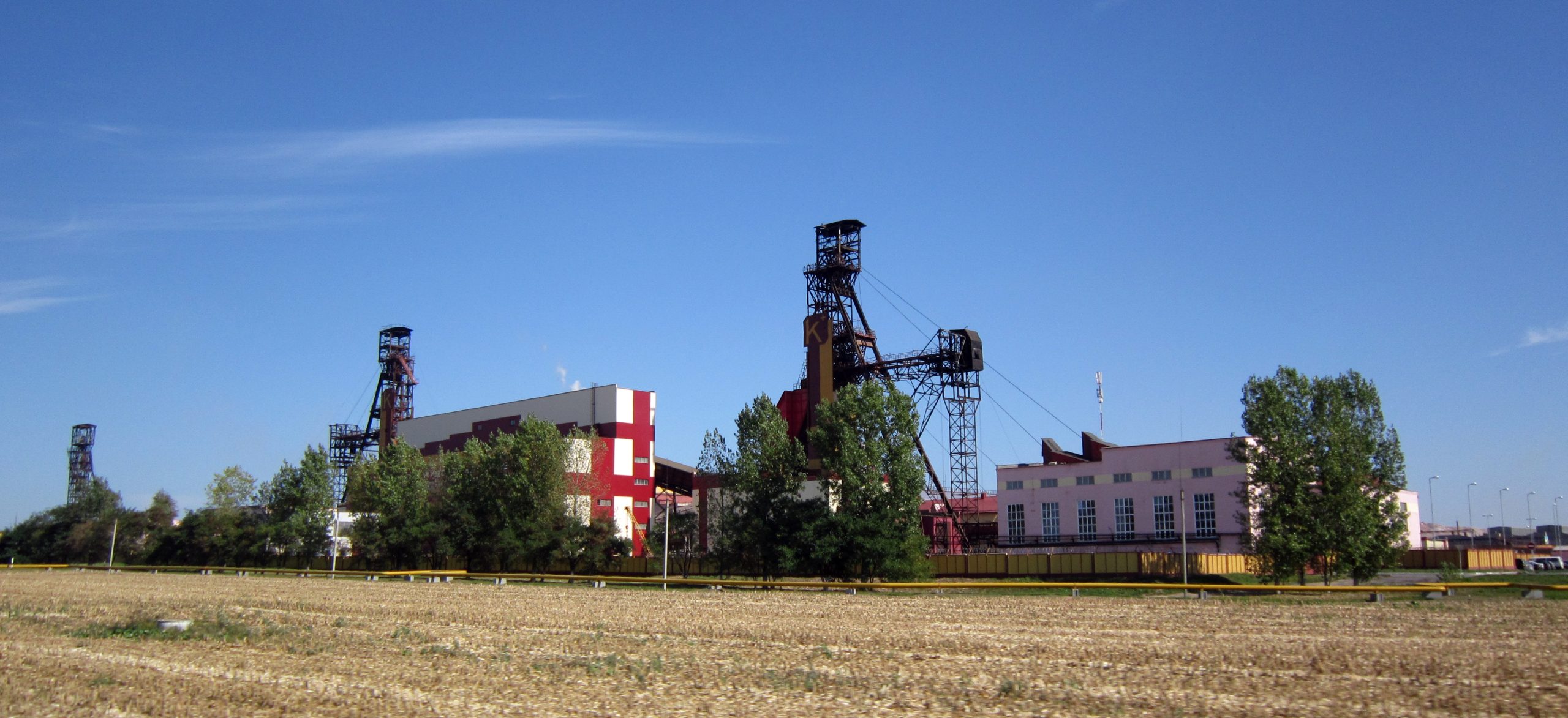
President Donald Trump said on Monday that the United States is working on a deal to purchase potash from Belarus at prices below what Washington currently pays Canada, framing the move as good news for American farmers and a new lever in his trade disputes with Ottawa.
“The United States is working on a massive Deal with respect to the purchase of Potash from Belarus,” Trump wrote in a post on Truth Social, according to Reuters. “The pricing would be for substantially less than we are currently paying to Canada, very good news for our Farmers and Ranchers.”
Potash — a potassium-rich mineral fertilizer — improves crop yields and disease resistance, and the United States depends heavily on imports. Canada supplies the vast majority of U.S. potash imports, and the announcement signals Trump’s willingness to use alternative suppliers as pressure against Ottawa, with which he is locked in broader trade disputes. Canada-U.S. Trade Minister Dominic LeBlanc and Saskatchewan-based Nutrien, the world’s largest potash producer, did not immediately comment, Reuters reported.
The statement marks a further thaw between Washington and Minsk. Belarusian President Alexander Lukashenko, a close Russian ally, said on September 11 that Belarus had resumed selling potash to the United States after Washington lifted sanctions. Lukashenko also said he wants the United States to return more than $40 million he described as stuck in the American banking system.
Analysts have noted that logistics remain a real constraint. Belarus and Russia are both major potash producers, but sanctions and the closure of a key port on Lithuania’s Baltic coast have made Belarusian supply expensive to ship to the United States, with the viable routes running through Russia’s Arctic. The United States continues to receive potash from Russia, but Canada remains the overwhelmingly dominant supplier.
What this is — and isn’t. Trump’s post announces an intention, not a signed agreement: no contract, pricing schedule, volume, or timeline has been published, and Belarus has not announced a matching confirmation of terms. The claim that Belarusian potash would cost “substantially less” is the president’s assertion; no independent pricing data for the prospective deal has been released. Readers should treat this as the opening of a negotiation signal rather than a completed trade.
Why it matters. If even a preliminary purchase agreement materializes, it would be one of the most concrete economic openings between the United States and Belarus in years — and a direct bargaining chip against Canada, the supplier the U.S. agricultural sector relies on most. For farmers, cheaper input costs are welcome in principle, but the supply is only as reliable as the sanctions and shipping constraints that have made Belarusian potash expensive to move in the first place.
What happens next. Watch for any formal U.S.–Belarus statement of terms, for Ottawa’s response, and for whether the deal advances beyond a Truth Social post into an actual procurement arrangement. A follow-up statement from the White House or the Commerce Department would be the first real confirmation that this is moving forward.
Updated September 22, 2026: Lithuania said on Monday that the European Union has no reason to ease sanctions on Belarus, opening a visible transatlantic split as Washington pursues its potash deal. Foreign Minister Kestutis Budrys told Reuters in an interview at the United Nations General Assembly that Alexander Lukashenko’s government “continues to repress opponents, violate human rights and back Russia’s war in Ukraine.”
“We do not see any reasons why our position on Belarus should soften as Belarus is not changing its behaviour,” Budrys said. He said the EU sanctions approach is “a bit different” from Washington’s — Vilnius would prefer the two sides to coordinate, but the bloc should continue applying pressure.
The EU position has practical consequences for Trump’s announced deal. EU sanctions prohibit Belarusian potash from entering or transiting EU territory regardless of ownership or carrier, Budrys explained in an interview with Lithuanian broadcaster LRT. That rules out the pre-2022 export route through Lithuania’s Klaipeda port, which had shipped Belaruskali potash to customers including India, China and Brazil before Vilnius halted exports in 2022. Budrys said about 1,000 political prisoners remain in Belarus despite the releases Washington negotiated.
What this changes — and doesn’t. The divergence does not cancel Trump’s announced intention: the United States already lifted its own sanctions on Belarusian potash in March, after Belarus released 250 prisoners in a U.S.-brokered deal, while the EU’s measures remain in force until February 2027 and can be extended. But it narrows the shipping options, keeping the most economical route to U.S. buyers — through Klaipeda — off the table under EU law and reviving the costly logistics problem analysts have flagged. In response, Belarusian opposition leader Sviatlana Tsikhanouskaya told LRT that potash exports are Lukashenka’s main source of income and that the revenue would fund repression and Russia’s war effort — the opposition’s stated position, not an independent finding.
Sources
- Reuters, Sept 21, 2026: “Trump says US is working on deal to purchase potash from Belarus” (Trump’s Truth Social statement as reported by Reuters)
- Reuters, Sept 21, 2026: “Not the time to soften stance over Belarus, Lithuania says” — https://www.reuters.com/world/not-time-soften-stance-over-belarus-lithuania-says-2026-09-21/
- LRT/Daily Baltic, Sept 21, 2026: “Budrys says US Belarus fertiliser deal will not directly affect Lithuania” — https://www.dailybaltic.com/40118/budrys-says-us-belarus-fertiliser-deal-will-not-directly-affect-lithuania/