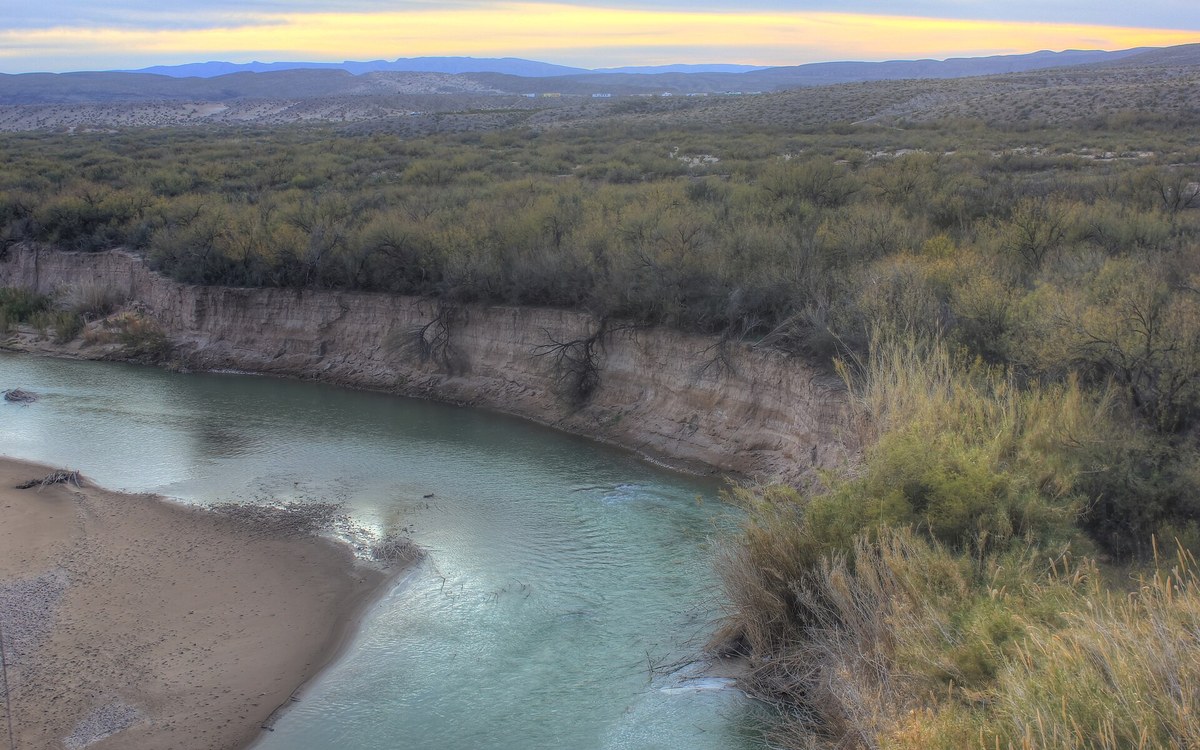
WASHINGTON — The Supreme Court on Monday cleared the way for the Trump administration to resume building border barriers and roads across the Big Bend region of West Texas, including inside Big Bend National Park. The decision puts bulldozers back to work in one of the most remote and protected landscapes in the country while the lawsuit against the project is still undecided.
If you pay taxes, visit national parks, or earn a living along the Rio Grande, this ruling reaches you. It decides whose judgment governs for now along 517 miles of river: a federal judge who found the government likely overstepped the limits Congress set, or a Homeland Security secretary who set aside dozens of environmental laws to build fast.
What the court decided
In an unsigned opinion, the justices granted the government's emergency request and put on hold the injunction that U.S. District Judge Kathleen Cardone issued on October 2. Justice Ketanji Brown Jackson was the only justice who said she would have denied the request. The court did not grant the administration's separate ask to throw out the judge's ruling outright.
The justices said the government is "exceedingly likely to prevail" on its argument that Judge Cardone had no power to hear the challenge at all. The 1996 immigration law behind the project allows court challenges to the secretary's waivers only when they claim a violation of the Constitution. The challengers argued the secretary went beyond the power Congress gave him, dressed in the major questions doctrine, the idea that Congress must speak clearly before an agency takes a step of vast size. The court answered in plain terms: "There is no such thing as a 'constitutional' major-questions claim." A claim that the government exceeded a statute is a statutory claim, not a constitutional one, whatever label it carries.
The court also weighed the cost of waiting, citing a Border Patrol declaration that the halt was costing nearly half a million dollars a day in money that could never be recovered. Congress, by allowing the waivers, showed a "clear preference for expeditious border construction over the very harms respondents assert," the court wrote, and the government's interest "outweighs any aesthetic, recreational, and environmental harm" the challengers raised.
Why the judge stopped the work
Homeland Security Secretaries Kristi Noem and Markwayne Mullin issued three waivers this year, in February, May and July, setting aside dozens of laws, among them the Endangered Species Act, so barriers and roads could be built quickly across the Big Bend Sector. The sector covers 517 miles of the Rio Grande, more than a quarter of the whole southern border, and takes in the national park, a state park and ranch land.
The waivers rest on a finding that Big Bend is an "area of high illegal entry." Judge Cardone, sitting in El Paso, found the record pointed the other way. Her October 14 opinion noted that the sector has the lowest rate of illegal entry on the southern border, about 1.3 percent of apprehensions in fiscal 2025, and ranked last in apprehensions per mile. The government counters that agents still apprehended more than 89,000 people there between 2021 and 2025. Cardone concluded the challengers were likely to win, and barred construction until the government complied with the laws it had waived.
What is planned, and who is fighting it
The administration says most of the roughly 340 miles of planned barriers and roads would cross private land. The 30-foot pedestrian wall planned elsewhere is not slated for the national park itself. The park would instead get about 17 miles of vehicle barriers in separated stretches, plus patrol roads and surveillance gear. Contractors began work near Santa Elena Canyon in August, and Customs and Border Protection paused the job on August 17 after bipartisan criticism, then let the pause lapse at the end of September.
The lawsuit was filed in April by the Center for Biological Diversity, the Friends of the Ruidosa Church, which works to preserve a fragile historic adobe church, and Danny William Miller Jr., a river guide and landowner. More than 140 outfitters, businesses and recreation groups have urged Texas leaders to stop the project, warning that barriers and new roads along the river would gut the guiding and tourism economy. Texas Sen. John Cornyn, a Republican, published an opinion piece on Monday opposing wall construction through Big Bend. The government says leaving a gap of more than 300 miles in border defenses would act as a magnet for cartels.
The Center for Biological Diversity reacted sharply. "This horrific decision clears the way for contractors to bulldoze pristine desert and dynamite canyon walls before the courts have even decided whether this destruction is legal," said Laiken Jordahl, the group's national public lands advocate.
What happens next
Monday's order is a stay, a pause on the judge's pause. It holds while the government asks the Supreme Court to take the case in full. If the justices refuse, the stay ends on its own and Judge Cardone's injunction returns. If they take the case, the stay lasts until they rule. Either way, the lawsuit continues, and the larger question, how far a secretary's power to set aside the law at the border extends, is still open. For people in Big Bend, the practical question is simpler: how much building happens before any court answers it for good.
Have you visited Big Bend, or do you live or work along the Rio Grande? Should border security or the park's protected status come first when the two collide? Tell us what you think.
Reporting note: This story is based on the Supreme Court's per curiam opinion in Mullin v. Friends of the Ruidosa Church, No. 26A560 (November 9, 2026); Judge Cardone's October 14, 2026 memorandum opinion in the district court case; reporting by Reuters, the Associated Press, USA Today, SCOTUSblog, the El Paso Times and the Texas Tribune; and a statement issued November 9 by the Center for Biological Diversity. Figures for apprehensions, construction costs and project mileage come from the court filings and statements cited above and are attributed where they appear.