BELGRADE — Serbia’s long-serving leader Aleksandar Vučić conceded defeat late on Sunday in a snap parliamentary election, acknowledging that the student-led list that grew out of nearly two years of protests had won a majority in the 250-seat National Assembly. It ends, at the ballot box, the hold Vučić and his Serbian Progressive Party (SNS) have held since he first became prime minister in 2014, according to Reuters. Read Zark News’s original report.
Why it matters
The winning list was built by a protest movement, chose many candidates through citizens’ assemblies rather than party machines, and campaigned on accountability, anti-corruption, the rule of law and independent institutions. It also matters beyond Serbia: Vučić had balanced ties with Russia and China against a stated EU path. Whether the new majority can govern will shape the Balkans’ largest country for years.
What we know
- The concession is clear. “The Students’ List has won,” Vučić told supporters on election night, based on his party’s own sample, according to Reuters. He projected the list at 135 to 140 seats and the SNS at about 105 — above the 126 needed for a majority.
- A fuller count on Monday pointed the same way, with different numbers. With almost 99 percent counted, the student-backed candidates had 52.7 percent against 39.2 percent for the SNS-led alliance, according to Reuters, citing the State Election Commission — 139 seats for the students, 97 for the SNS alliance, and the remainder to minority parties. Neither figure is the final certified result.
- Turnout was exceptionally high — about 70 percent, the highest since the breakup of Yugoslavia in 1992, according to Reuters. The commission had put it at 64.9 percent by 6 p.m., two hours before polls closed.
- The movement began with a disaster. On November 1, 2024, a concrete canopy at the newly reconstructed Novi Sad railway station collapsed, killing 16 people. Students demanding the documents and prosecutions blockaded faculties and led nationwide protests, according to Reuters. Their list of 250 largely unknown candidates, led by cardiologist Ilija Srdanovic, according to Reuters, grew out of that movement. Read Zark News’s election-day preview.
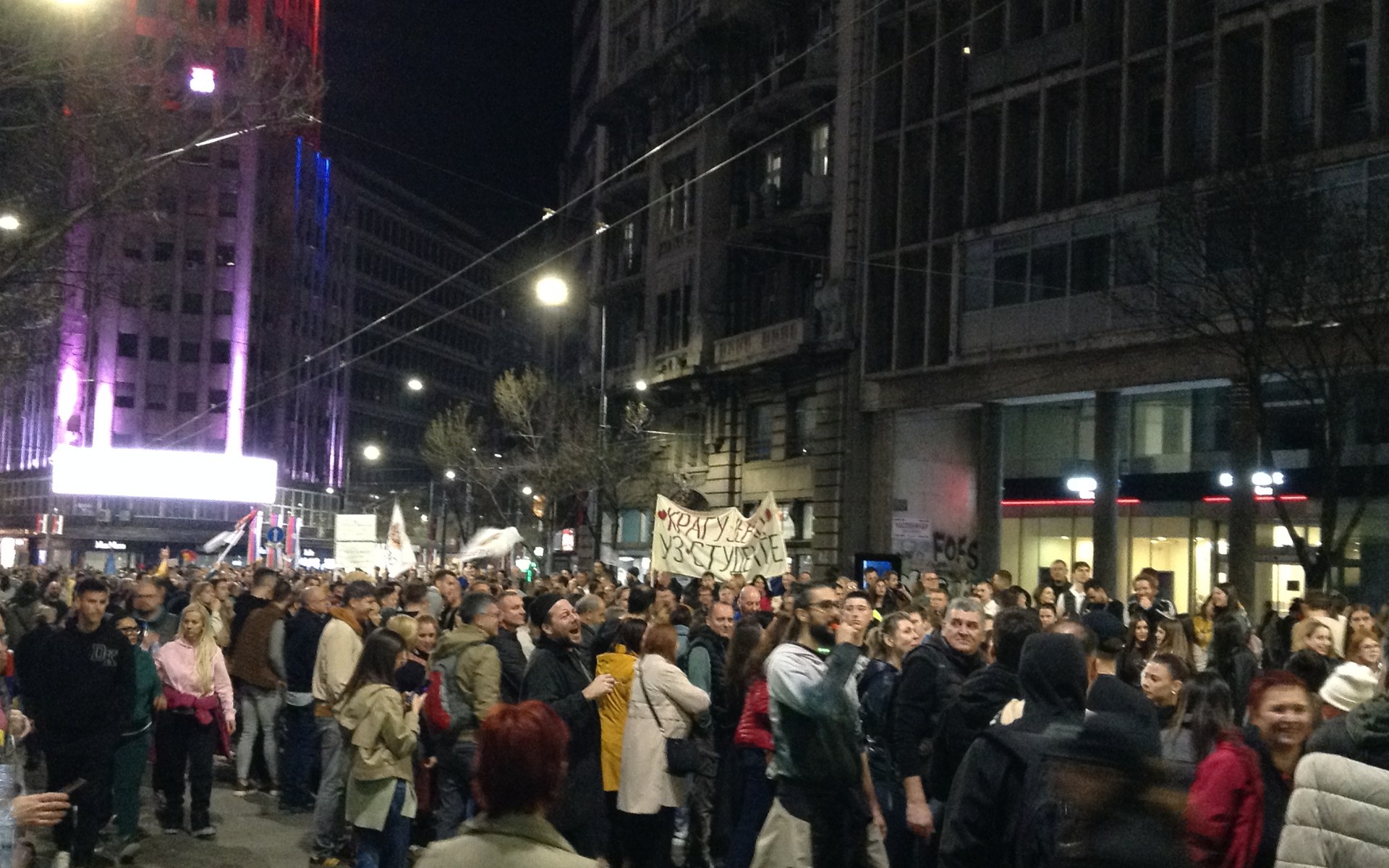
- The reaction split along the old lines. Tens of thousands celebrated in Belgrade and other cities, according to Reuters. In Moscow, Kremlin spokesman Dmitry Peskov praised Vučić and hoped the new rulers would keep cooperating with Russia, according to Reuters.
What we still don’t know
- The final certified result. Projections and the near-complete count differ (135 to 140 projected on election night; 139 on Monday, with the SNS falling from about 104–105 to 97). Only the Republic Electoral Commission’s certification settles the mandates.
- Who will govern, and on what programme. Reuters reported on Monday that few had an idea of how the student-backed leaders would govern. The list has been specific on accountability, and quieter on foreign policy toward the EU, Russia and China, and on economic policy.
- Whether complaints change anything. The watchdog CRTA said its observers recorded pressure on voters or workers at almost a third of the roughly 500 polling stations it monitored. How the commission handles complaints is not yet reported.
- What Vučić does next. He blamed independent media and alleged interference by unnamed European countries and an “American deep state” — an allegation for which no evidence was presented in the reporting reviewed. Whether he leads the SNS in opposition is unknown.
- Accountability for Novi Sad. Protesters attribute the collapse to corruption and negligence. Whether prosecutions follow, and what courts find, remains open — no court finding on that claim was reported in the sources reviewed.
What’s next
First comes certification, then the new assembly convenes and government formation begins. Watch for the list to name a prime ministerial candidate, publish a programme beyond anti-corruption, and signal its stance toward the EU, Russia and China.
Timeline
- November 1, 2024: A canopy collapses at Novi Sad railway station, killing 16 people.
- Late 2024 into 2025: Students blockade faculties; protests spread nationwide.
- September 2026: Vučić calls a snap election, a gamble to renew his mandate.
- October 25, 2026: Serbia votes; polls close at 8 p.m., turnout heading toward about 70 percent.
- October 25, 2026, late evening: Vučić concedes, projecting the Students’ List at 135 to 140 seats against about 105 for the SNS.
- October 26, 2026: With almost 99 percent counted, Reuters reports the student list at 52.7 percent and 139 seats; the Kremlin praises the defeated Vučić.