Samsung Electronics said Thursday that it expects third-quarter operating profit of about 107.4 trillion won ($80.2 billion), nearly nine times the year-earlier level, as the artificial-intelligence buildout continues to tighten supplies of memory chips.
The South Korean technology group estimated consolidated sales of approximately 195 trillion won for the July-to-September quarter. Samsung’s Oct. 8 pre-earnings guidance is preliminary and unaudited; the company is scheduled to release full results and divisional details on Oct. 29.
A record-sized preliminary estimate
Samsung’s midpoint guidance compares with sales of 86.06 trillion won and operating profit of 12.17 trillion won in the third quarter of 2025. That implies year-over-year growth of roughly 127% in sales and 783% in operating profit.
| Samsung Electronics | Q3 2025 | Q3 2026 guidance |
|---|---|---|
| Consolidated sales | 86.06 trillion won | About 195 trillion won |
| Operating profit | 12.17 trillion won | About 107.4 trillion won |
Samsung provided ranges of 194 trillion to 196 trillion won for sales and 107.3 trillion to 107.5 trillion won for operating profit, with the published figures representing the midpoint required under Korean disclosure rules.
The guidance does not break out performance by business unit. Independent reporting from Reuters attributed most of the improvement to memory semiconductors, including high-bandwidth memory used in AI accelerators, as data-center investment has outpaced supply expansion.
Why the market reaction was restrained
The scale of the projected profit highlights how sharply the memory cycle has turned in favor of suppliers. It also raises the question investors are now asking across the AI trade: how long can elevated chip prices and unusually high margins last?
Samsung shares closed 2.4% lower in Seoul on Oct. 8, according to Reuters, even after the company outlined a record quarter. The decline suggested that investors had already priced in exceptionally strong results and were looking beyond the headline number to the pace of future growth.
Rising memory prices can also cut both ways inside Samsung. The company sells chips to outside customers, but its smartphone and consumer-electronics businesses also buy those components. Analysts cited by Reuters expect higher component costs to pressure those divisions, while Samsung’s contract chipmaking operation is still working to improve utilization.
Currency movements add another complication. A stronger South Korean won reduces the local-currency value of sales made in dollars, potentially limiting some of the benefit from higher chip prices.
What comes next
The Oct. 29 results will show how much of the profit came from Samsung’s semiconductor division and whether its mobile, display and consumer-electronics units offset any of those gains. Investors will also be watching for an update on high-bandwidth memory shipments, foundry utilization and shareholder returns.
For now, the guidance reinforces the central tension in the semiconductor market: AI infrastructure spending is producing extraordinary earnings for memory suppliers, while the same shortage is raising costs for device makers and increasing pressure to add capacity. New supply could eventually cool prices, and competition from Chinese producers remains a longer-term risk.
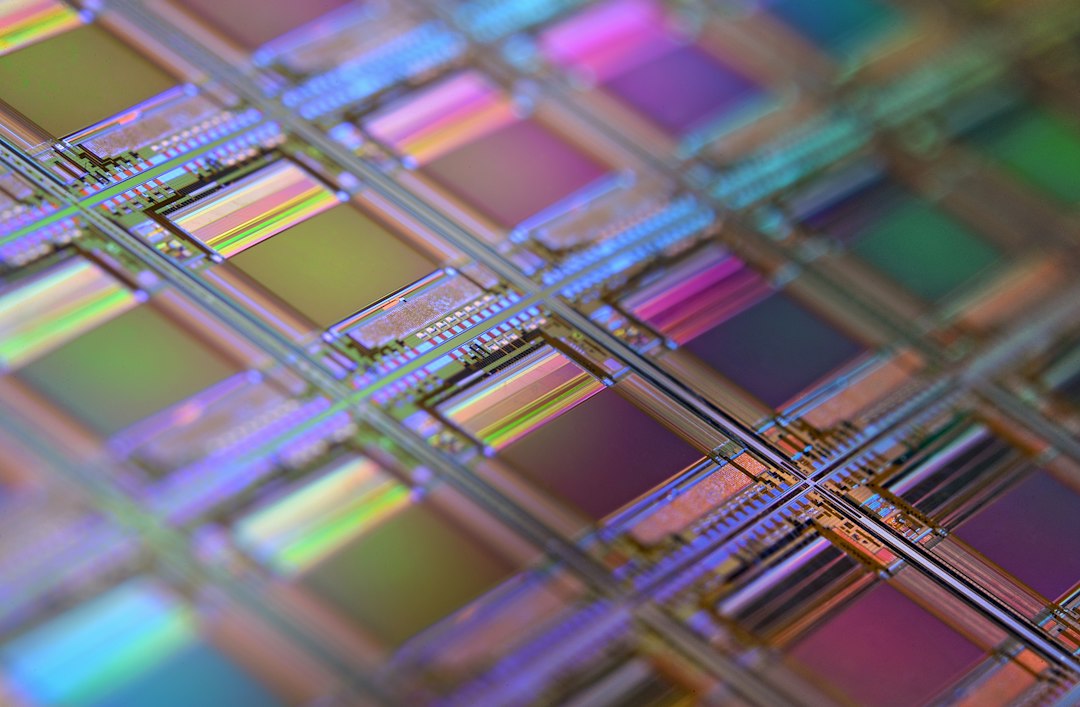
Featured image: Silicon wafer photograph by Laura Ockel via Unsplash. Image is illustrative and does not depict a Samsung facility or product.