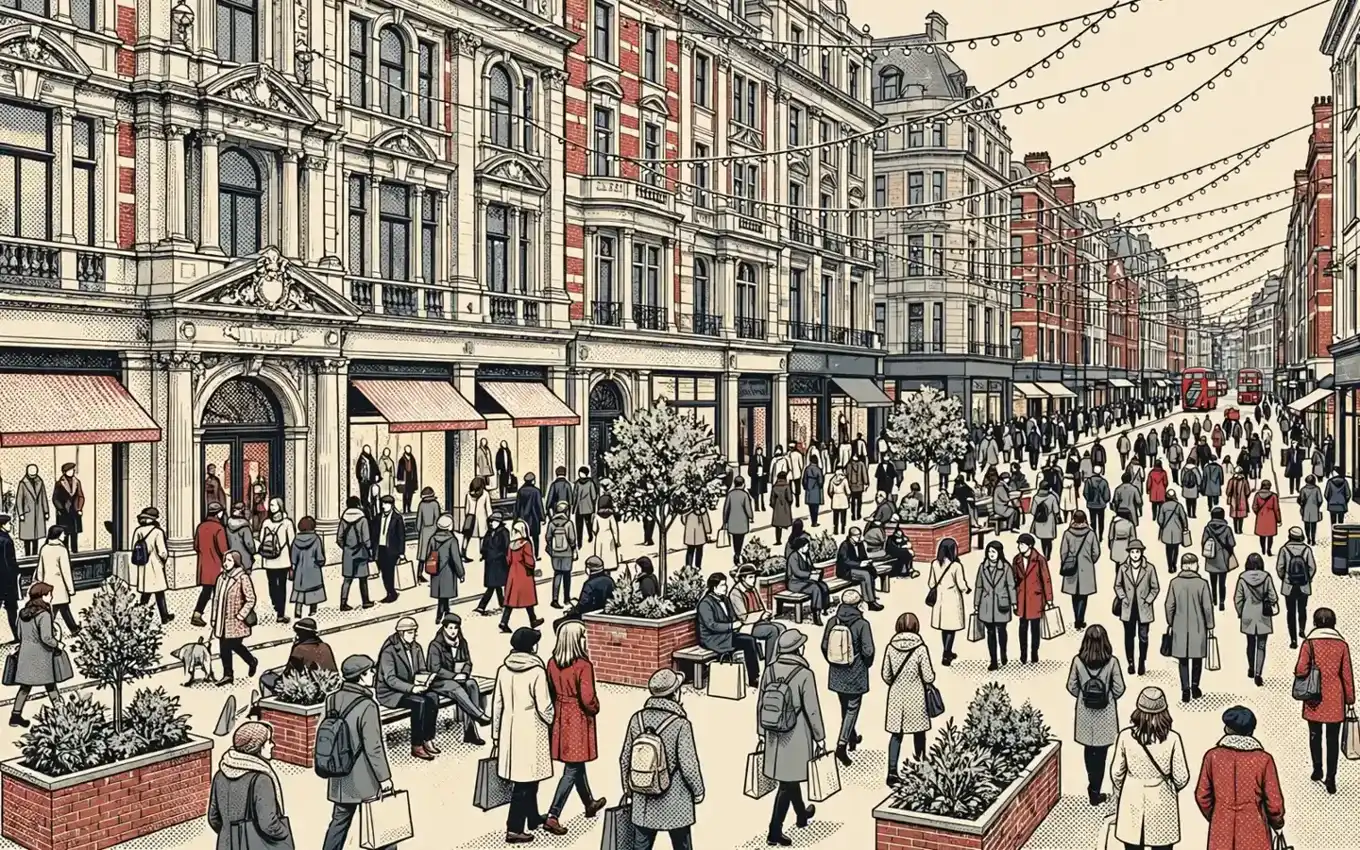
LONDON — Almost a kilometre of Oxford Street, Britain’s busiest shopping thoroughfare, went permanently traffic-free on Monday, as London bet on pedestrians to revive a famous street that has struggled since the pandemic, according to Reuters.
The closed section runs for about 0.9 km (0.6 miles) between Orchard Street, by the Selfridges store, and Great Portland Street, past the IKEA store at Oxford Circus. It is now shut to buses, cars, taxis, cycles, scooters and pedicabs, the office of London Mayor Sadiq Khan said. Servicing vehicles retain access only between midnight and 7 a.m., and emergency vehicles are always permitted. Buses have been rerouted along parallel streets including Wigmore Street and Henrietta Place, and new cycle routes, taxi ranks and drop-off points have been set up around the zone.
"After so many false dawns, and now working with a government who share the scale of my ambition, I’m proud that we’re finally unlocking a new era for the street," Khan said, according to Reuters. "Revitalising Oxford Street will boost jobs and economic growth in the capital." The scheme, more than two decades in the making — a tram proposal was first floated in 2004 — is the first phase delivered through a Mayoral Development Corporation, with the new Oxford Street Development Corporation overseeing the transformation. Public consultations drew more than 2,700 responses, with roughly two-thirds backing the plans, according to the Greater London Authority.
The mayor’s office says Oxford Street attracts around half a million visitors a day, yet flagship stores including House of Fraser and Topshop have shut in recent years, the street filled with American-style candy stores that officials say put shoppers off, and Khan has said the area was neglected. The stated ambition is to put Oxford Street back among the world’s top shopping destinations, alongside New York’s Times Square, Paris’s Champs-Élysées and Barcelona’s La Rambla. Westminster City Council, which previously controlled the street, objected to the scheme over the traffic displaced onto surrounding streets.
The launch layout is temporary and will be reviewed through spring 2027, with permanent changes intended by late 2027. Minimal construction will take place during the run-up to Christmas, the street’s busiest trading period, so the new pedestrian space is being tested immediately by festive crowds. Plans for 2027 include more than 50 new trees, 100 new seats, two public squares, rest areas, and better signage and lighting.
Whether the bet pays off will be measured in footfall and takings over the Christmas season and in the rents landlords can command next year. The first phase is being financed through borrowing of about €176 million against projected gains in sales taxes and business rates, according to reporting on the scheme’s financial structure — a model its backers say could be copied by other cities if Oxford Street’s crowds return. For now, the most visible change is the simplest one: on one of the most famous shopping streets in the world, the traffic has stopped and the people have taken the road. Read the Reuters report at devdiscourse.com.