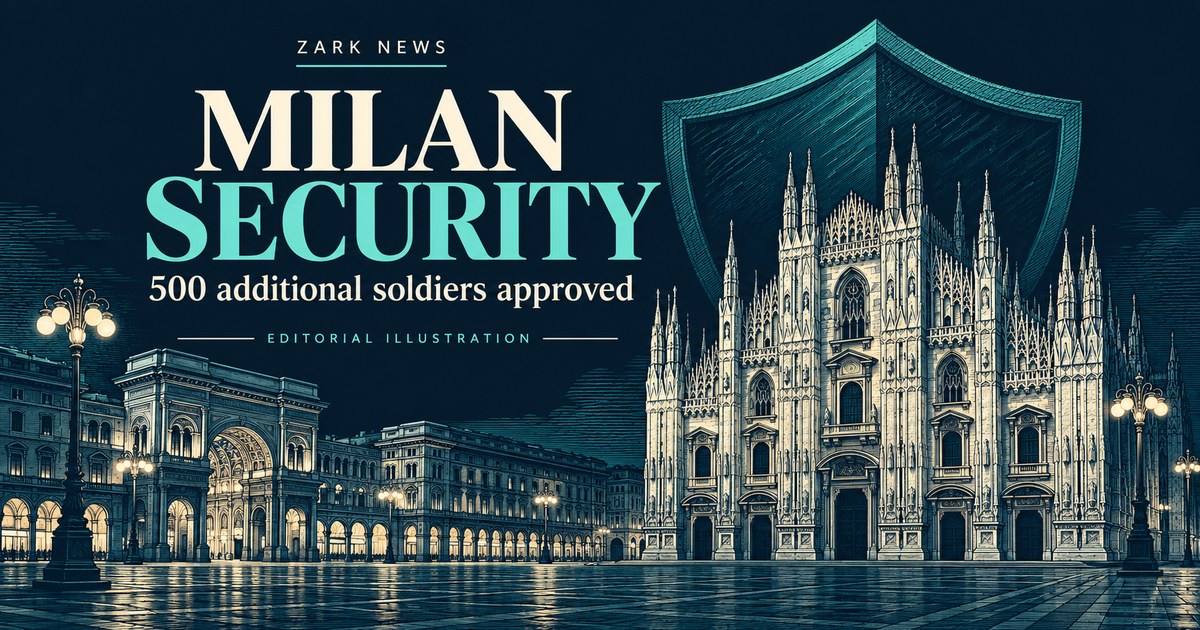
ROME — Italy approved 500 additional soldiers for Milan on October 20 as Prime Minister Giorgia Meloni’s government announced tougher measures following a weekend of looting and clashes around demonstrations over living costs.
The Defence Ministry confirmed the reinforcement of the existing Strade Sicure security operation. Defence Minister Guido Crosetto would make the personnel immediately available, it said. The announcement establishes approval and availability; it does not independently confirm that all 500 soldiers have already arrived or begun patrols.
What the soldiers will do
The ministry said troops would reinforce security posts, increase protection of sensitive sites and improve territorial surveillance. They will work alongside police within Strade Sicure’s existing responsibilities, with each service retaining its own role.
The government’s explanation is that military support can release police and Carabinieri personnel for crime prevention, intervention and public-order duties. The Associated Press reported that the additional deployment is intended to last through the end of 2026.
New penalties and powers involving minors
Reuters reported that the approved package creates an offence covering violent participation in a demonstration by a group of at least five people that endangers public safety. It carries up to five years in prison and a maximum €20,000 fine, with higher penalties where faces are concealed or people are injured.
The package also provides for compensation for damage, including parental financial liability where minors are responsible. Reuters reported an extension to 14-to-17-year-olds of preventive detention powers previously applicable to adults when evidence indicates a danger, even without a completed crime. Those powers are distinct from a conviction and sentence.
AP separately reported a presumption that those over 14 understand their actions unless shown otherwise, changing a matter previously determined by a judge. The precise application of these provisions will depend on the legal text and judicial decisions.
How the unrest began
The weekend demonstrations focused on the cost of living. AP’s reporting on October 17 described rioters looting shops and setting fires in central Milan during the protest. Reports of those acts should not be treated as a description of everyone who demonstrated, or as proof of guilt against an individual who was detained.
Meloni presented the measures as a response to criminal damage and theft. According to Reuters, authorities were also preparing for further demonstrations on Saturday, October 24.
A decree still faces parliamentary scrutiny
Reuters described the emergency package as taking immediate effect. That is different from final parliamentary enactment. Under Article 77 of Italy’s constitution, an urgent decree-law must be submitted to parliament on the day it is adopted and converted into law within 60 days of publication. Otherwise, it loses effect from its inception, subject to parliament’s ability to regulate resulting legal relationships.
Zark News has not independently inspected the final gazetted text. The reported measures are therefore attributed to the government’s announcement and wire reporting; cabinet approval should not be described as a completed parliamentary vote.
Public safety and the right to protest
The new package enters an established debate over the reach of security legislation. In May 2025, Amnesty International warned that an earlier Italian security decree risked restricting peaceful assembly and disproportionately affecting activists and marginalized groups.
That criticism concerned the earlier legislation, not a verified assessment of the October 20 package. It nevertheless identifies the question lawmakers now face: how to punish violence while protecting peaceful dissent. The next tests will be parliamentary scrutiny, the detailed safeguards governing powers over minors and how authorities apply the measures at future demonstrations.