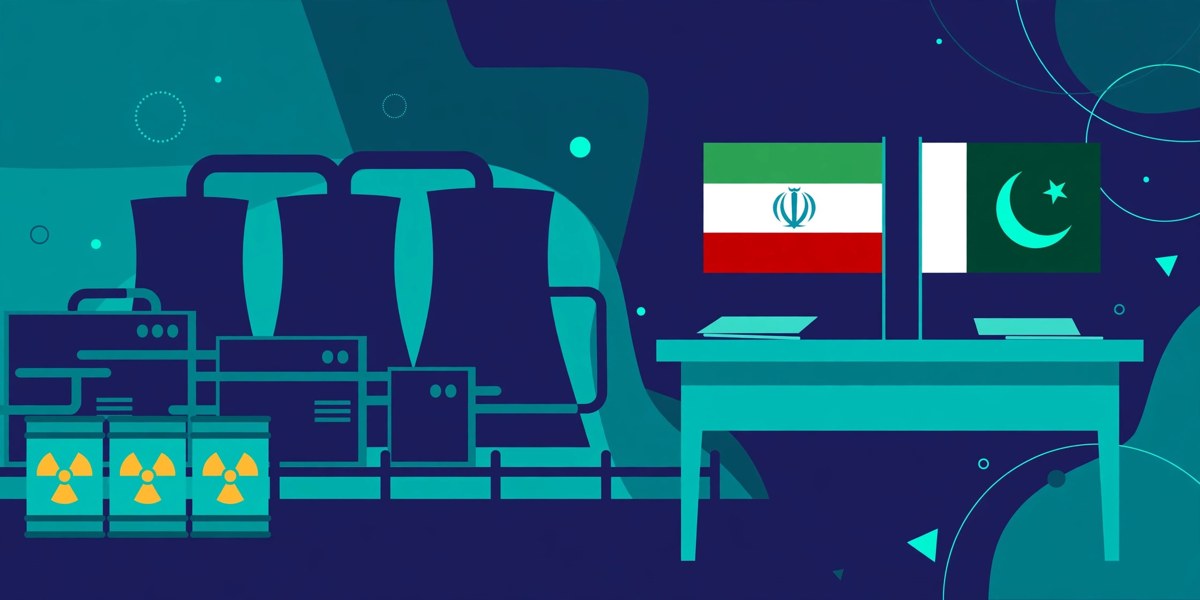
TEHRAN — Iran’s security chief Mohsen Rezaei told visiting Pakistani army chief Asim Munir on Tuesday that Tehran will not allow nuclear material to leave the country, according to state TV reporting carried by AFP.
“Not even a tiny bit of enriched nuclear material will leave Iran. Such materials constitute a major asset and national wealth for the Iranian people, intended for use within the country,” said Rezaei, secretary of Iran’s Supreme National Security Council, according to AFP. “There will be no negotiations until America takes steps to build trust — a process that must begin with the fulfilment of Iran’s conditions.” In a separate post cited in reporting, Rezaei added: “Today, our nation does not trust America. It believes that if we enter the negotiations, they (the Americans) will attack us again.”
Munir is in Tehran as part of Pakistan’s renewed push to mediate a peace deal in the conflict between the United States and Iran, according to AFP reporting. It is his fifth visit to Iran since June, and he met the country’s top leadership on Tuesday, accompanied by Pakistan’s interior minister Mohsin Naqvi, according to the reporting. Munir announced that the border between Iran and Pakistan had reopened, saying border-related problems had been resolved and crossings had resumed operations on Tuesday morning, according to Iranian reporting of the meeting.
The remarks harden a position Tehran has held through months of stalled diplomacy. The warring parties agreed a memorandum of understanding in June that was expected to create a framework for a permanent resolution, but the deal did not last long, and negotiations have effectively been at an impasse since, according to AFP. Recent indirect talks between the U.S. and Iran on the sidelines of the U.N. General Assembly failed to produce a breakthrough. Tehran had previously said it would not hand over its nuclear materials — enriched to 60 percent, close to the atomic-bomb threshold of 90 percent — to any country, but had hinted at the possibility of diluting them within Iran’s borders; in September, President Masoud Pezeshkian offered to dilute uranium enriched to 60 percent, according to reporting.
Iran’s stated conditions for resuming talks include ending a U.S. blockade on its ports, lifting all sanctions on Iran’s oil exports and ending hostilities on all fronts, according to reporting of Rezaei’s position. Washington and its allies have imposed waves of sanctions on Iran, accusing it of seeking to build nuclear weapons — a charge Tehran has long denied, AFP reported.
Why it matters: the stockpile of 60-percent enriched uranium is the central bargaining asset in any future U.S.-Iran settlement. By ruling out its removal entirely — rather than leaving open dilution or transfer — Tehran narrows the options available to Pakistani mediators and raises the price of restarting talks.
What happens next: Pakistan’s mediation continues, but with Iran publicly conditioning any negotiations on prior U.S. steps and refusing the uranium transfer that Washington has sought, no new round of talks has been announced. Read the original AFP report here.