
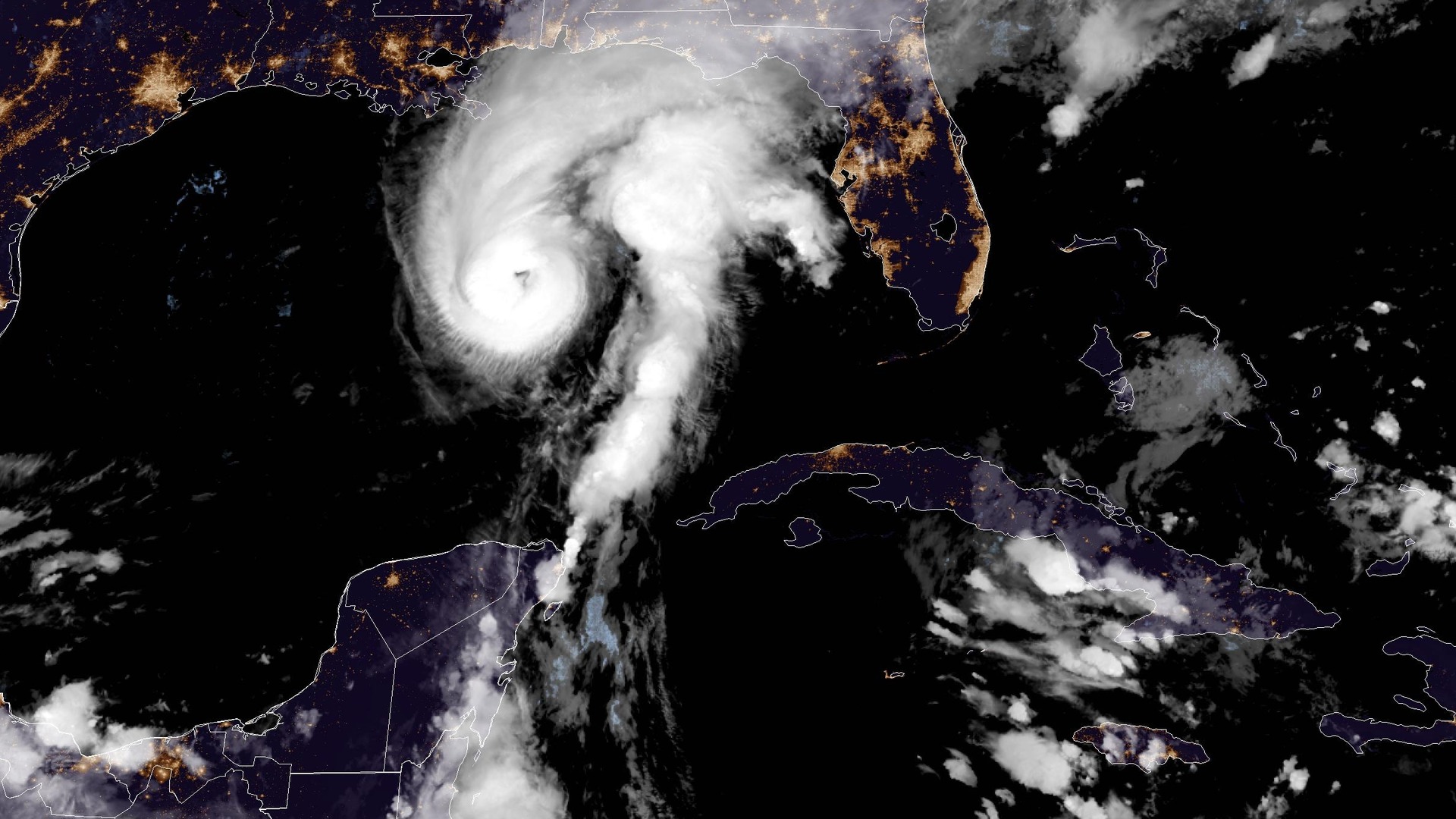
MIAMI — Hurricane Isaias is bearing down on the northern Gulf Coast and is expected to make landfall near Mexico Beach, Florida, on Friday evening, with maximum sustained winds near 110 miles per hour, the National Hurricane Center said.
Isaias was a high-end Category 1 hurricane early Friday, bordering Category 2 strength and sitting just below the 111-mph threshold for a Category 3 storm. The landfall zone stretches between eastern Mississippi and the Florida Panhandle.
The storm is the first hurricane of the 2026 Atlantic season — arriving four months after the season began — and would be the first U.S. hurricane landfall since Hurricane Milton struck in October 2024. Forecasters called it the latest first hurricane of a season in more than a century, not seen since 1905, and blamed the unusually quiet season on a powerful El Niño.
The National Hurricane Center’s warnings on Thursday were dire. A storm surge warning stretches from the mouth of the Mississippi River to the Steinhatchee River, with forecasters predicting peak surge of 5 to 7 feet from Ocean Springs, Mississippi, to Indian Pass, Florida, including Mobile Bay. Forecasters warned of 8 to 12 inches of rain near the landfall zone and a high tornado potential east of the storm’s center, with life-threatening surge arriving after dark.
About 30 million people live in the impact zone across Louisiana, Mississippi, Alabama and the Florida Panhandle. Evacuation orders were issued in parts of Dauphin Island, Alabama, and Okaloosa County, Florida. Alabama Gov. Kay Ivey declared a state of emergency in 40 counties on Oct. 7, schools were closed, and Mississippi’s coast saw its first evacuation order on Oct. 8.
The storm is also rattling energy markets. Gulf of Mexico oil producers shut in about 1.3 million barrels per day — roughly 63 percent of the Gulf’s production — on Thursday, according to the U.S. Marine Minerals Administration.
Early insured-loss estimates are preliminary. Gallagher Re estimated losses in the low- to mid-single-digit billions of dollars, while BMS Group put the range at $3 billion to $5 billion, both described as early broker estimates subject to revision.