
WASHINGTON — Air travel across the United States was still badly disrupted on Saturday, a day after the Federal Aviation Administration halted every departing flight in the country for more than four hours because of a communications failure in the air traffic control system.
The nationwide ground stop, issued at about 3:54 p.m. Eastern time on Friday and cancelled at 8:19 p.m., was the longest of its kind since the September 11 attacks, according to officials and flight-tracking firms. More than 2,500 flights within, into or out of the United States were cancelled on Saturday and hundreds more were delayed, according to FlightAware, as airlines worked to get aircraft and crews back into position.
Friday’s totals were far larger. Depending on the tracker and the time of the count, between about 6,000 and 8,800 U.S. flights were cancelled on Friday and roughly 10,000 were delayed. The aviation data firm Cirium estimated that about 1.5 million passengers were stranded or disrupted, and more cancellations were expected through the weekend.
Transportation Secretary Sean Duffy said new technology being added to the air traffic control system had overloaded older equipment, causing intermittent communications and radar gaps that forced the shutdown. The FAA has said the failure was not a cyberattack. Duffy warned travellers on Friday night that the recovery would not be quick, saying, “It’s going to be slow,” and that airlines might still be moving aircraft into position on Saturday morning.
Homeland Security Secretary Markwayne Mullin told reporters that no one had been in danger during the stoppage and that more than 3,000 flights already in the air landed safely on Friday. The ground stop held departures on the ground; it did not order aircraft already flying to land.
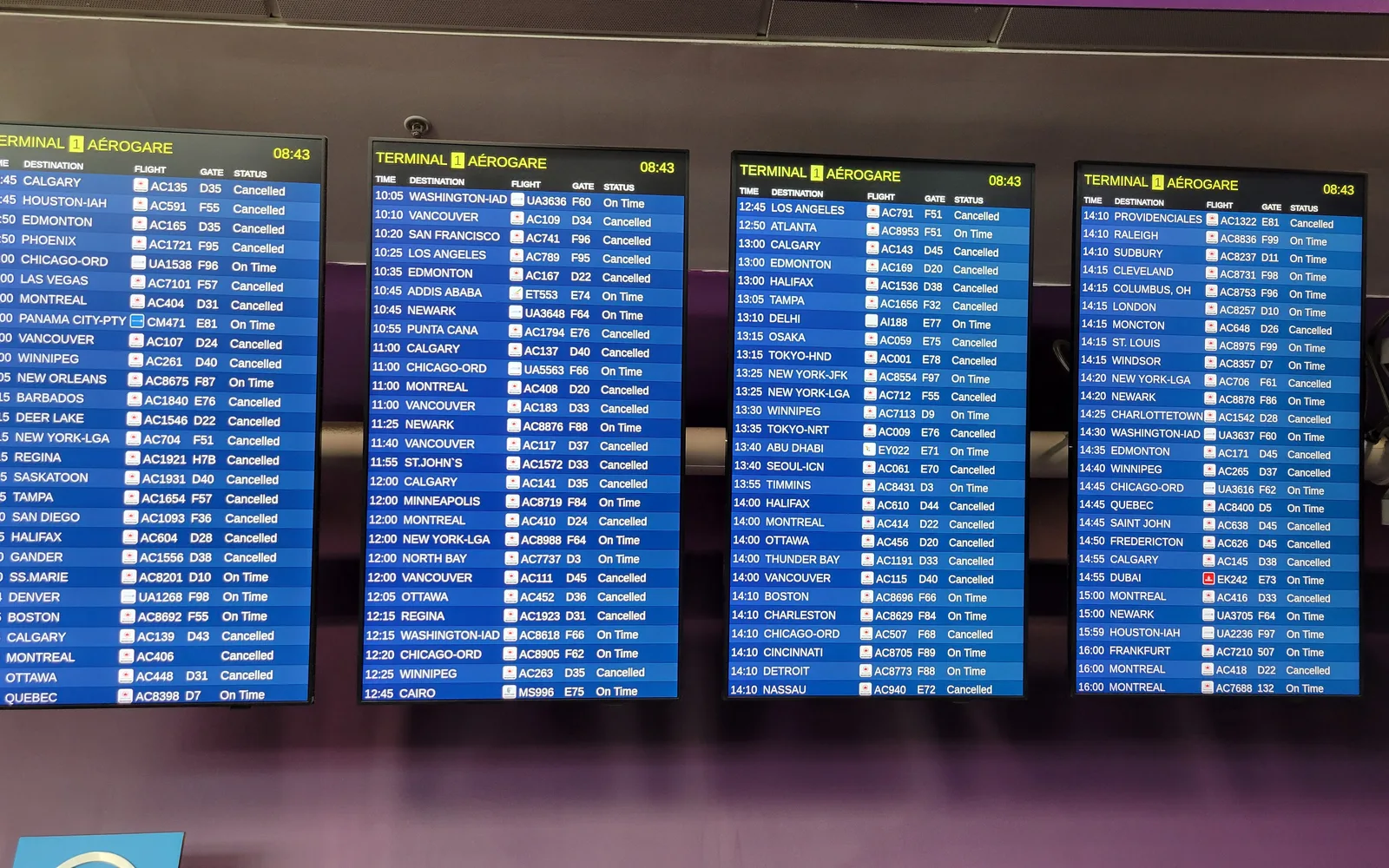
Delta Air Lines and United Airlines said they were resuming operations but warned that disruption could continue into the weekend. JetBlue cancelled its remaining Friday flights and expected further problems on Saturday, and Frontier said it was working to restore its schedule. At some airports, including Denver, departure boards still showed long lines of cancellations hours after the federal order was lifted, and long customer service queues formed as passengers tried to rebook.
The episode has renewed questions about the age of the systems that keep U.S. airspace running. Duffy used a White House briefing on Friday to argue that the air traffic system needs a major overhaul, a case the administration has been making as it seeks funding for new equipment. Aviation experts note that a single network failure was able to halt departures nationwide because so much of the system depends on the same ageing infrastructure.
For passengers, the advice from the FAA and the airlines was the same on Saturday: check the status of a flight directly with the airline before leaving for the airport, and do not assume that a flight will operate simply because the national restriction has ended. Officials said they expected the system to stabilise in time for the Thanksgiving travel rush, one of the busiest periods of the year.
Sources: Associated Press reporting on the airline recovery; FAA advisories and airline statements.
Update, Saturday, Nov. 14, 12:17 p.m. ET: Transportation Secretary Sean Duffy gave a fuller account of the failure at a Department of Transportation briefing on Saturday. He said the contractor L3Harris was switching a telecommunications line from copper wire to fiber at a remote FAA facility when the router being replaced began flooding other routers in the network, generating over 1,000 connection attempts every four to five seconds and disrupting communications and some radar feeds. Duffy said investigators have not yet determined whether the cause was installer error or a faulty router. FAA Administrator Bryan Bedford said the fault has been identified and that there is zero evidence of a cyberattack or of any link to artificial intelligence. Bedford also gave the recovery outlook: of the 41,000 flights scheduled on Saturday, between 4,000 and 5,000 are expected to cancel, and airlines expect to restore full schedule integrity by the close of business on Sunday. Duffy also pressed Congress for more modernization funding, saying he has requested $30 billion in total and will send a detailed written request to Capitol Hill on Monday. Watch: Duffy explains how the router flooded the network and Bedford says the worst is behind us.
