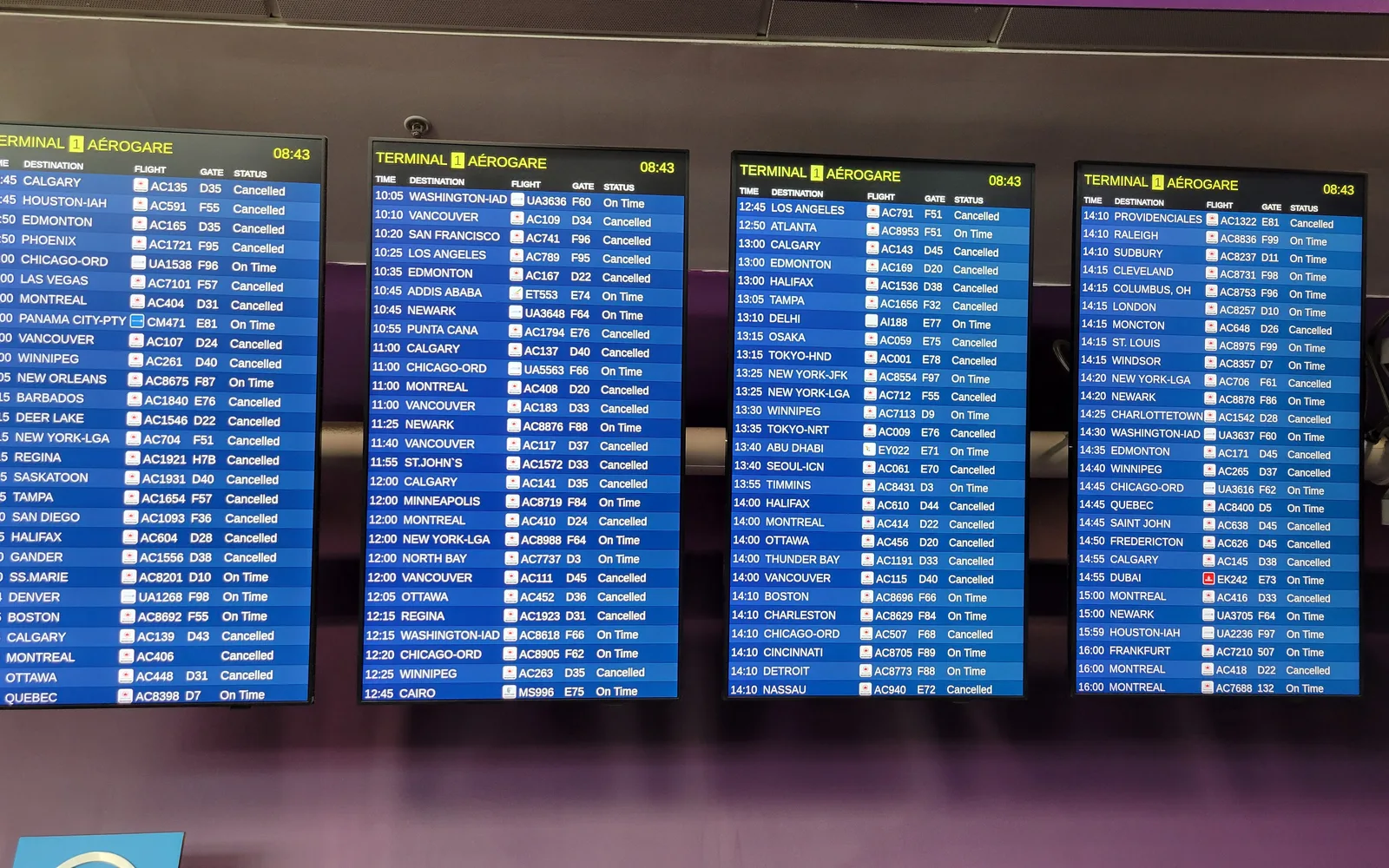
WASHINGTON. Every departing flight in the United States was held on the ground for more than four hours on Friday after a communications failure hit the air traffic control system. The Federal Aviation Administration lifted the nationwide ground stop on Friday evening, but airlines were still cancelling thousands of flights on Saturday as aircraft and crews sat in the wrong cities. Officials say the system is stable again and a full schedule should return by the end of Sunday.
Zark News covered the stop from the first order through the Saturday recovery briefing: the original ground stop report, the Saturday recovery story, and briefings from Secretary Sean Duffy and FAA Administrator Bryan Bedford.
Why it matters
A nationwide ground stop is rarely used for the whole country at once. Officials described Friday’s stop as the longest nationwide halt since the September 11 attacks, and the first since January 2023. That a single network fault during routine maintenance could stop departures everywhere is the central question, weeks before the Thanksgiving rush.
What we know
- The stop itself. The FAA ordered the stop at about 3:54 p.m. Eastern on Friday, November 13, citing a communications failure affecting the regional centers that guide aircraft between airports, according to FAA advisories reported by Zark News. Flights already in the air were not ordered down. About 3,500 aircraft were airborne at the time, officials said on Saturday, and all landed safely. The FAA cancelled the stop at 8:19 p.m.; Duffy put the reopening at 8:15 p.m.
- The official account of the cause. On Saturday, Duffy said contractor L3Harris was switching a telecommunications line from copper wire to fiber at a remote FAA facility when the router being replaced began flooding other routers, with more than 1,000 connection attempts every four to five seconds. That disrupted communications and some radar feeds, and officials shut departures down rather than risk losing contact, according to Duffy’s account at Saturday’s briefing, reported by Zark News.
- What it was not, on the official account. Bedford said investigators see zero evidence of a cyberattack, of anything nefarious, or of a link to artificial intelligence, and Duffy said the FAA’s new SMART airspace tool had zero impact. Those are officials’ statements about the evidence so far, not a final root-cause finding.
- The scale on Friday. Bedford said 50,000 flights were scheduled on Friday, about 30,000 had been completed when the stop came, and of the 20,000 still to fly, airlines recovered about 8,000. The other 12,000 were lost, roughly 9,000 commercial flights and 3,000 private and general aviation flights. Cirium estimated about 1.5 million passengers were stranded or disrupted, according to the Associated Press.
- The recovery. Bedford apologized on Saturday and said the system remained stable, and Duffy said air traffic control was back at full operations, with Saturday’s disruption coming from aircraft and crews out of position. Of 41,000 flights scheduled on Saturday, Bedford expected 4,000 to 5,000 to cancel, setting up full schedule integrity by the close of business on Sunday.
What we still don’t know
- The root cause. Duffy said investigators have not determined whether the fault was installer error by L3Harris or a faulty router. A full root-cause analysis has not been published. The remote facility has not been publicly named in the reporting reviewed, and L3Harris had not commented in the NPR reporting reviewed on Saturday.
- The final totals. Counts differ by tracker and by time of day. A snapshot at 8 p.m. on Friday put cancellations above 5,000. Later counts ran higher: Zark News put Friday’s totals at between about 6,000 and 8,800 cancellations depending on the tracker and the time of the count, and a full-day FlightAware tally reported by Fox Weather put Friday cancellations above 9,100. None of these is a final official total, so this piece uses Bedford’s Saturday accounting for flights lost to the stop itself.
- Whether Sunday’s recovery holds. Full schedule integrity by Sunday evening is an expectation stated on Saturday, not a result. Crew and aircraft positioning could still extend disruption.
- What Congress will fund. Duffy said 69 percent of copper lines have been replaced with fiber under a $12.5 billion modernization down payment, and that he has requested $30 billion in total. Whether Congress approves the rest is undecided.
What’s next
Watch Sunday first: whether cancellations fall as Bedford forecast is the earliest test of the recovery claim. Duffy said he will send Congress a detailed funding request on Monday. The FAA’s root-cause analysis, and any response from L3Harris, will decide whether Friday is remembered as a contractor error, an equipment failure, or a warning about the age of the network.
Timeline
- January 2023: The last nationwide ground stop before Friday, caused by a failure in the FAA system that sends safety notices to pilots.
- Friday, November 13, about 3:10 p.m. ET: The FAA first stops flights headed to Chicago O’Hare, then Midway minutes later, citing an equipment outage, according to Zark News.
- Friday, November 13, about 3:54 p.m. ET: The FAA issues the nationwide ground stop for all departing flights.
- Friday, November 13, 5:46 p.m. ET: A later advisory begins a phased release of departures while the national stop remains in effect.
- Friday, November 13, about 8:15 to 8:19 p.m. ET: Departures resume; the FAA advisory cancelling the stop is issued at 8:19 p.m.
- Saturday, November 14, morning: Duffy gives the router account; Bedford apologizes, gives the Friday accounting of 12,000 lost flights, and forecasts 4,000 to 5,000 Saturday cancellations.
- Sunday, November 15: Airlines and the FAA expect full schedule integrity by the close of business, according to Bedford.
- Monday, November 16: Duffy says he will send Congress a detailed modernization funding request.