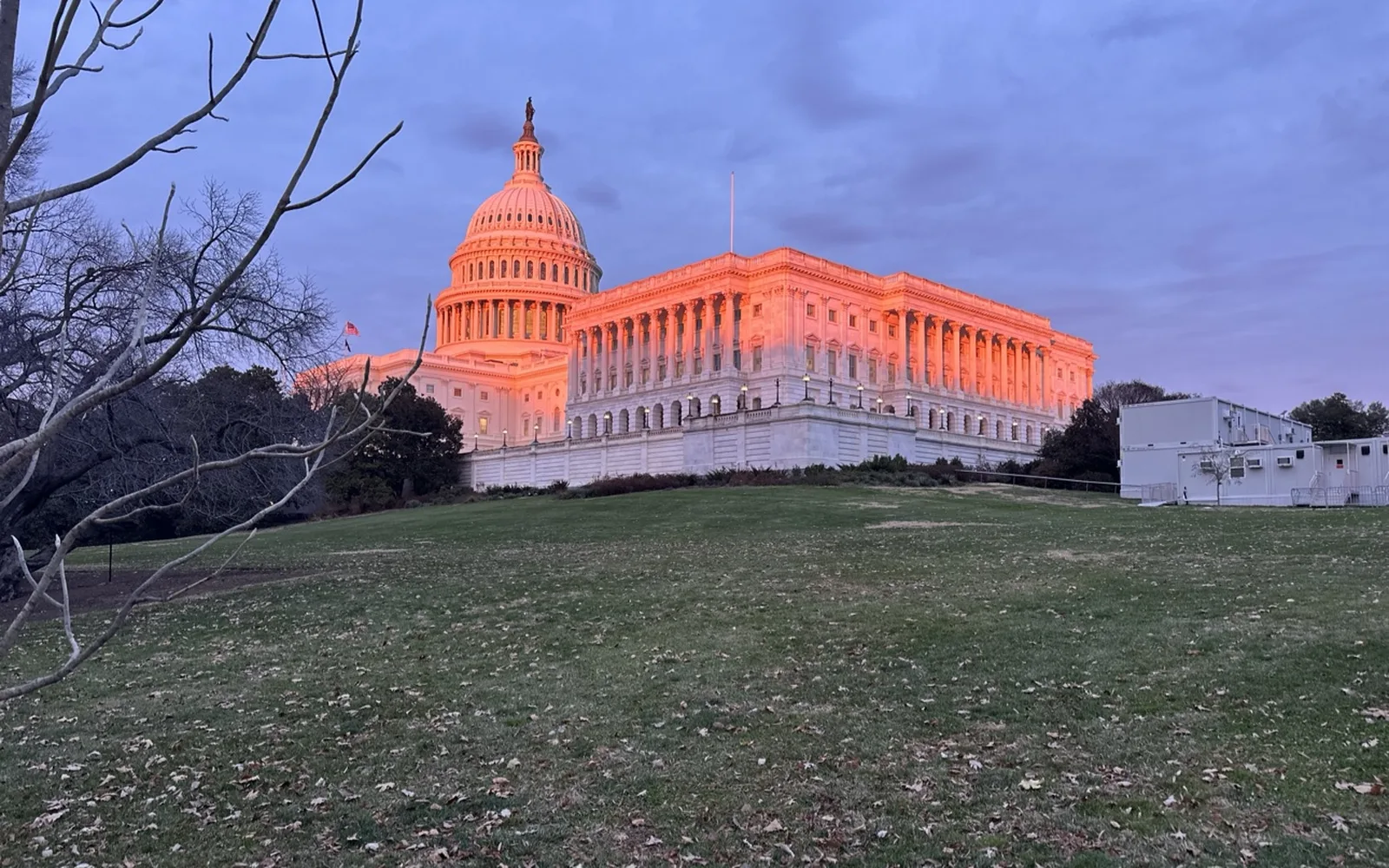
WASHINGTON. Democrats won control of both the Senate and the House in Tuesday’s midterm elections, taking seats in states Republicans had held for decades and ending two years of one-party Republican rule in Washington, according to race calls by the Associated Press. The new Congress takes office in January, setting up two years of divided government for the final half of President Donald Trump’s term.
Why it matters
Congress writes the spending bills, runs investigations, and, in the Senate, confirms the president’s nominees, including any Supreme Court justice. For two years, a Republican Congress rarely challenged Mr. Trump, according to Reuters. From January, Democrats will set the agenda in both chambers, can investigate the administration, and can block nominees. Mr. Trump keeps the presidency, the veto, and control of foreign policy, so neither side can govern alone.
What we know
- Democrats flipped seven Republican-held Senate seats, in Iowa, Kansas, Maine, North Carolina, Ohio, South Carolina and Texas, and held every Democratic seat that was contested, according to AP race calls tallied by CNN and NPR. In Kansas, Adam Hamilton became the state’s first Democratic senator since 1932; in Maine, Troy Jackson beat Susan Collins, a five-term Republican.
- The House flipped too. The AP called the House for Democrats in the early hours of Wednesday. In the races called by Wednesday morning, Democrats had won 222 seats, past the 218 needed for a majority, according to AP tallies. House Democratic leader Hakeem Jeffries is in line to become Speaker, which would make him the first Black speaker in U.S. history.
- Texas produced the night’s biggest shock. State Representative James Talarico beat Attorney General Ken Paxton for the U.S. Senate, and State Representative Gina Hinojosa beat three-term Governor Greg Abbott, according to the AP, the first Democratic statewide wins in Texas since 1994, as Zark News reported.
- History was made in the governor’s races. Keisha Lance Bottoms of Georgia became the first Black woman elected governor of a U.S. state, and Democrats flipped five governorships in all, according to the AP (Zark News).
- Voters pointed to prices and the Iran war. In the AP Voter Poll, about nine in ten voters called the cost of living a crucial or major factor, more than six in ten said the U.S. made the wrong decision in taking military action against Iran, and close to two-thirds said Mr. Trump’s tariffs had hurt the economy. Half said they saw the vote as a chance to rebuke the president, according to Reuters.
- Mr. Trump conceded ground, then defended himself. On election night he told The Wall Street Journal the Iran war was “a piece of it,” blaming higher gasoline prices, but said he did not regret it. On Wednesday, in his first on-camera remarks since the results, he called the war “worth it,” said he would have won “if I was on the ballot,” and reminded Democrats he holds “the power of the veto,” as Zark News reported. The full Zark News account is here.
What we still don’t know
- The final size of either majority. Counting continued Wednesday in many House districts, 75 races were still uncalled Wednesday morning, and the Senate races in Alaska and Mississippi had not been called. Alaska’s ranked-choice count is set for Nov. 18.
- Whether the results change the Iran war. The war, now in its eighth month, was a clear drag on Republicans, and a senior Iranian official told Reuters on Tuesday the two sides remain far from a deal. Whether Mr. Trump seeks a settlement or orders new strikes before January is not yet clear. Zark News covered the war’s shadow over the new Washington here.
- What Democrats will do first. Leaders have promised investigations and checks on the president, but their first bills, and how far they will push on issues such as impeachment, which Mr. Trump dismissed Wednesday, have not been set out.
- Whether any result is challenged. These are race calls by news organizations, not final certified results. State certification comes later, and no major legal challenge had been reported by Wednesday afternoon.
What’s next
Counting and state certification continue through November, with Alaska’s ranked-choice tabulation on Nov. 18. The current Republican Congress still sits until the new Congress is sworn in in January 2027; until then, Mr. Trump governs with the old Congress and full control of foreign policy, including the Iran war. In January, Democrats take the gavels and the Senate’s power over nominees, and divided government begins.
Timeline
- May 2026, Ken Paxton beats Senator John Cornyn in a Texas Republican primary runoff, setting up the most expensive Senate race in U.S. history, according to CNN.
- Nov. 3, 2026 (evening), Polls close. Roy Cooper’s North Carolina win is the first Senate seat to change parties; the AP calls the Texas Senate race for James Talarico at about 10 p.m. Eastern.
- Nov. 4, 2026 (about 1:28 a.m. Eastern), The AP calls the House for Democrats, completing the party’s capture of Congress.
- Nov. 4, 2026, Mr. Trump defends the Iran war as “worth it” and says he would have won had he been on the ballot.
- Nov. 18, 2026, Alaska’s ranked-choice tabulation is scheduled, which should settle its uncalled Senate race.
- January 2027, The new Democratic-led Congress is sworn in, and divided government begins.