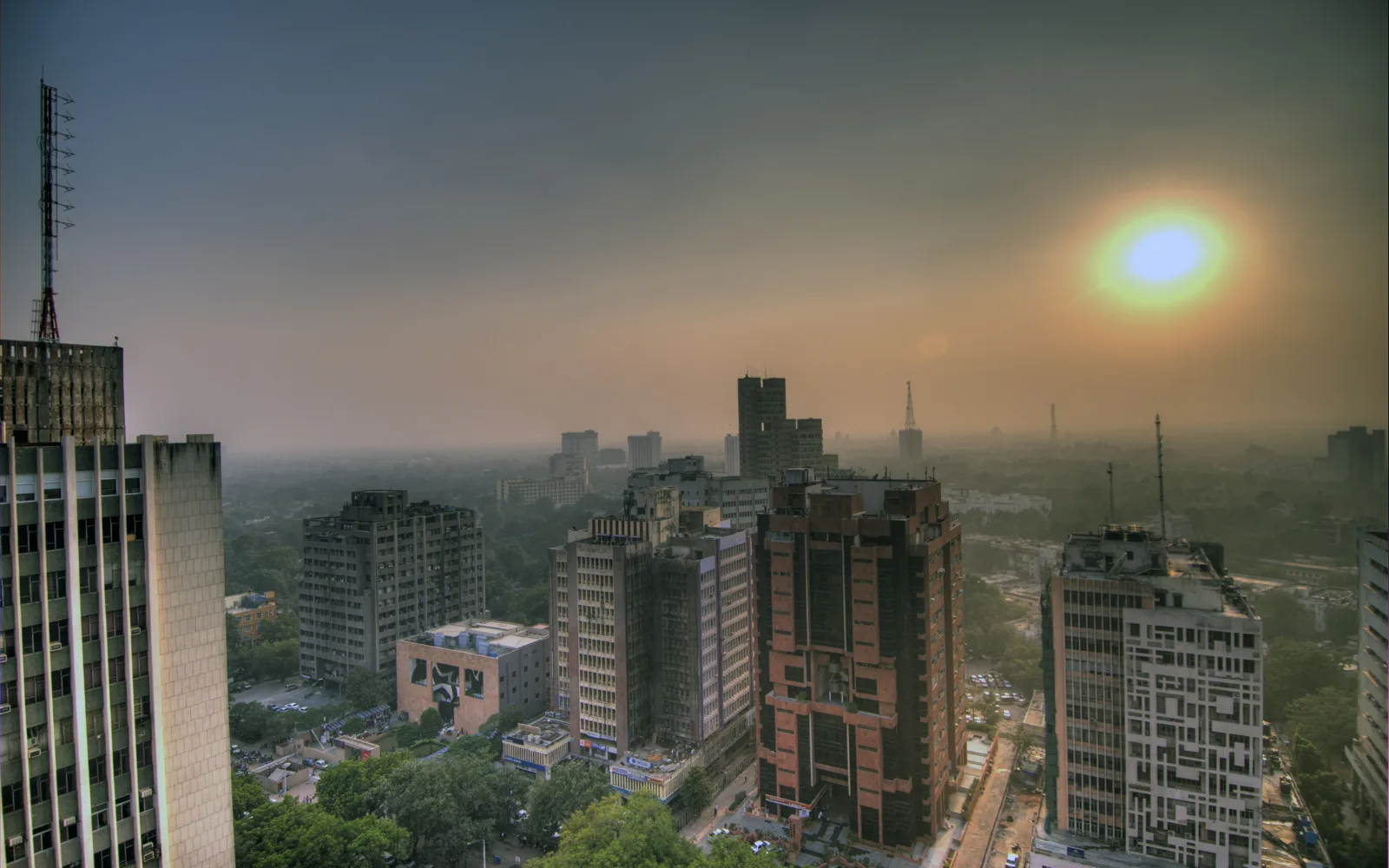
NEW DELHI — Toxic air in parts of India’s capital rose to more than 58 times the World Health Organization’s recommended daily limit on Monday, a day after Diwali fireworks filled the city with smoke, according to air monitor data reported by AFP.
At Mandir Marg, levels of PM2.5, the fine particles small enough to enter the bloodstream, reached 879 micrograms per cubic metre early on Monday, about eight hours after the peak of the fireworks, according to the monitoring firm IQAir citing a city government station. The WHO guideline for average exposure over 24 hours is 15 micrograms per cubic metre. Other available readings pointed higher still: concentrations topped 900 micrograms per cubic metre at several locations, according to the data reported on Monday.
The official picture was incomplete. At least 44 of the Central Pollution Control Board’s 59 monitoring stations in the capital failed to show particulate readings during the episode, according to Manoj Kumar, an analyst at the Centre for Research on Energy and Clean Air, who said the gap may have understated the severity in official averages as readings approached the monitors’ upper limit of 1,000 micrograms. Across Delhi, the official air quality index hovered around 370, in the band the government calls “very poor,” while IQAir reported index readings above 2,000 at multiple locations. India’s official index scale ends at 500.
The smog arrived despite emergency curbs. The Commission for Air Quality Management had invoked Stage III of the capital region’s graded response plan on Friday, restricting construction and older vehicles, when the citywide index stood at 382, and forecasters had warned the air would stay in the severe category through Monday. The Supreme Court had allowed the limited use of so called green firecrackers, designed to produce fewer emissions, during the festival.
Delhi’s winter pollution has standing causes beyond fireworks. India’s environment ministry attributes about 23 percent of winter pollution to vehicles and about 20 percent to biomass burning, including crop stubble fires in neighbouring states, which emergency rules inside the capital cannot reach. The health stakes are long term as well as immediate: a 2024 study in The Lancet Planetary Health estimated that 3.8 million deaths in India between 2009 and 2019 were linked to air pollution. The capital has recorded just one day of “good” air quality in 2026, according to the pollution control board.
What happens next depends on weather and enforcement. Forecasters expect the haze to ease only as winds pick up, and officials face the same argument that follows every Diwali: whether festival fireworks, farm fires or year round traffic and industry should carry the blame, and whether the monitoring network that is meant to measure the crisis can be kept working through its worst nights.