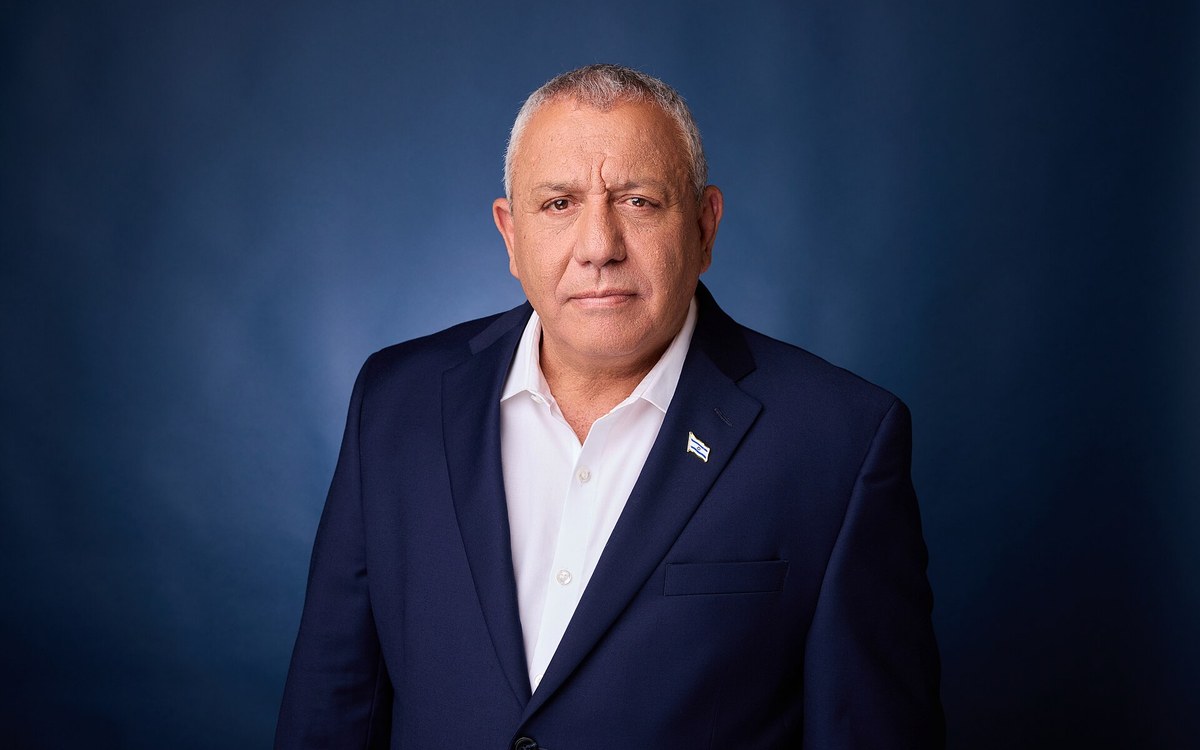
JERUSALEM — Israel’s president has given Gadi Eisenkot, the former army chief who challenged Benjamin Netanyahu in last month’s election, the first chance to form a new government. The choice is a setback for Netanyahu, Israel’s longest serving prime minister. It does not remove him from office, and Eisenkot’s road to power runs through allies who disagree with each other.
President Isaac Herzog announced the decision on Saturday night, after a week of meetings with the parties that won seats in the Oct. 27 election. He will hand Eisenkot the formal task at a ceremony at the President’s Residence on Sunday at 5 p.m. local time. The announcement had been expected on Sunday. It came a few hours after Netanyahu released a video calling for a national unity government.
The math behind the decision
The Oct. 27 vote was Israel’s first national election since the Hamas-led attack of Oct. 7, 2023, and the wars that followed. It ended without a winner. Netanyahu’s Likud won 27 seats, more than any other single party, but his bloc of religious and nationalist parties holds 53 seats in the 120 seat Knesset, Israel’s parliament. That is eight short of the 61 needed to govern. Eisenkot’s Yashar party won 21 seats, and his wider bloc of opposition parties holds 48. The two Arab-led parties, Ra’am and the Joint List, won 19 seats between them, a record.
When the parties met the president this week, 67 lawmakers said Eisenkot should get the first chance. Forty-six backed Netanyahu. Eisenkot’s 67 includes all 19 lawmakers from the Arab-led parties. One of Netanyahu’s longtime allies, the ultra-Orthodox party United Torah Judaism, declined to recommend him this time.
A plan built on a minority
Eisenkot wants to move fast. He calls his plan a national emergency government. It would start as a minority government of the four Jewish opposition parties, which hold 48 seats together: his own Yashar, the Together party of former prime ministers Naftali Bennett and Yair Lapid, Avigdor Liberman’s Yisrael Beiteinu, and the Democrats, led by Yair Golan. Other parties could join later if they accept his four conditions. The conditions are that Israel stays a Jewish, democratic, liberal and equal state, that the values of the Declaration of Independence are kept, that everyone serves the country in the military or in civilian service, and that Hamas is recognized as a terrorist organization.
The last condition, in practice, keeps the Arab-led parties out of the cabinet. They could still support the government from outside, and the Joint List says its backing was meant to stop Netanyahu returning to power, not to join the government. But Liberman has ruled out any government that depends on Arab party support. He argues that a minority government would be short lived and would only bring Netanyahu back stronger. He wants Eisenkot to pull the two ultra-Orthodox parties into a coalition of 61 instead.
Herzog himself named the problem before deciding. After the consultations he said the recommendations looked clear, but who can actually build a government was not entirely clear, because the blocs veto each other.
The fight is already public
In his video on Saturday, Netanyahu called for a national unity government of all Zionist parties. “This is the time for unity,” he said. He warned that a minority government backed by the Arab-led parties would put Israel’s survival at risk, and he has claimed, without public evidence, that Arab parties stole the election through bribery and foreign funding.
Eisenkot’s party dismissed the video as a “pathetic spin.” It answered that if Likud wants a broad unity government, it can announce the end of its alliance with what it called the extremists and join a government under Eisenkot. On Friday, Eisenkot wrote that letting a caretaker prime minister who has lost the public’s trust keep running the security system is a dangerous situation that must not continue for even one more day.
What happens next
The new Knesset is sworn in on Tuesday, and its first fight will be over choosing a speaker. From Sunday, Eisenkot has 28 days to build his coalition. The president can give him 14 more. If he fails, the task is expected to pass to Netanyahu, who would get four weeks of his own. If neither man can build a government, Israel could face another election early next year. Through all of it, Netanyahu stays in office as caretaker prime minister.
For readers in the United States, the stakes travel. Israel is Washington’s closest partner in the Middle East, and whoever forms the next government will handle the unfinished files of the Gaza and Lebanon wars and the standoff with Iran. A change at the top in Jerusalem would end the long Netanyahu era. A deadlock would keep it going by default.
Can a government built from rivals who veto each other hold together? Tell us what you think in the comments.
Reporting note: This story is based on reporting by The Associated Press, CNN, USA Today, The Media Line and Israeli outlets including the Times of Israel and JFeed, and on public statements by President Herzog’s office, the Yashar party and Prime Minister Netanyahu. Photo: Gadi Eisenkot in June 2026, by Yahav Trudler (Yahav Studio), from Eisenkot’s spokesperson’s office, via Wikimedia Commons, CC BY-SA 3.0. The photo was cropped to the site’s standard size.