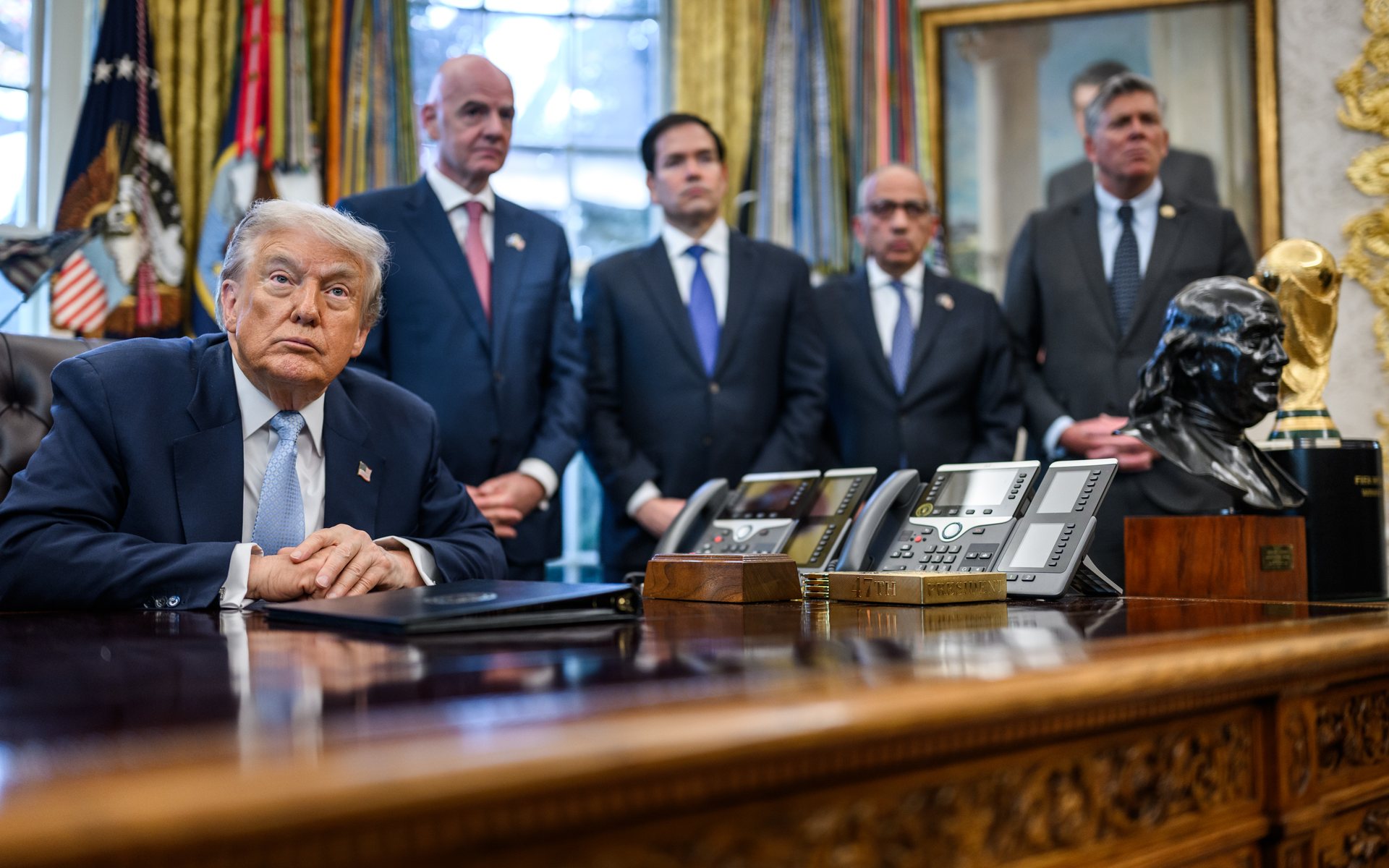
WASHINGTON — Donald Trump is not running for office Tuesday. But the results could change how much he can accomplish during the final two years of his presidency.
Americans will elect all 435 members of the House of Representatives and 35 senators. The results will determine which party controls Congress — and how easily Trump can pass laws, secure funding and get his nominees approved.
Trump has already warned Republicans about the consequences of losing.
“You got to win the midterms because if we don’t win the midterms, it’s just going to be — I mean, they’ll find a reason to impeach me,” he told Republican lawmakers in January. “I’ll get impeached.”
He has spent the final days of the campaign urging supporters to turn out and vote:
TO THE GREAT PEOPLE OF INDIANA, GET OUT AND VOTE for these Great Patriots! They have my Complete and Total Endorsement and will never let you down! President DONALD J. TRUMP — swampthevoteusa.com/indiana/
— Donald J. Trump (@realDonaldTrump) November 2, 2026
But what would actually happen if Democrats won?
First, the Numbers
Republicans currently control both chambers of Congress, but their House majority is narrow.
The House has 218 Republicans, 214 Democrats, one independent and two vacant seats.
In the Senate, Republicans hold 53 seats. Democrats and two independents who work with them hold the other 47.
Democrats need to win at least 218 House seats to control that chamber. They would also need a net gain of four Senate seats to take control there. A gain of three would tie the Senate 50 to 50, and Vice President JD Vance’s tie-breaking vote would keep Republicans in control.
A divided Congress would make it harder for either party to pass major legislation without negotiating. The sharpest fights usually come over money: Congress must approve government spending, and deep disagreement can delay funding or even shut down parts of the federal government.
What is expected? Election forecasters say Democrats are favored to win the House. The Senate is a harder climb, because Democrats must win several states Trump carried. Polls asking voters which party they prefer for Congress have favored Democrats for months. But polls are not results, and in recent elections they have often underestimated Republicans. Nothing is decided until the votes are counted.

If Democrats Win the House
Three important things could change.
1. More investigations of Trump
Democrats would gain control of House committees. They could investigate the administration’s decisions on immigration, government spending, tariffs and other issues.
Committees can demand records, hold hearings and, within their legal authority, require witnesses to testify.
2. Trump’s plans would face more opposition
Major legislation must pass both the House and Senate.
A Democratic House could block Republican proposals on taxes, immigration and spending. Trump would need Democratic support to pass new laws.
That would not stop every part of his agenda. He could still use presidential powers, although those actions would remain subject to the law and court challenges.
3. Impeachment could return
The House can vote to impeach a president by a simple majority.
Trump was impeached twice during his first term and acquitted both times by the Senate.
If Democrats win the House, they could consider impeachment again. But winning control would not mean they would necessarily pursue it.
Removing a president requires a two-thirds vote in the Senate, a much higher threshold.
What if Democrats Win the Senate Too?
Trump would face another obstacle.
The Senate votes on presidential nominees, including federal judges, Cabinet officials and ambassadors.
A Democratic-controlled Senate could reject or delay nominees, making it harder for Trump to fill important government positions.
It could also influence any future Supreme Court appointment.
What if Republicans Keep Congress?
Trump would continue working with Republican leaders in both chambers.
They could pursue additional legislation on taxes, immigration, energy and government spending.
But Republican control would not guarantee success. Lawmakers can disagree within their own party, and some Senate legislation requires 60 votes to overcome procedural obstacles.
Republicans argue that keeping Congress would allow them to continue policies they say have strengthened border security, reduced taxes and supported economic growth.
Democrats argue that changing control would provide stronger oversight of the administration and give them more influence over federal policy.
What Would Stay the Same?
Regardless of Tuesday’s results, Trump remains president until January 2029.
He would still be able to veto legislation, conduct foreign policy, issue executive orders within his legal authority and exercise other presidential powers.
Congress could block legislation, investigate his administration and challenge its spending decisions. It could not simply take over the presidency.
And the new Congress would not take office immediately. Members elected Tuesday begin their terms on January 3, 2027.
What to Watch Tuesday Night
Virginia will be one of the first states to report results; its polls close at 7 p.m. Eastern. Close Virginia House races — including the 1st District contest between Republican Rob Wittman and Democrat Shannon Taylor — will give an early hint of how the night is going nationally.
Why Tuesday Matters
The election will decide more than which party has the most seats in Congress.
It will determine who writes legislation, who leads congressional investigations and how much cooperation Trump needs to advance his priorities.
A Democratic victory in one or both chambers would change the relationship between Congress and the White House. Republican control would preserve more opportunities for the president and his party to pursue their shared agenda.
For the next two years, those differences could shape decisions affecting taxes, healthcare, immigration and federal spending.
Trump will remain president after Tuesday. The question is how much support — or opposition — he will face in Congress.