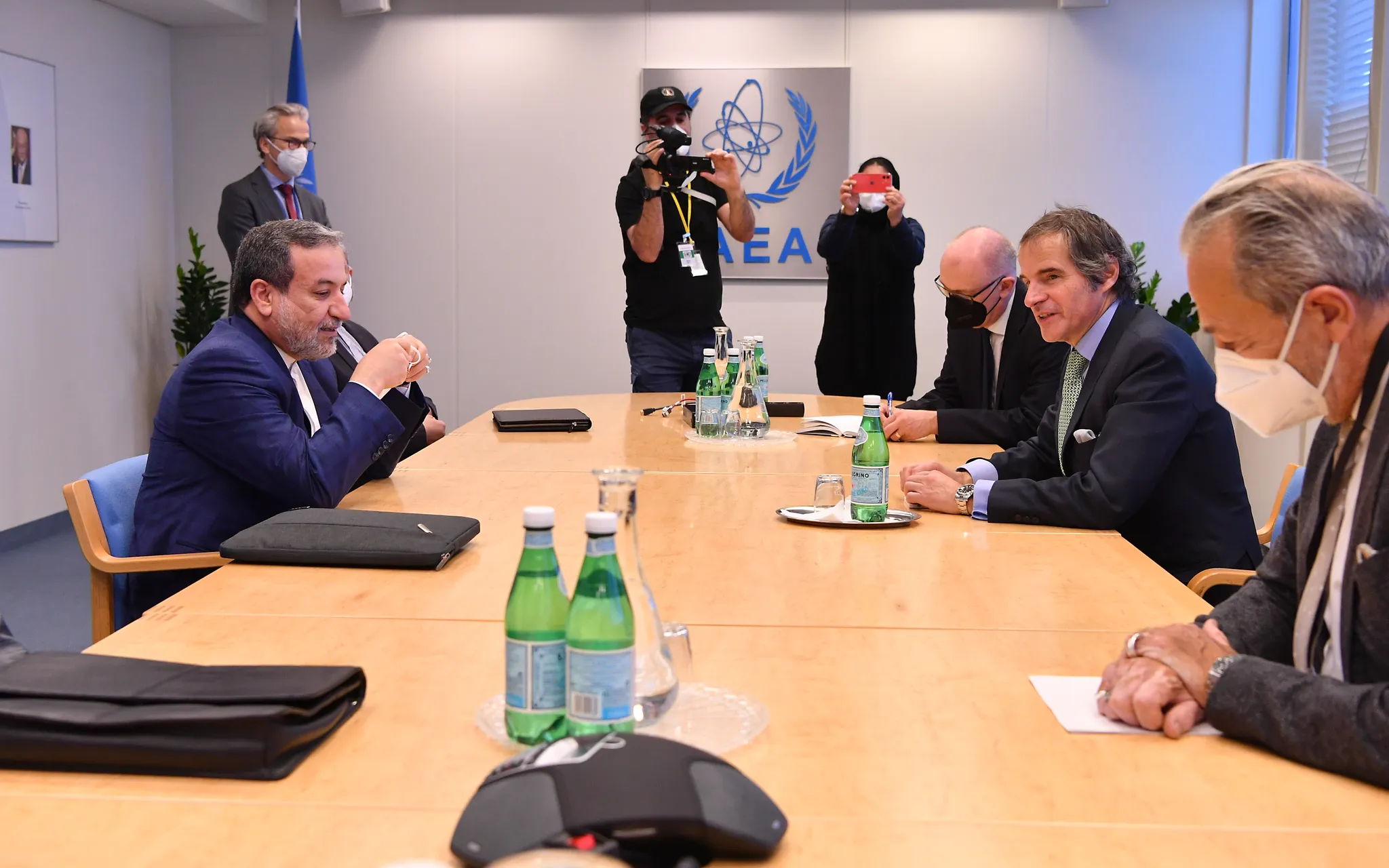
TEHRAN — Senior security officials from Saudi Arabia, Pakistan and Türkiye met Iran’s leaders in Tehran on Monday in the first high-level contact between Tehran and all three members of the Mecca mutual defence pact since the regional war spread to Saudi Arabia, according to Reuters.
Saudi Arabia was represented by Defence Minister Prince Khalid bin Salman, Pakistan by army chief Field Marshal Asim Munir and Türkiye by intelligence chief Ibrahim Kalin, Saudi and Iranian officials said. Iranian state television showed the officials arriving in the capital and being received. Foreign Minister Abbas Araghchi also took part, and Iranian state media published pictures of President Masoud Pezeshkian attending.
The Saudi Foreign Ministry said the visit was part of efforts to “de-escalate” and “promote dialogue and diplomatic solutions,” and stressed the need to open negotiating channels to “prevent the return of military escalation,” according to Reuters. Saudi deputy minister Rayed Krimly said the delegation would meet Iranian President Masoud Pezeshkian and Mohsen Rezaei, secretary of Iran’s Supreme National Security Council.
Iranian officials framed the meeting in somewhat different terms. Ali Bagheri Kani, the deputy secretary of the Supreme National Security Council, told state television that the three countries’ officials would hold consultations with the council, and said the four countries could together take an effective step toward establishing what he called “endogenous security” — a regional order led by the region’s own states. Other Iranian reporting said a first purpose of the visit was to congratulate Rezaei on taking up the security post in August.
According to Reuters, a senior Iranian official said the meeting was initiated by Pakistan during Munir’s visit to Tehran last week, when he met Pezeshkian and other senior officials and was told there would be no talks with Washington until Tehran’s demands were met. Qatari mediators also met Iranian officials in Tehran on Sunday in a parallel push to lower tensions, Reuters reported.
No joint statement, agreement or detailed readout of Monday’s talks had been issued by either side as of Monday evening, and neither government said whether the delegation put specific proposals to Tehran — including on Yemen, where Iran-aligned Houthi forces have sharply escalated missile and drone attacks on Saudi Arabia in recent weeks.
The talks took place as Yemen’s Houthi movement said it had attacked Saudi oil pumping stations and Riyadh’s airport again on Monday; there was no immediate Saudi confirmation of those claims.
The meeting’s significance lies in who was sitting across the table. The three visitors are bound to Riyadh, and to each other, by the Mecca Joint Defence Agreement signed in August, under which an armed attack on one member is treated as an attack on all; the pact’s text, seen by Reuters, commits signatories to use “all necessary means” to eliminate threats to one another’s territory and sovereignty. Pakistan’s parliament approved the pact last week, while ratification in Türkiye’s parliament is still under way. Earlier this month the pact’s members held an emergency meeting in Riyadh and agreed to ensure the rapid deployment of military forces and capabilities to Saudi Arabia.
The bloc assembled in response to the attacks on Saudi Arabia thus sat down with the country Riyadh and Washington regard as the Houthis’ principal backer — on the same day the Saudi-led coalition was striking Houthi missile facilities in Yemen. Pakistan and Qatar have led mediation efforts in the war, and earlier diplomacy helped produce an interim peace agreement in June before fighting between Iran and the United States resumed, according to Reuters.
Monday’s talks also extended a diplomatic track Pakistan has been building in person. On Friday, Deputy Prime Minister and Foreign Minister Ishaq Dar joined the foreign ministers of Türkiye, Saudi Arabia and Egypt in Istanbul for the first meeting of the regional R4 group with ministers from France, Germany, Italy and the United Kingdom, where the ministers expressed solidarity with Saudi Arabia, condemned the Houthi attacks and demanded unimpeded passage through the Strait of Hormuz.
What happens next may depend on Washington as much as Tehran. Both the United States and Iran have drawn up plans to restart the wider war, possibly after the US midterm elections on November 3, according to Reuters, and President Donald Trump has repeatedly suggested he could resume bombing Iran. Brent crude, the global oil benchmark, traded just under $115 a barrel on Monday on fears of renewed fighting.
Separately on Monday, Egypt — which is not a signatory to the pact — authorized its military to help defend Saudi Arabia if Riyadh requests it. https://zarknews.com/egypt-delays-parliament-vote-on-military-support-for-saudi-arabia-until-october-26/