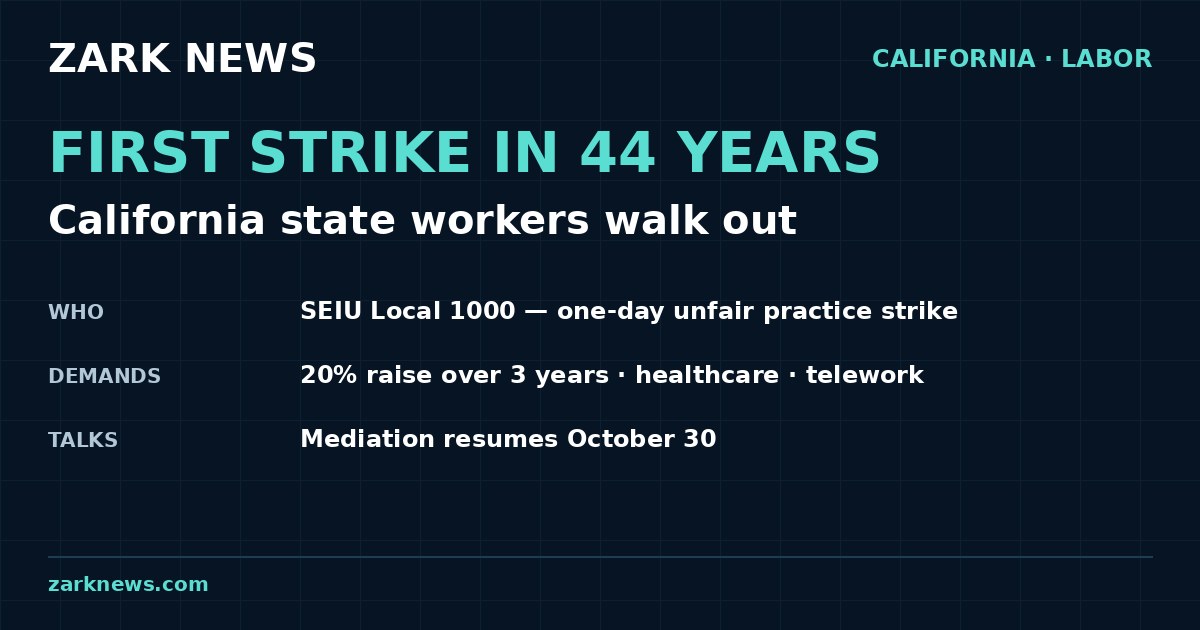
Tens of thousands of California state workers walked off the job on Wednesday in a one-day strike over pay, healthcare costs and the Newsom administration’s return-to-office mandate, the first statewide strike in the 44-year history of SEIU Local 1000, the state’s largest public-employee union.
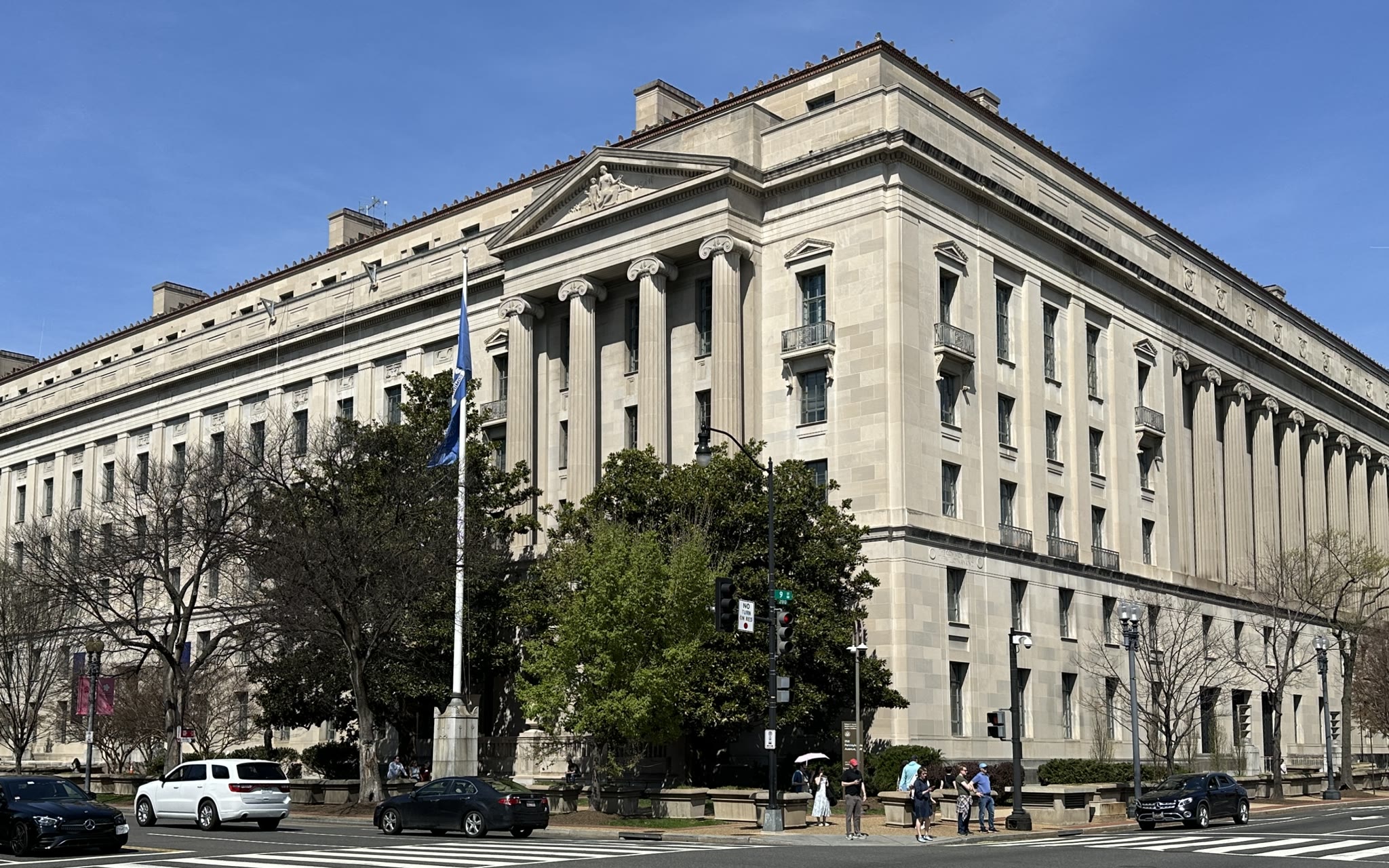
Picket lines went up from 7 a.m. in Sacramento, Oakland, Fresno, San Francisco, Los Angeles, San Diego, Norwalk and San Bernardino. In the capital, demonstrators targeted the headquarters of the California Department of Human Resources (CalHR) and other state buildings, with a midday rally at CalHR and another at the Ronald Reagan State Building in Los Angeles. The Associated Press reported just after midnight that the strike would go ahead after no last-minute agreement was reached overnight.
What the union is asking for
Local 1000, which represents about 100,000 state employees, is seeking a general salary increase of 20% over three years, structured as 7% in 2026, 7% in 2027 and 6% in 2028, together with more affordable healthcare coverage and greater work-from-home flexibility. Its members are resisting the administration’s push to bring state workers back to the office four days a week. Above all, the union says, the strike is about process: it wants the state to return to the bargaining table and negotiate in good faith, and it argues the state can afford more, pointing to roughly $20 billion in added general fund spending over two years.
The strike was authorized in a membership vote conducted from September 9 to October 7, in which 96.2% of those voting approved a walkout. Members have been working without a contract since the previous three-year agreement expired on June 30, 2026. That deal delivered three successive 3% raises, but a conditional additional 1% for 2025 was withheld by the administration, and in June 2025 the state’s unions agreed to temporary pay reductions that effectively erased the promised increase, a sequence that hardened attitudes heading into this year’s talks.
A legal fight underneath the picket lines
Formally, this is an “unfair practice strike.” Local 1000 filed an unfair practice charge with the California Public Employment Relations Board (PERB) accusing CalHR of bad-faith bargaining, delays and rejecting union proposals outright. On September 29, PERB’s general counsel issued a formal complaint, Case No. SA-CE-2363-S, alleging that CalHR “failed and refused to meet and confer in good faith.” A general counsel complaint is an allegation that proceeds to a hearing; it is not a final ruling that the state bargained unlawfully, and the union’s case has not yet been adjudicated.
The state asked PERB to block the strike, but the board declined to seek an injunction after the union agreed in writing to keep designated essential workers on the job. About 5,000 of the employees Local 1000 represents, in areas such as veterans’ care, correctional health, state hospitals and transportation, were designated essential and excluded from the walkout. No independently verified count of how many workers actually struck was available on Wednesday; the union’s roughly 100,000 represented employees are the pool from which strikers were drawn, not a turnout figure, and the AP described the walkout as drawing tens of thousands.
The state’s response, and what residents may notice
CalHR’s deputy director of communications, Angela Musallam, said “the state has been, and remains open to negotiation, and is prepared to move into mediation,” adding that the department “remains ready to sit down anytime with the union to negotiate a fair and responsible agreement” and is “focused on protecting the critical and essential services that Californians rely on.” State departments have contingency plans in place, she said. Governor Gavin Newsom’s office did not immediately respond to requests for comment. According to the union, the state instructed departments to record strike absences as AWOL for timekeeping purposes, and strikers lose pay for the hours they miss.
For the public, the most likely effects are slower counters rather than closed doors. A Department of Motor Vehicles spokesperson told CalMatters that services could be delayed and some offices might close early, and processing at the Employment Development Department, which handles unemployment and disability claims, and for CalFresh food assistance could slow. Union president Anica Walls advised residents to reschedule non-urgent errands or use online services. As of Wednesday afternoon there were no verified reports of specific office closures.
What happens next
PERB declared an impasse in the talks on October 2 and appointed a mediator; mediation began on October 15 and the next session is scheduled for October 30. Walls has said the union is prepared to escalate if the state continues what it calls bad-faith bargaining. A walkout had been threatened before and averted: in 2016 the union authorized a one-day strike with 92% support, only to call it off after a last-minute deal with Governor Jerry Brown. This time there was no deal, and California got the statewide state-workers’ strike it had never had.
Sources: SEIU Local 1000 strike information; SEIU Local 1000 Contract Action Center; Associated Press reporting, October 21, 2026; CalMatters; MyNewsLA, October 20, 2026.