
SpaceX’s agreement to acquire a nationwide portfolio of low-band wireless spectrum sent major U.S. and European telecom shares sharply lower Friday, as investors weighed a more direct push by Starlink into consumer mobile service.
The company said it will acquire up to 14 megahertz of paired spectrum in the 800 MHz band from Grain Management. Financial terms were not disclosed by the companies. The Wall Street Journal reported a value of about $8 billion, citing people familiar with the transaction; Reuters also reported that estimate.
The deal requires approval from the Federal Communications Commission and other customary closing conditions. Until those reviews are completed, the spectrum transfer and the planned service expansion are not final.
Why the spectrum matters
SpaceX said the 800 MHz licenses would address a key coverage gap for Starlink Mobile. Low-band spectrum generally travels farther and penetrates buildings more effectively than higher-frequency signals, potentially allowing a combined satellite and terrestrial network to reach phones indoors as well as in rural areas and conventional cellular dead zones.
Most current mobile devices already support the band, according to SpaceX. The company said it plans to combine the terrestrial licenses with its direct-to-device satellite network after regulatory approval.
The FCC has separately authorized SpaceX to expand supplemental satellite coverage for mobile devices. That approval and the proposed spectrum purchase strengthen the company’s technical position, but neither guarantees that Starlink Mobile will quickly match the nationwide capacity, customer support or terrestrial infrastructure of established carriers.
Telecom shares react
At approximately 6:25 a.m. Eastern time Friday, before the U.S. market opened, T-Mobile US, Verizon and AT&T were each down about 5% to 6%, according to Reuters. Deutsche Telekom fell about 8% in European trading, while Vodafone, Orange and Telefónica also declined.
The market reaction moved in the opposite direction for several tower operators. American Tower, Crown Castle and SBA Communications gained roughly 5% to 6% in premarket trading as investors considered whether a Starlink terrestrial buildout could increase demand for tower and small-cell infrastructure.
These are timestamped premarket moves, not closing prices, and they may change significantly during Friday’s session.
Competition—and continuing uncertainty
Starlink already provides satellite broadband and has worked with carriers including T-Mobile on direct-to-device coverage. Owning low-band terrestrial spectrum could reduce its dependence on carrier partnerships and give SpaceX more control over a hybrid mobile network.
However, acquiring licenses is only one step. SpaceX would still need regulatory clearance, network deployment, commercial agreements and sufficient terrestrial capacity. The established carriers retain large subscriber bases and extensive nationwide networks, so the immediate stock reaction does not establish the eventual competitive outcome.
Sources: SpaceX updates; Federal Communications Commission order; Reuters, October 9, 2026.
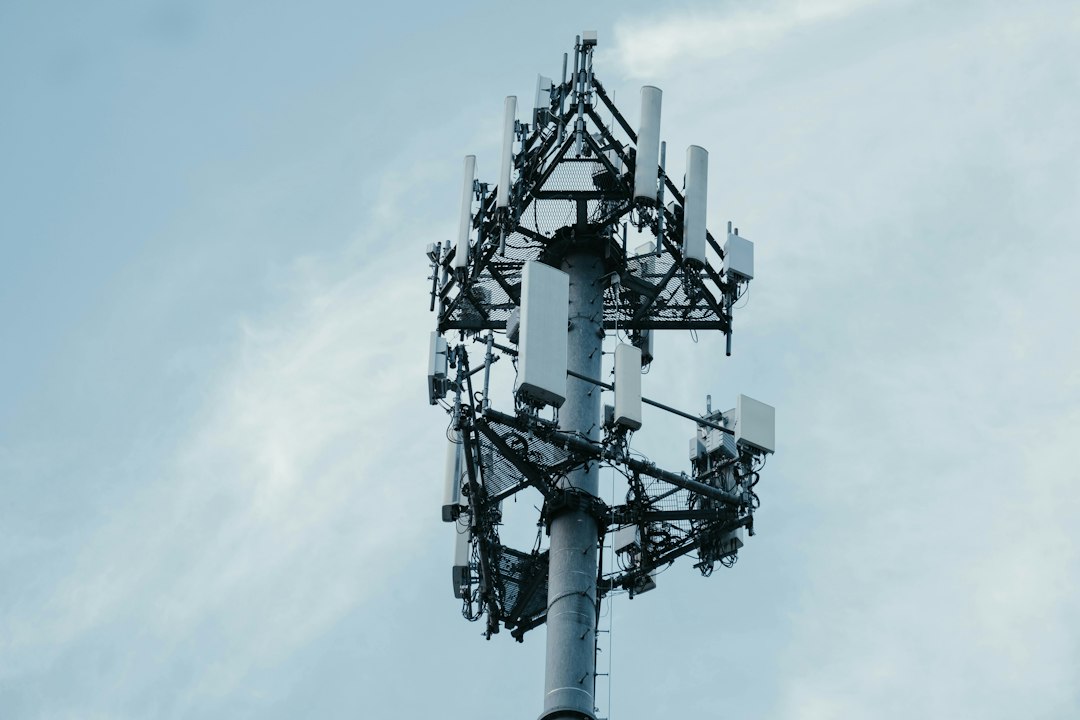
Featured image: Zac Gudakov via Unsplash. The photograph is illustrative and does not depict SpaceX infrastructure.