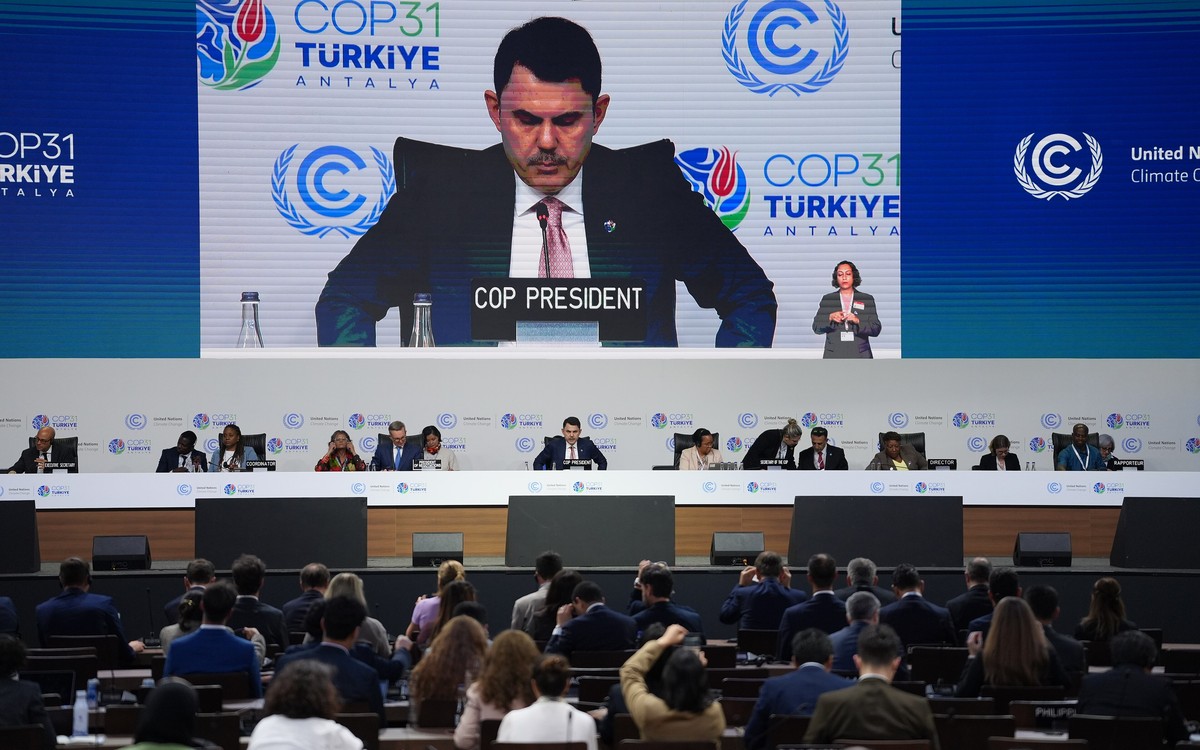
ANTALYA, Turkey. The COP31 United Nations climate talks collapsed on Sunday, November 22, with no overarching deal adopted, after countries could not agree on whether the final text should name fossil fuels at all. The conference in Antalya ran two days past its scheduled close and became the longest climate summit in history, according to CNN and Reuters reporting cited in Zark News reporting on the collapse.
Why it matters
The COP talks are the only forum where nearly 200 countries try to agree by consensus on cutting emissions and paying for climate damage. A cover decision sets the direction for what follows, so failing to adopt one leaves no shared direction for the next year. This is the first major breakdown since COP15 in Copenhagen in 2009, according to CNN, and it reverses the signal from COP28 in Dubai in 2023, when countries first agreed to call for a transition away from fossil fuels.
What we know
- The sticking point was two words. Early drafts of the proposed cover decision, known as the Antalya Pact, called for an immediate transition away from fossil fuels. That language was removed from later drafts, and the final text did not mention coal, oil or gas at all, according to CNN, Reuters and The Times.
- A large group refused the final text. The European Union, Panama, the Marshall Islands and Norway were among those that refused to endorse it. Ireland’s climate minister Darragh O’Brien said the bloc would not endorse a deal that does not even mention fossil fuels, and told Reuters the talks had been hijacked by some oil states.
- More than 100 countries wanted the language kept. According to CNN, more than 100 countries pushed to keep a fossil fuel transition reference, while petrostates including Saudi Arabia and Russia have long opposed any such reference. Russian delegate Sergei Kononuchenko said he could not agree to any formulation on fossil fuel, according to Reuters.
- The presidency conceded there was no consensus. COP31 President Murat Kurum said the presidency had done its utmost, but some parties opposed the text and there was no consensus, according to CNN. Decisions at COP are taken by consensus, so opposition from even a small group can block adoption.
- The reaction was sharp. UN Secretary-General António Guterres said on Sunday night he was "deeply disappointed" that the talks ended without consensus, adding that "there may be no consensus in the negotiating room; there is no ambiguity in the science," according to UN News. An EU Commission spokesperson said on Monday the bloc did not support the final draft and would keep pushing the multilateral process, according to Reuters.
- Finance was also unresolved. Disagreement remained over adaptation finance, electrification and carbon capture, according to Zark News reporting. Developing countries said a draft call to triple adaptation finance by 2035 had no baseline or numbers, according to CNN. Countries did adopt 46 other decisions during the summit, President Recep Tayyip Erdogan said on Monday, according to Reuters, but the main decision was not adopted.
What we still don’t know
- Whether the fossil fuel language can be restored at the next talks, or whether the Dubai wording from 2023 will remain a one-time agreement that was never repeated.
- Whether the unadopted parts of the Antalya Pact survive at the next talks. Unresolved items carry over automatically to COP32 in Addis Ababa under the UNFCCC rules of procedure; what is not known is whether the electrification and adaptation finance proposals, or any fossil fuel language, will be adopted there.
- How much of the breakdown was about the wording alone, and how much was driven by high energy prices and geopolitical tension described in reporting from the summit.
- Whether countries that rejected the weaker text will push for a different process.
What’s next
COP31 President of Negotiations Chris Bowen said countries would reconvene in Ethiopia next year, according to CNN. That round inherits the same question: whether a global deal can name fossil fuels as the cause of the crisis it exists to address. A recent UN report cited by CNN put the world on course to overshoot the 1.5 degree limit, heading for about 2.8 degrees on current policies. Mohamed Adow of Power Shift Africa called COP31 the worst ever COP, according to CNN. The United States, under President Donald Trump, was not part of the consensus effort, according to CNN.
Timeline
- December 2023: COP28 in Dubai agrees, for the first time, to call for a transition away from fossil fuels.
- Early November 2026: COP31 opens in Antalya with more than 190 countries.
- Monday, November 16, 2026: The first draft of the cover decision calls for the immediate transition away from fossil fuels, according to CNN.
- Friday, November 20, 2026: The summit passes its scheduled close without a deal, running into record overtime.
- Saturday, November 21, 2026: Walkout threats prompt Turkey and Australia to convene a hurried meeting between the EU and Saudi Arabia, with no compromise, according to AFP.
- Sunday, November 22, 2026: The Antalya Pact fails to win consensus at the final meeting and is not adopted.
- Monday, November 23, 2026: President Erdogan says delegates adopted 46 decisions at the summit; the EU says it did not support the final draft and will keep pushing the multilateral process.
- 2027: The next round of talks is expected in Ethiopia, with the fossil fuel question still unresolved.
For the original reporting, see COP31 Climate Talks Collapse in Turkey With No Deal on Fossil Fuels.