
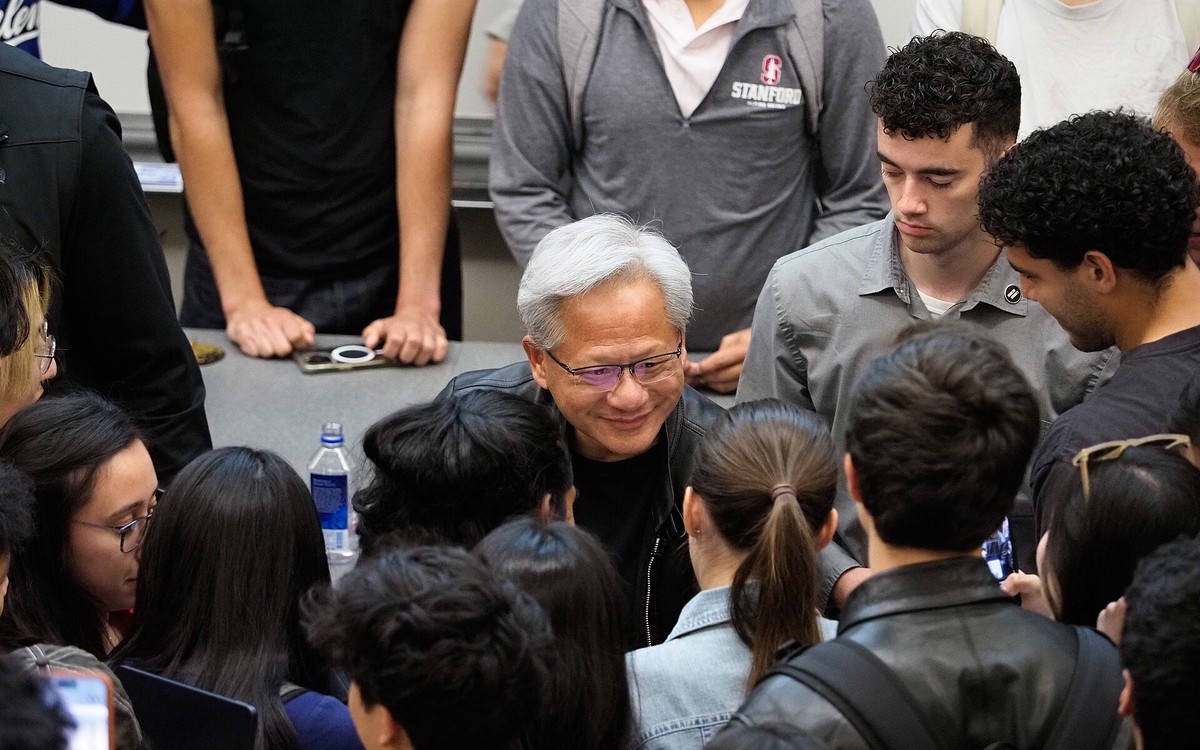
WASHINGTON. Nvidia’s board voted unanimously on Monday, November 23, to bring Jensen Huang back as president, chief executive and board member, effective at once. The vote came 11 days after Huang resigned, and six days after the board’s chair said in public that Huang would not be coming back. President Donald Trump said his intervention was, in his words, very important to the board’s decision.
Why it matters
Nvidia is the world’s most valuable chip company and the central supplier of the processors behind the artificial intelligence boom. Who runs it affects markets and United States policy toward China, because its most advanced chips are restricted for export. A sitting president publicly pressing a private company’s board to restore its chief executive is, as one analyst quoted by Al Jazeera put it, unprecedented. Reuters reported on Tuesday that investors and governance experts say the board weakened its claim to independence by vouching for Huang before its own investigation into his conduct had finished.
What we know
- The board’s stated reason. Nvidia said directors received input from “senior levels of the United States government” and, based on that input, are “confident that Mr. Huang’s reinstatement poses no national security risk.” Directors met with Huang and were satisfied with his candor and his ability to lead, according to the company’s November 23 announcement, reported by Zark News and Reuters.
- The reversal. On the November 17 earnings call, board chair Harvey Jones said the board did not intend to reinstate Huang. On Monday, Jones welcomed him back, said the board has “every confidence in Jensen,” and remains chair. Colette Kress, who served as interim chief executive alongside her continuing role as chief financial officer, keeps the finance role.
- The president’s role, in his own words. Trump wrote on Truth Social that the board “has made the correct and proper decision to return Jensen Huang to the position of CEO.” On CNBC on Monday, he said, “I believe my intervention was very important,” said he was represented at the board meeting, had spoken with Huang on Sunday night, and had worked with Vice President JD Vance and Treasury Secretary Scott Bessent. According to CNN, Vance led a weekend effort in which officials assured the board that Huang posed no national security risk.
- The market reaction. A petition for Huang’s reinstatement drew more than 180,000 signatures, including Elon Musk’s, according to Reuters. Nvidia’s shares rose 31.5 percent on Monday, according to Reuters, after a fall that took the stock to a $126 close on November 20, down 48 percent from its peak, according to Le Monde. The rally faded on Tuesday, when the shares fell 5.2 percent in premarket trading to $156.40, still almost 31 percent below their October 6 record, according to Reuters.
- What has not closed. Nvidia said its independent investigation into reporting that Huang was the target of a foreign intelligence effort will continue, and Reuters and the Wall Street Journal have reported that the Securities and Exchange Commission and the Justice Department are also investigating the company. California’s attorney general has subpoenaed the company over whether its chips reached China and whether investors were misled, a case Zark News reported on November 20. No finding has been made that Nvidia broke any law.
What we still don’t know
- What the government told the board. Nvidia has not said which senior officials gave the input, or what evidence supported the conclusion that Huang poses no risk. The Wall Street Journal has reported that Attorney General Todd Blanche told Trump and Vice President Vance on Saturday that Huang was not the target or subject of any Justice Department investigation and that the department had no evidence he broke laws or was a security risk. Senator Elizabeth Warren has said the administration “needs to explain what ‘input’ was given and by which senior officials.” On Tuesday, Senator Chuck Schumer accused Huang of violating United States export control law, according to Reuters.
- Whether the underlying concerns were resolved or set aside. Huang resigned following reports of extramarital affairs, one with a woman officials feared could be working with Chinese intelligence. The board reinstated him while its own investigation continues, so no public finding has settled the matter.
- What Huang will tell Congress. Huang is due to give closed-door, transcribed interviews on December 1 to three House committees, Foreign Affairs, Intelligence and the Select Committee on China. What he says about the intelligence concerns and chip exports to China is not yet known. His first public testimony comes on December 3, before the Senate Banking Committee.
- Whether the export control questions end here. Senator John Kennedy has demanded that Commerce Secretary Howard Lutnick and Treasury Secretary Scott Bessent testify under oath about whether China has been able to get around United States export controls on advanced chips. Lutnick has since agreed to testify before the Senate Banking Committee on December 10. Bessent has not.
What’s next
The next fixed points are December 1, when Huang gives closed-door interviews to three House committees, and December 3, when he testifies in public as the sole witness before the Senate Banking Committee, the first public test of the board’s decision. The company’s investigation continues with no announced deadline, the California subpoena remains open, and Lutnick testifies on December 10, while Bessent’s appearance is still pending. Watch whether the administration discloses who gave the board its national security assurance; that disclosure, or its absence, will shape the governance fight Reuters says is now under way.
Timeline
- November 12, 2026: Huang resigns as Nvidia chief executive following reports of extramarital affairs, including one involving a woman officials feared could be linked to Chinese intelligence.
- November 17, 2026: On Nvidia’s earnings call, chair Harvey Jones says the board does not intend to reinstate Huang.
- November 20, 2026: Nvidia shares close at $126, down 48 percent from their peak, according to Le Monde. Zark News reports California’s attorney general has subpoenaed Nvidia over chip shipments to China.
- November 21 to 22, 2026: Vance leads a weekend administration effort pressing the board to restore Huang, according to CNN. Trump speaks with Huang on Sunday night, according to his CNBC interview.
- November 23, 2026: The board votes unanimously to reinstate Huang, citing input from senior levels of the United States government. Trump claims credit on Truth Social and CNBC. Nvidia shares rise 31.5 percent.
- December 1, 2026: Huang is due to give closed-door, transcribed interviews to three House committees.
- December 3, 2026: Huang is due to testify in public before the Senate Banking Committee.
Read the original Zark News story: Nvidia Brings Back Jensen Huang as Chief Executive After Trump Intervenes. See also: Trump: ‘I Would Love to See Jensen Be Given a Second Chance’.