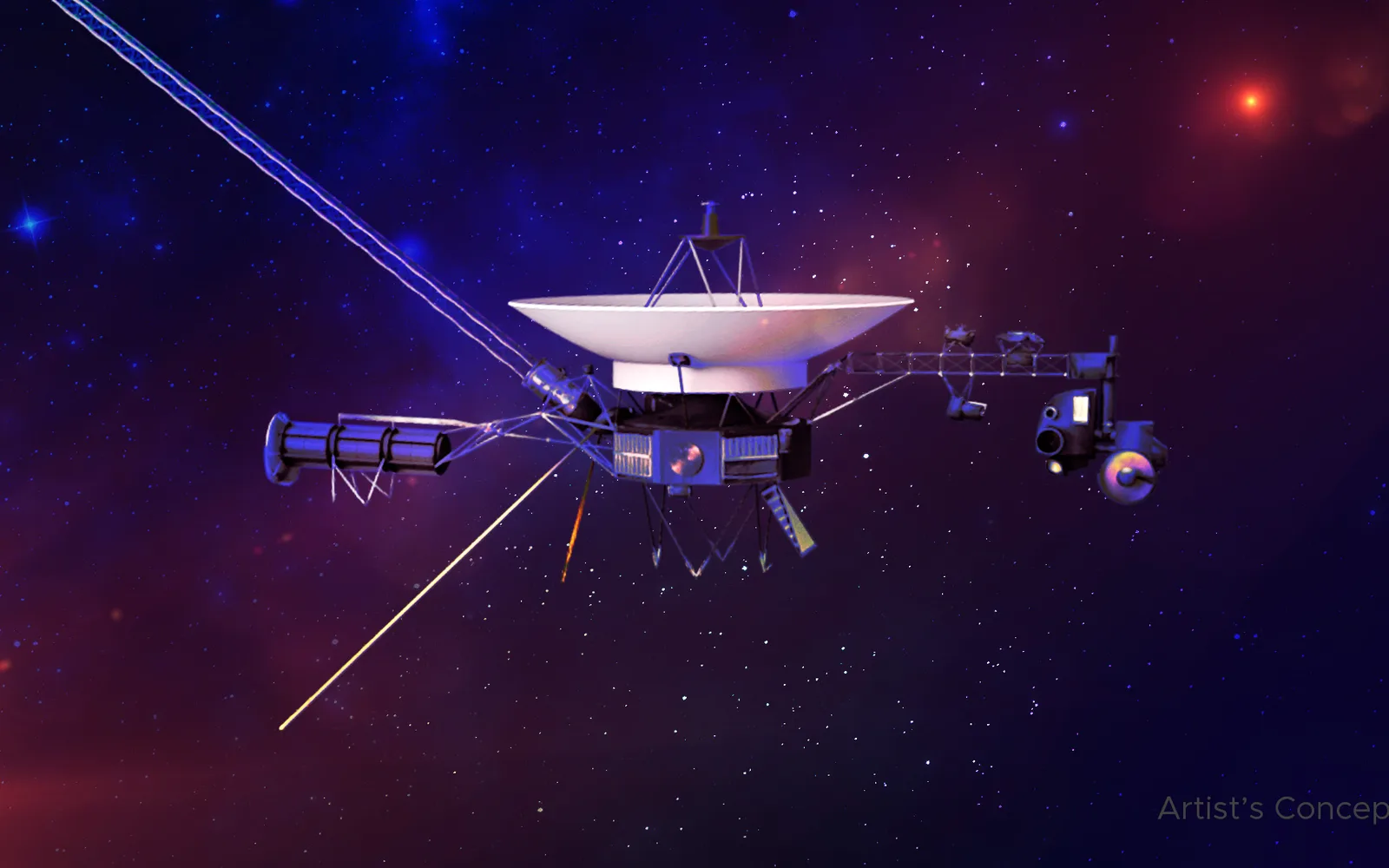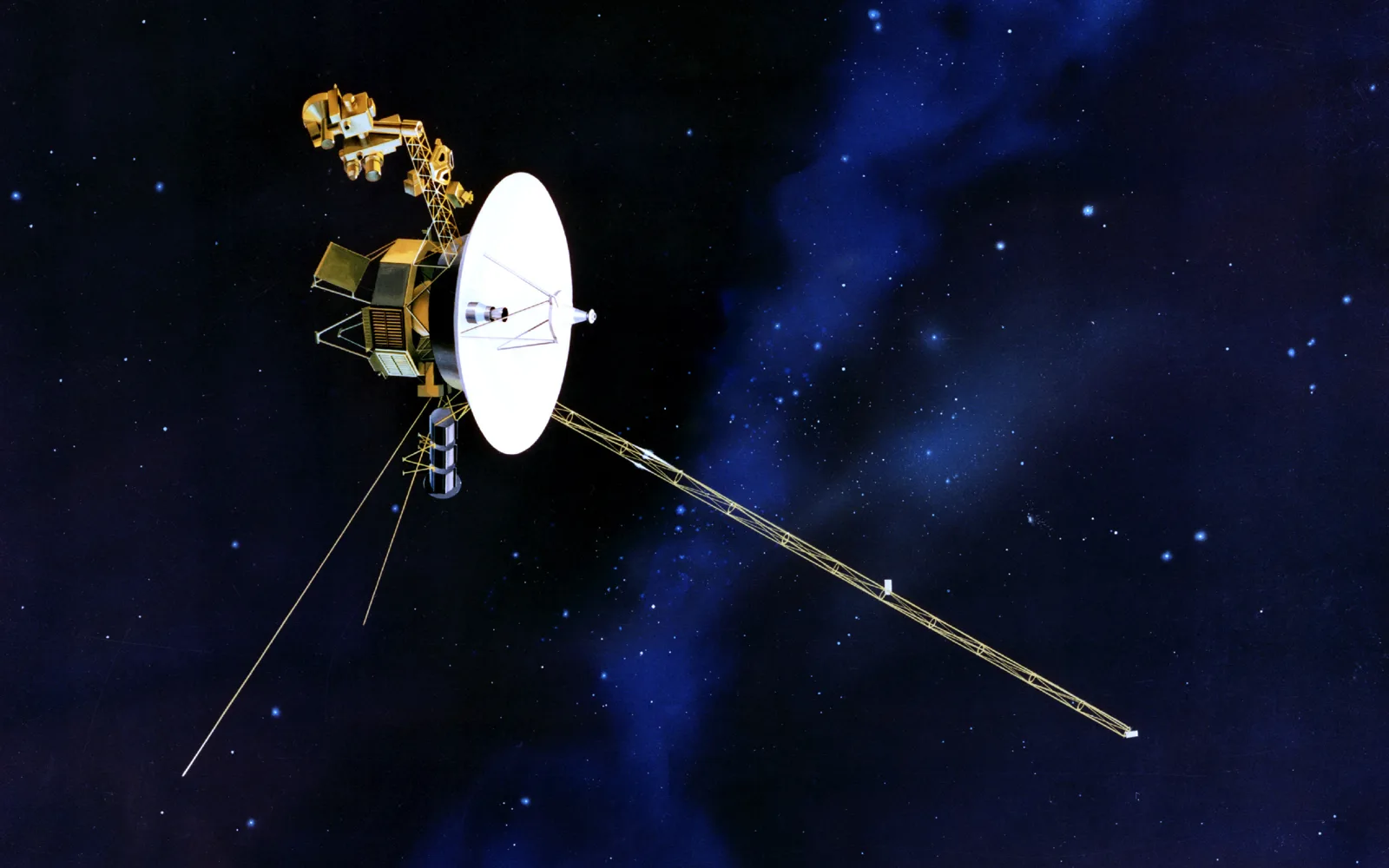
PASADENA — Voyager 1, the most distant human-made object in existence, reached a new milestone on Wednesday: one light-day from Earth, a distance of about 16 billion miles that light itself needs a full 24 hours to cover, according to NASA.
The Jet Propulsion Laboratory calculated the moment precisely: Wednesday, November 18, 2026, at 5:16:07 a.m. Eastern time, when the spacecraft’s distance from Earth equalled the distance light travels in a day, about 25.9 billion kilometres. From now on, a radio signal from Voyager 1, travelling at the speed of light, takes more than a day to reach home, and a command from Earth takes more than a day to arrive. By comparison, sunlight reaches Earth in just over eight minutes.
Voyager 1 was launched on September 5, 1977, from Cape Canaveral, Florida, on what was planned as a tour of Jupiter and Saturn. It has now been travelling for more than 49 years at about 38,000 miles per hour. It became the first human-made object to enter interstellar space, crossing out of the heliosphere, the bubble of charged particles and magnetic fields created by the Sun, and it has held the record as the farthest human-made object since it passed Pioneer 10 in 1998. Its twin, Voyager 2, launched the same year and is the only other spacecraft operating outside the heliosphere, is expected to reach its own one light-day milestone about nine years later, in November 2035.
Both spacecraft carry the Golden Record, a gold-plated copper disc of sounds, images and greetings meant to represent life and culture on Earth to anyone who might one day find it. The engineering challenge now is power: the probes run on slowly decaying nuclear generators, and mission managers at JPL have spent years switching off instruments and heaters to stretch the remaining supply. NASA estimates Voyager 1 may keep communicating with Earth into the early 2030s, before its power falls below what is needed to run anything at all.
NASA marked the milestone with a public celebration called “Shine Bright for Voyager’s Light-Day,” inviting people around the world to shine a phone, flashlight or lantern at the sky after sunset on Tuesday, November 17, and flash V-G-R, Voyager’s call signal, in Morse code. The gesture is symbolic, since no flashlight signal could be detected across 16 billion miles, but the agency used it to draw attention to a mission that has outlived most of the people who built it. On Thursday, November 19, NASA officials will host a discussion at JPL on the status of both spacecraft, and a documentary on the missions is due in 2027, the 50th anniversary year.
Why it matters: Voyager 1 is still returning data from a region no other working instrument has ever reached, measuring the interstellar medium that the solar system moves through. What happens next is a slow race between distance and power, as the spacecraft that redefined how far human engineering can reach continues outward at a light-day, and counting.
Sources: NASA, November 2026; USA Today, November 17, 2026.