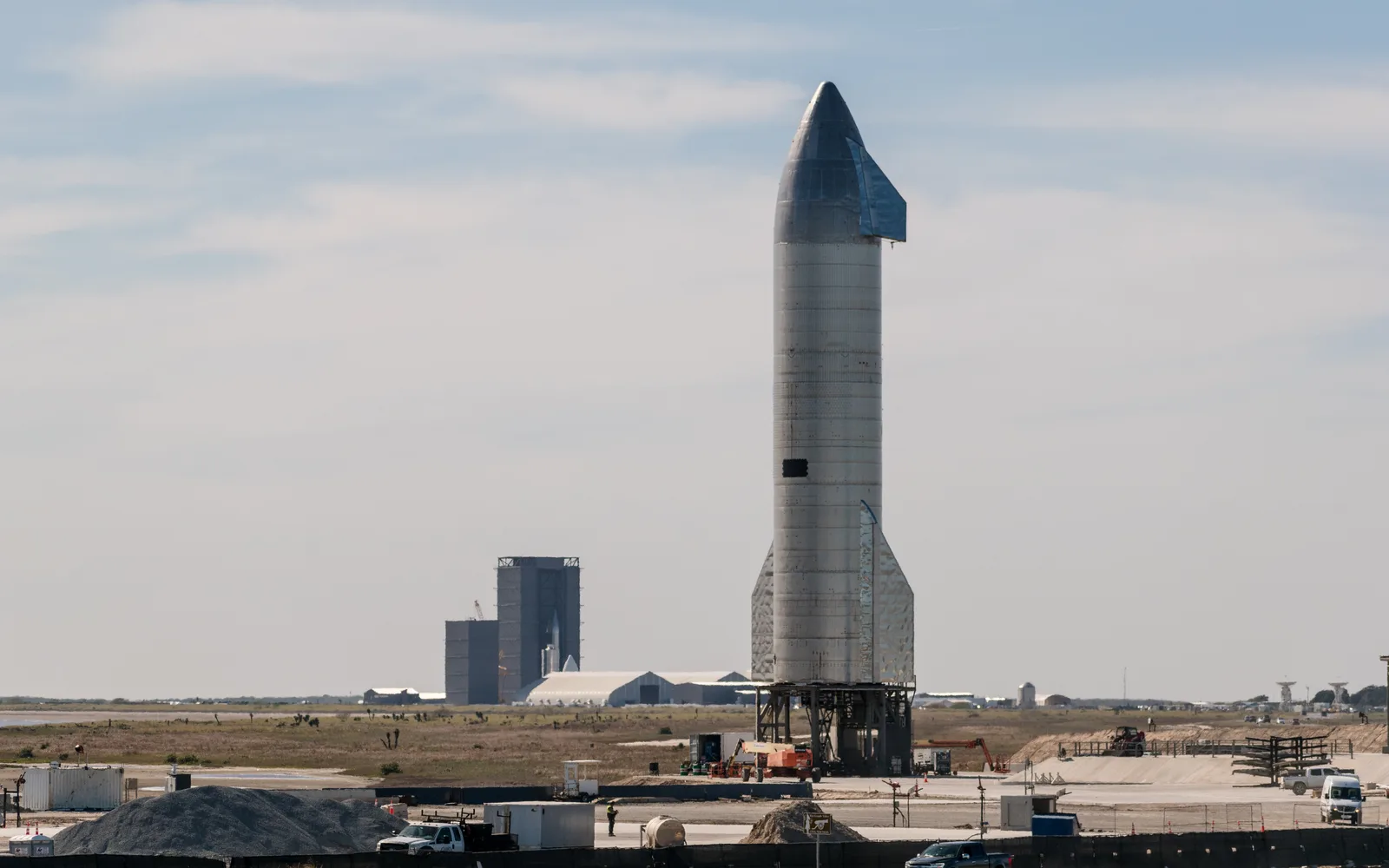
STARBASE — SpaceX’s Starship soared into orbit on Friday in its boldest test flight yet, but the attempt to recover the whole rocket at its Texas launch pad failed when the booster was diverted into the Gulf of Mexico and exploded, according to the Associated Press.
Starship lifted off from Starbase at 5:48 p.m. Eastern time on Friday, November 13, on its 15th test flight. The plan called for the Super Heavy booster, the upgraded version stretching 236 feet, to fly back to the pad about six minutes later and be caught by the launch tower’s mechanical arms. Instead, for reasons SpaceX has not specified, the catch was aborted and the booster came down offshore in flames.
The upper spacecraft flew on. It reached orbit at an altitude of about 170 miles (275 kilometres), only the second time Starship has done so, and deployed all 26 of the company’s most advanced Starlink satellites. SpaceX confirmed the satellites were in orbit on Friday evening.
The flight is not over. The spacecraft is coasting through a long orbit, planned at up to about 15 laps of the Earth, and SpaceX intends to steer it back toward Starbase on Saturday for a catch attempt of its own, at about 4:20 p.m. Eastern time, if all the systems needed for re-entry and landing stay healthy. It would be the first time a Starship spacecraft has tried to return to the pad from orbit and be plucked from the air by the tower.
The return path is itself a first: the ship would re-enter over the Pacific and cross parts of northern Mexico and southern Texas, over land, before turning toward the tower. SpaceX has kept fallbacks open, including splashdowns off Hawaii or Chile, or a late diversion into the Gulf, if the ship or the tower has a problem.
SpaceX had already caught a returning booster three times before Friday, but never the upgraded booster flown on this mission, and never both halves of the rocket on the same flight. Catching both is the core of the company’s claim that Starship can be fully and rapidly reusable, which is what its Moon and Mars plans, and its contract work for NASA, depend on.
Friday’s result is therefore a split one: the spacecraft did the new thing it most needed to do in orbit, while the booster recovery, the part SpaceX had begun to make look routine, failed at its first attempt with the new design. Saturday’s catch attempt, if it goes ahead, will decide whether Flight 15 is remembered as a breakthrough or as a near miss.
Sources: Associated Press report on Flight 15; Spaceflight Now live coverage.