Afghan forces opened fire on Pakistani border posts late Saturday, October 17, and Pakistan retaliated with gun and artillery fire, in what amounts to the heaviest direct Pakistan–Afghanistan military confrontation of the current escalation cycle. Intermittent gunfire continued in the Kurram area on Sunday.
Afghanistan’s Ministry of Defence said its action was retaliation for Pakistani airstrikes inside Afghanistan earlier in the week, according to Reuters. The alleged Pakistani airstrikes — which Islamabad has not officially acknowledged — targeted a Tehreek-e-Taliban Pakistan (TTP) leader in Kabul on Thursday; whether he survived the strike is unclear, a Pakistani security official told Reuters.
Pakistani security officials said several Afghan border posts were destroyed. Geo News and the Express Tribune reported that the Shipola base camp was “completely destroyed” and the Topser post was hit in Upper Kurram, in the Taida and Ghozgarhi/Ghuz Garhi sectors.
Casualty claims from both sides are unverified. The Bakhtar News Agency claimed seven Pakistani soldiers were killed — a claim that is unconfirmed and has not been independently verified. Pakistan claims “major losses” on the Afghan side — but no independent casualty count exists from either side.
Afghanistan’s Ministry of Defence said its operation finished at midnight local time. Taliban spokesman Zabihullah Mujahid said on Sunday: “There is no kind of threat in any part of Afghanistan’s territory.”
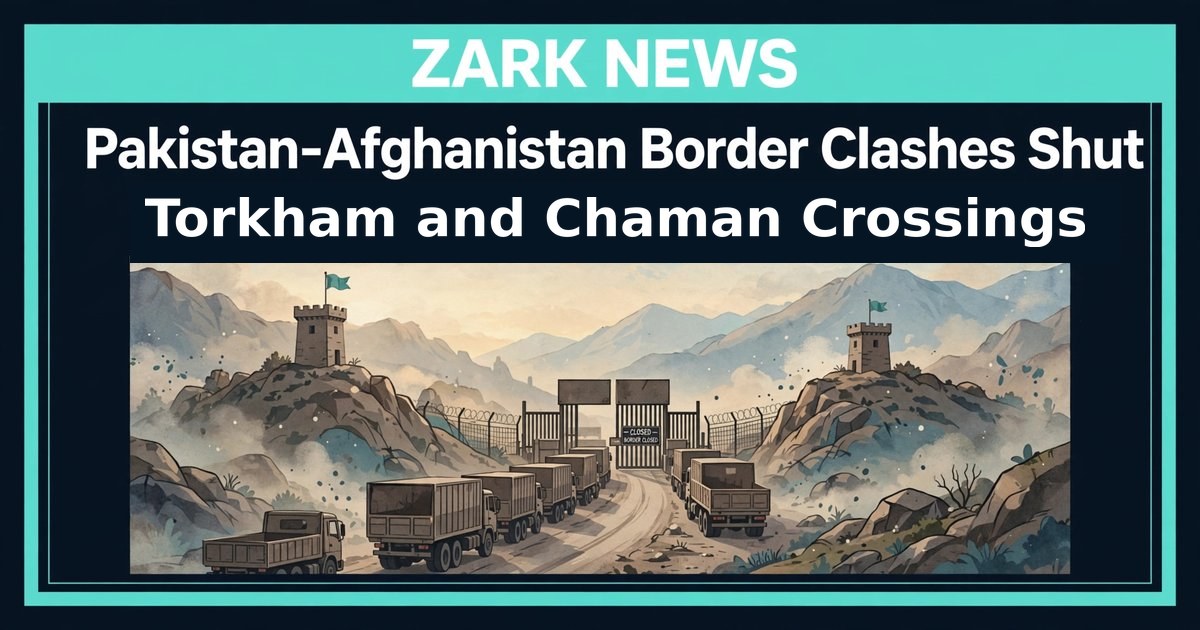
The fighting shut the two main crossings — Torkham and Chaman — on Sunday, along with Kharlachi, Angoor Adda and Ghulam Khan, local officials told Reuters. Hundreds of passengers, dozens of cargo trucks and medical patients were stranded, according to the South Asia Times via Tolo News.
Why it matters
The confrontation lands at a volatile moment. It hits just as Khyber Pakhtunkhwa — the province sharing the border — sits under federal emergency rule, raising the stakes of any miscalculation. The closure of every major crossing cuts the lifeline of landlocked Afghanistan, stranding not only cargo and trade but also medical patients who depend on hospitals across the border. And the retaliation-cycle risk is live: airstrikes allegedly targeting militants in Kabul, followed by cross-border artillery duels, leave little buffer against a further round of escalation.
What happens next
This is a developing story. Watch whether the border crossings reopen or stay shut — a prolonged closure would choke trade and humanitarian movement for landlocked Afghanistan. Watch whether Islamabad acknowledges or denies the alleged Kabul airstrikes, and whether either side escalates beyond the current exchanges. The immediate test is whether the fighting holds at the level of intermittent gunfire or spirals into a sustained artillery campaign along the Kurram sector.
Note to readers: this story carries the edition’s Pakistan slot — Zark News found no genuine new PTI development overnight, so the biggest Pakistan story takes its place.