WASHINGTON — The Norwegian Nobel Committee awarded the 2026 Nobel Peace Prize on Friday to Navi Pillay, the 85-year-old South African jurist honored for a lifetime spent building international justice. Hours later, the Trump administration imposed sweeping financial sanctions on the International Criminal Court — the tribunal where Pillay served as a judge from 2003 to 2008 — putting Washington on a collision course with its own European allies.
Why it matters
This is the first time the United States has sanctioned the court itself. Thirteen individual ICC judges and prosecutors were already under U.S. sanctions; Friday’s move targets the institution, and could punish companies that provide services to the court — potentially disrupting its work far beyond The Hague. The timing — hours after a former ICC judge won the world’s most famous peace prize, and a prize the Nobel Committee framed explicitly as a defense of international law “under political attack” — has raised questions the White House has not answered.
What we know
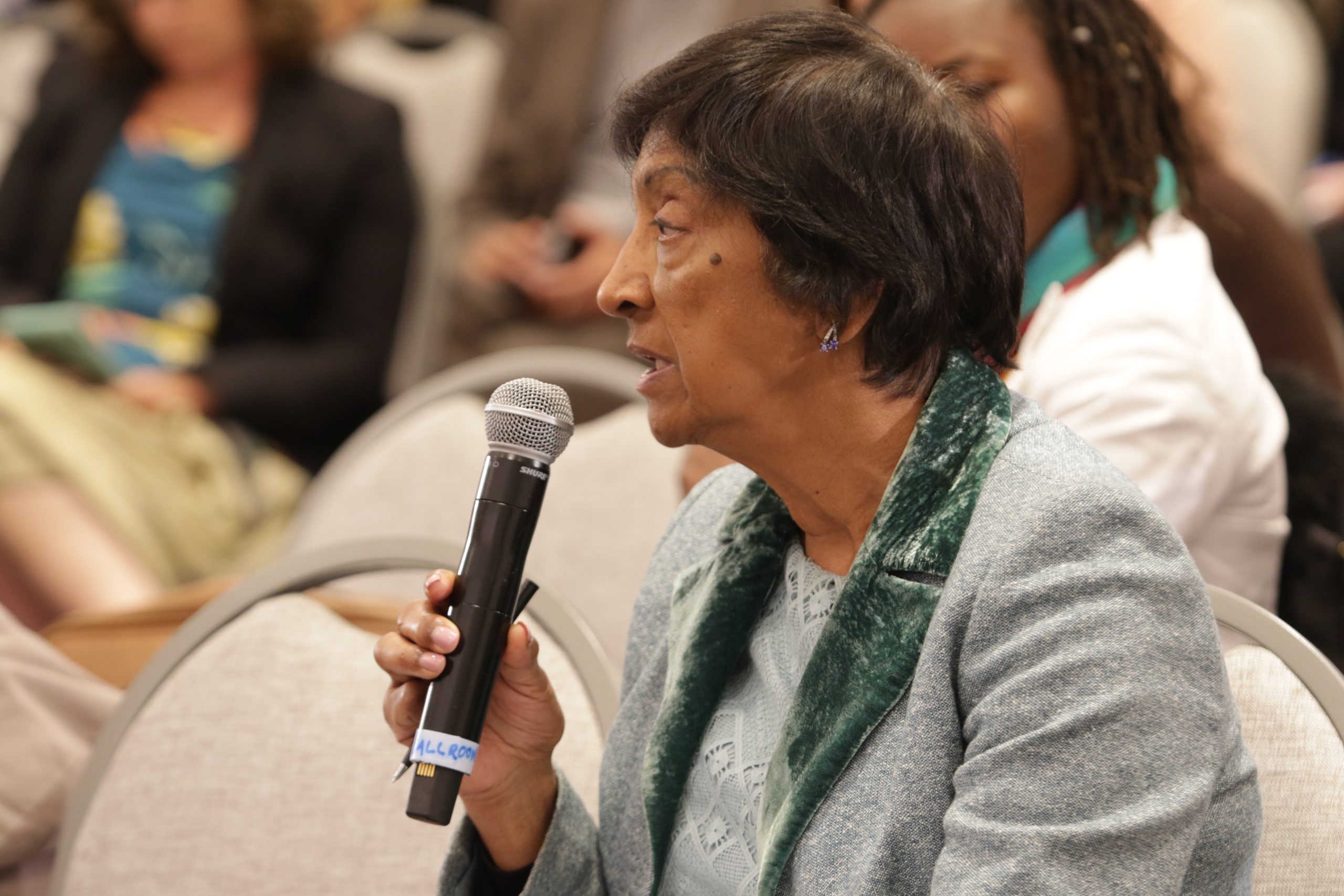
The prize. The committee announced the award in Oslo on Friday morning. Committee chair Jørgen Watne Frydnes said Pillay was being honored “for her efforts to promote peace and international law.” The prize carries 12 million Swedish kronor, about $1.2 million, and drew 287 nominations this year — 208 candidates and 79 organizations. The medal and diploma are presented on December 10.
Pillay’s biography is the citation’s backbone. Born in Durban on September 23, 1941, to a family of Indian Tamil descent under apartheid, she became in 1967 the first woman of color to open a legal practice in Natal province, defending anti-apartheid activists including Nelson Mandela. In 1973 she won political prisoners on Robben Island the right to legal counsel. After apartheid, she served as a judge of South Africa’s High Court, then as judge and president of the International Criminal Tribunal for Rwanda, where she presided over the landmark ruling that rape and sexual violence can constitute genocide. From 2003 to 2008 she sat on the ICC’s Appeals Chamber, and from 2008 to 2014 she was the U.N. High Commissioner for Human Rights.
Most recently, Pillay chaired the U.N.’s Independent International Commission of Inquiry on the Occupied Palestinian Territory (2021–2025), whose September 2025 report concluded that Israel committed genocide in Gaza in its war against Hamas after the October 7, 2023 attacks — a finding Israel rejected as biased and refused to cooperate with. She now sits as an ad hoc judge on the International Court of Justice, designated by The Gambia, in the case accusing Myanmar of genocide against the Rohingya.
Reaction split along familiar lines. South African President Cyril Ramaphosa and U.N. human rights chief Volker Türk praised the choice; South Africa’s ambassador to Washington noted she is the fifth South African laureate and the first woman. Israel’s Foreign Ministry denounced the award on X, saying it rewarded “anti-Israel hatred” and adding, “Joseph Goebbels is certainly applauding from hell,” according to NPR.
President Donald Trump, who has long campaigned for the prize and argued he deserves it for his efforts to end conflicts, was not among this year’s laureates. Last year’s winner, Venezuelan opposition leader María Corina Machado, gifted Trump her physical medal in January; the Nobel Committee responded that prizes cannot be transferred. Learning of her win at a human rights lawyers’ conference in Nuremberg, Pillay drew laughs with a quip: “If you clap a little bit more, I may share this prize with Trump.”
The sanctions. Secretary of State Marco Rubio announced the move in a statement reviewed by Reuters: “President Trump will never allow the International Criminal Court to prosecute Americans. That is why, today, the United States is sanctioning the International Criminal Court. We will ban transactions with this rogue court, cutting off their resources and crippling its ability to operate.” In a video statement, Rubio added, “Either the ICC will end its threats, or we will end the ICC,” and said Washington expects allies to “rein in the court,” according to U.N. News.
The Treasury Department placed the court on its Specially Designated Nationals list under Executive Order 14203 and issued General Licenses 13 through 16 with limited carve-outs. The action came with a six-month initial grace period and exemptions covering telecoms, software, pension payments and detainee-related transactions. Banks and companies typically over-comply with such designations, so the practical squeeze may run wider than the licenses allow.
Washington’s stated grievances are longstanding: ICC arrest warrants for Israeli officials, including Prime Minister Benjamin Netanyahu, over alleged war crimes in Gaza, and a past ICC investigation into U.S. soldiers in Afghanistan that the court has since closed. In a July Wall Street Journal op-ed, Rubio said the United States was “dismantling the ICC.” Notably, the New York Post reported Thursday — before the Nobel announcement — that State Department posts had been warned “further ICC action” was imminent, citing an internal memo. The sanctions were already in motion before Oslo spoke.
The court hit back forcefully, calling the measure “an assault on the rule of law and on the very foundations of the international legal order” and urging its 125 member states — every EU country and every NATO member except the United States and Turkey — to defend it. ICC President Tomoko Akane said the court would “continue to fully discharge its mandate.” Deputy prosecutor Nazhat Shameem Khan told Reuters the sanctions “must be condemned” as “intended to undermine the rule of law internationally.” U.N. Secretary-General António Guterres called the move a “serious blow.”
What we still don’t know
- Was the timing retaliation? The Thursday memo reported by the Post suggests the sanctions were already in the works before the Nobel announcement. But the White House did not respond to USA Today’s request for comment, and the State Department has not said whether Pillay’s win influenced the announcement. Coincidence or calculation remains unproven either way.
- How far the bite goes. The six-month grace period and the licenses blunt the immediate impact; how aggressively banks and vendors over-comply is unknown.
- How allies respond. The court said its fate “rests also in the hands of the states that created it” — whether the Netherlands and EU states mount a defense is unresolved.
- Whether ongoing cases are affected. The court insists its work continues across all investigations and prosecutions; the practical effects remain to be seen.
What’s next
- The six-month grace period and the scope of any further Treasury licenses will show how hard the sanctions hit in practice.
- Watch European capitals: the court has called on its 125 member states to act, and allied statements or countermeasures will define the diplomatic fallout.
- Pillay’s Gaza commission shared “thousands of pieces of information” with ICC prosecutors, according to AFP reporting — the court’s Netanyahu investigation continues under the new sanctions.
- The Nobel medal and diploma are presented in Oslo on December 10.
Timeline
- September 23, 1941 — Navanethem Pillay is born in Durban, South Africa, under apartheid.
- 1967 — Becomes the first woman of color to open a legal practice in Natal province.
- 1973 — Wins political prisoners on Robben Island, including Mandela, the right to legal counsel.
- 1995 — Appointed a judge of South Africa’s High Court.
- 1999 — Becomes judge and president of the ICTR; presides over the landmark ruling that rape and sexual violence can constitute genocide.
- 2003–2008 — Serves as a judge on the ICC’s Appeals Chamber.
- 2008–2014 — U.N. High Commissioner for Human Rights.
- 2019 — Appointed ad hoc judge at the ICJ, designated by The Gambia, in the Myanmar/Rohingya genocide case.
- 2021–2025 — Chairs the U.N. commission of inquiry on the occupied Palestinian territory; its September 2025 report concludes Israel committed genocide in Gaza. Israel rejects the finding.
- July 2026 — Rubio writes in the Wall Street Journal that the U.S. is “dismantling the ICC.”
- October 8, 2026 — The New York Post reports an internal State Department memo warning of imminent “further ICC action.”
- October 9, 2026 (morning, Oslo) — The 2026 Nobel Peace Prize is announced for Pillay; she learns of it at a human rights lawyers’ conference in Nuremberg.
- October 9, 2026 (Washington) — The U.S. sanctions the ICC; Rubio’s statement; Treasury action with General Licenses 13–16 and a six-month grace period.
- October 9, 2026 — The ICC denounces an “assault on the rule of law”; Guterres calls it a “serious blow.”
- December 10, 2026 — Nobel Peace Prize ceremony scheduled in Oslo.
Read Zark News’s original reporting: Navi Pillay wins 2026 Nobel Peace Prize and U.S. sanctions the ICC hours after its former judge wins. Official source: Nobel Prize 2026 press release.