
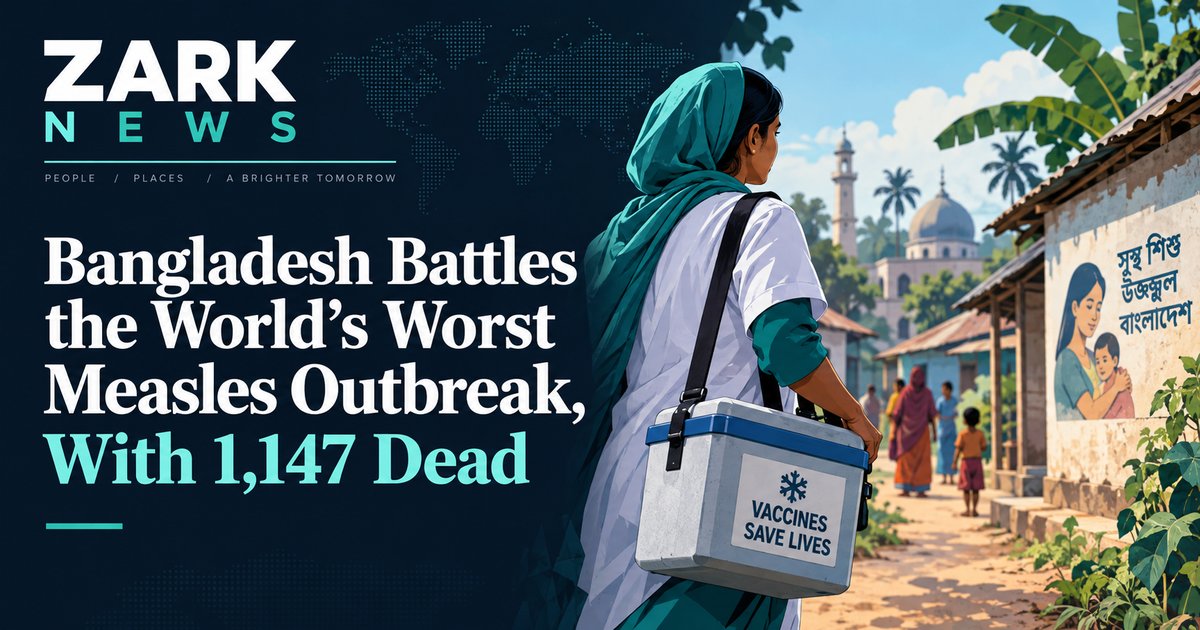
SYLHET — Bangladesh is battling to contain the world’s worst measles outbreak, a crisis that health experts say offers a warning to every country about what happens when routine vaccination coverage slips, according to Reuters reporting published on Saturday.
Bangladesh has reported 202,000 suspected measles cases since the outbreak began in mid-March — 22,000 of them laboratory-confirmed — through October 9, according to the World Health Organization. That is more suspected cases than any other country this year. So far 1,147 people have died, and 94 percent of the reported deaths were children under five years old, the WHO said.
Bangladesh’s routine vaccination programme faltered in 2025, and coverage dropped below the roughly 95 percent level the WHO says is needed to prevent outbreaks. Bangladesh had come close to that level in recent years. Measles is among the most contagious viruses known, so even a small fall in coverage leaves large numbers of unprotected children.
A Reuters review of WHO documents, alongside interviews with more than a dozen scientists, health workers and officials, found the emergency response was also hampered by health data that left out millions of children, by shortcomings in preparation, and by a failure to reach enough parents. When records miss children, vaccinators cannot reliably find the ones who need protection most.
Mark Jit, a WHO vaccine adviser and professor at the School of Global Public Health at New York University, called the outbreak a real warning to every country, noting that preventing an outbreak through vaccination is easier, cheaper and safer than responding to an emergency. He said the response will stop the outbreak eventually, but that many people will have had measles in the meantime, and some will have died. Ziauddin Hyder, special assistant on health affairs to Prime Minister Tarique Rahman, told Reuters in September the government was doing everything it could to end the outbreak; the government did not respond to further questions sent in October.
Why it matters beyond Bangladesh: measles is a tracer for the health of immunisation systems everywhere. Where coverage falls — through conflict, funding gaps, misinformation or simple administrative failure — the virus finds children first. What happens next is an expanded vaccination push and a race to close the data gaps that hid unvaccinated children, while other countries with slipping coverage watch a preventable disease demonstrate the cost of delay. Read the full Reuters investigation via Reuters and WHO guidance at who.int.