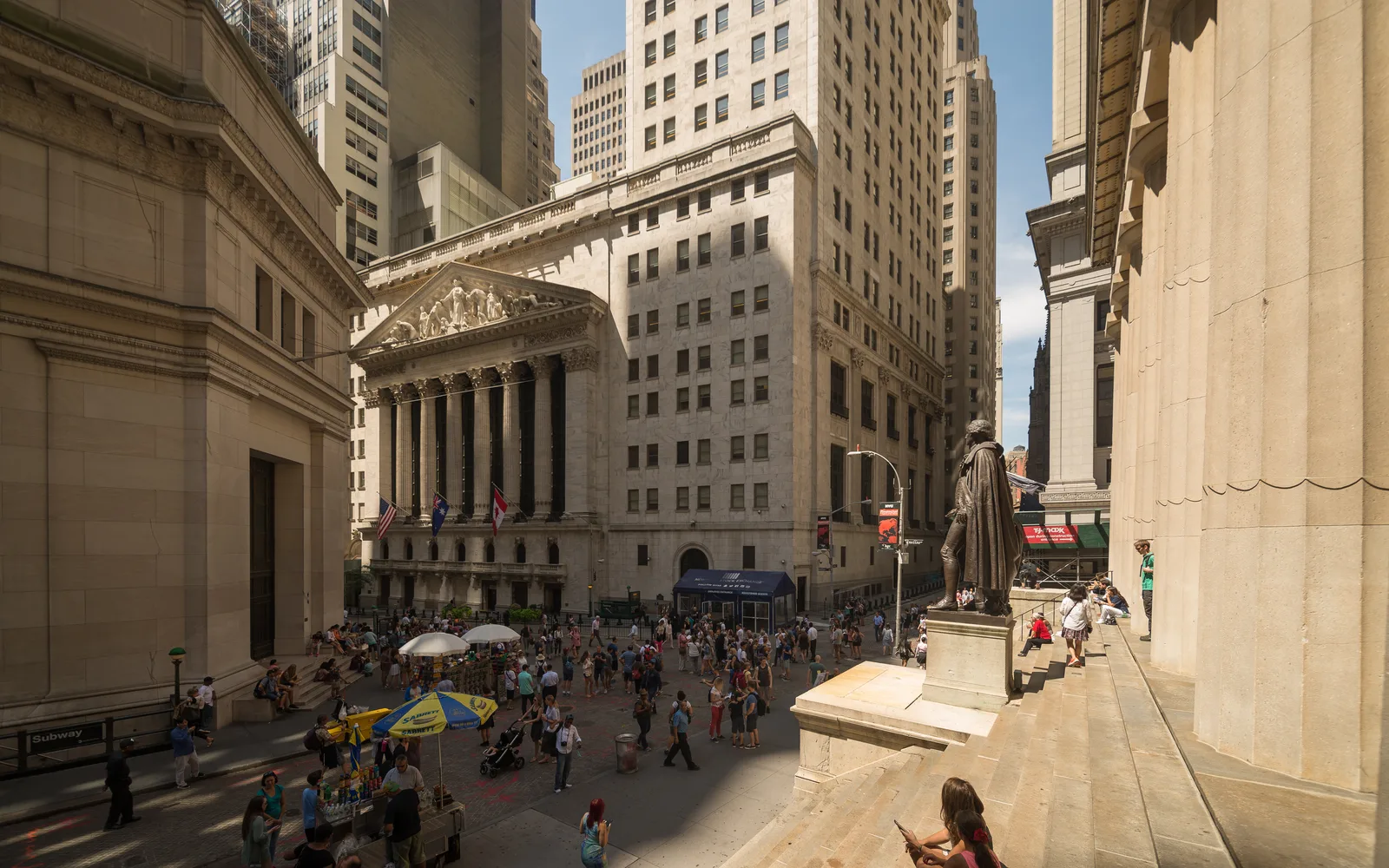
NEW YORK — Wall Street had its best day since April on Monday, and by Tuesday morning the rally faced the one number that could undo it: the October reading on consumer prices, due at 8:30 a.m. Eastern, the last inflation report before the Federal Reserve meets in December.
The Dow Jones Industrial Average rose 1,104.02 points on Monday, or 2.15 percent, to close at 52,389.75. The S&P 500 gained 2.35 percent to 7,549.94, and the Nasdaq Composite climbed 2.74 percent to 25,253.14. Smaller companies did best of all: the Russell 2000 index rose 3.15 percent. The market’s main gauge of fear, the VIX volatility index, fell by more than a fifth.
Two forces drove the buying. The first was oil. Brent crude fell 5.71 percent to $92.71 a barrel, and West Texas Intermediate fell 5.11 percent to $86.19, after President Donald Trump said further military strikes on Iran were unlikely for now and that the conflict was, in his words, effectively over militarily. Cheaper oil means less pressure on fuel and transport costs, and traders who had spent weeks pricing in an energy shock rushed to unwind those bets.
The second force was technology. A semiconductor index that lost more than 12 percent last week, in a sell-off driven by fears that artificial intelligence spending had run ahead of itself, jumped 6.9 percent on Monday. Nvidia was the exception, falling as it faced a proposed shareholder lawsuit and a board investigation, a reminder that the rebound did not lift every name.
The rally carried into Asia on Tuesday morning. Japan’s Nikkei index rose about 2.9 percent, and South Korea’s Kospi rose about 4 percent, as chip stocks recovered there as well.
Why it matters: inflation is now the whole argument. Economists surveyed expect consumer prices to have risen 0.3 percent in October and core prices, which strip out food and energy, to have risen 0.2 percent, according to Reuters polling. On a yearly basis, headline inflation is expected at 3.9 percent and core inflation at 2.8 percent. Those are forecasts, not results, and the report itself will settle them when the Bureau of Labor Statistics publishes it on Tuesday morning.
The Federal Reserve’s benchmark rate stands at 3.75 to 4 percent, and money markets have put a probability of roughly 80 percent or more on another quarter-point increase on December 9. Bank of America economists have said only a very soft reading, around 0.1 percent, would put that expectation in doubt. The New York Fed’s October survey, published ahead of the report, showed consumers’ one-year inflation expectations edging up to 3.91 percent, a sign that households still feel prices rising faster than the Fed’s 2 percent target.
What happens next is straightforward. A reading in line with forecasts probably keeps the December increase on track and tests whether Monday’s rally can hold. A hotter reading would strengthen the case for the Fed to move again and would hit the same technology shares that led the rebound, because higher rates weigh most on companies valued for future growth. A softer reading would do the opposite, and would be the outcome the rally is quietly hoping for. Source: market data reported by Reuters and financial press; Bureau of Labor Statistics consumer price data.