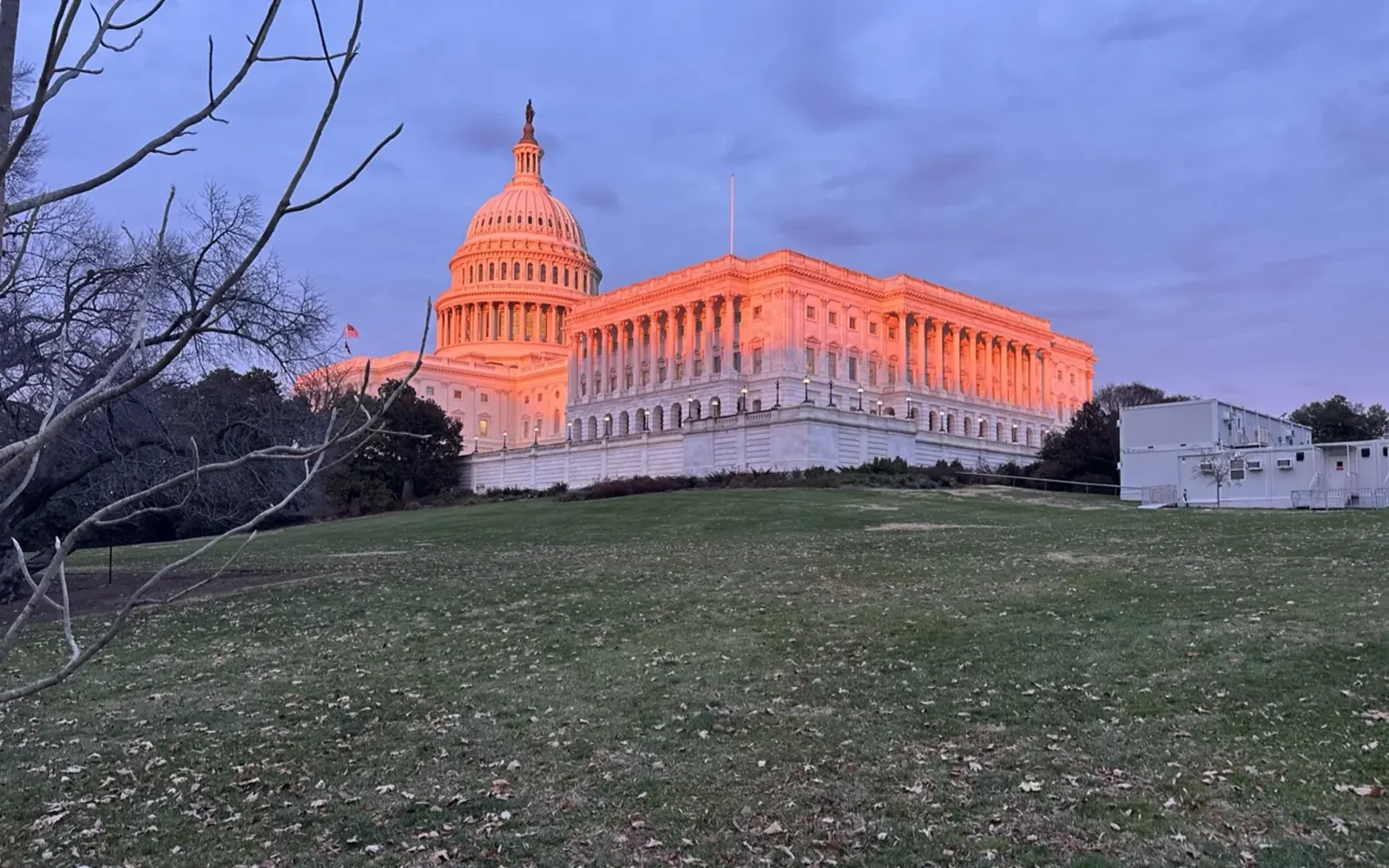
WASHINGTON — Americans vote on Tuesday, Nov. 3, in midterms that will decide who controls Congress for the last two years of President Donald Trump’s term. Democrats enter the final weekend with a clear national polling lead. The House looks likely to change hands. The Senate is much closer.
This is based on Zark News reporting, the original Zark News story, checked against RealClearPolling, Cook and AP reporting.
Why it matters
Trump is not on the ballot, but his agenda is. If Republicans keep both chambers, he can keep passing bills and confirming judges. If Democrats take the House, they can block bills and open investigations; the Senate adds a say over judges and officials.
What we know
- Democrats lead the national vote. The RealClearPolling generic ballot average (polls from Oct. 8 to Oct. 26) puts Democrats at 51.4% and Republicans at 43.2% — a lead of 8.2 points.
- The House majority is small. All 435 seats are up, and 218 wins a majority. Current counts differ slightly by source — 219 Republicans to 214 Democrats in the count Zark News cited from The Wall Street Journal, 218 to 214 plus one independent who sits with Republicans in other tallies. All agree Democrats need a net gain of only three seats.
- Forecasters expect Democrats to clear that bar. On Oct. 30, the nonpartisan Cook Political Report moved 12 more races toward Democrats and projected a 227–240 seat Democratic majority (The Hill, USA Today).
- The Senate is a harder climb. Republicans hold the Senate 53–47. Of 35 seats on the ballot, 22 are Republican-held and 13 Democratic. Democrats need a net gain of four to reach 51; a 50–50 tie is not enough, because Vice President JD Vance breaks ties for Republicans. CNN polling cited by Zark News put Democrat James Talarico ahead in Texas, 49% to 43%, and Democrat Abdul El-Sayed ahead in Michigan, 49% to 42%.
- Trump’s ratings and prices weigh on Republicans. A Marquette Law School poll in Wisconsin (Oct. 14–22, released Oct. 28) put Trump’s approval at 37%, disapproval at 61%, and found 42% of voters there worse off than a year ago. A Harris poll cited by Zark News named the cost of living voters’ top concern, at 36%.
- Money and early voting are at record levels. Ad spending and reservations reached a record $11.21 billion, according to AdImpact figures reported by the Associated Press. An AP analysis found more than 43 million people had voted early, in person or by mail, five days before Election Day — nearly 10 million more than at the same point in 2022.
What we still don’t know
- Whether the polls are right. Polls are a snapshot, not a result, and the national lead does not decide the House — 435 district races do. Poll director Charles Franklin warned small shifts can still change close races.
- Who turns out. Early voting shows how many voted, not how. A late surge by either side can move the closest races.
- Whether Democrats can flip four Senate seats. They must hold all their seats and win four Republican ones — a much closer call than the House.
- When the full picture will be clear. A dispute in Alaska over two candidates named Dan Sullivan could slow that Senate count, and close races may take time. Prediction markets that gave Democrats 94% for the House and 69% for the Senate on Friday are fast-moving bets — not polls, and not evidence.
What’s next
Polls close state by state on Tuesday, Nov. 3. If the lead holds, House control could be clear on election night; the Senate may take longer. The new Congress is sworn in on Jan. 3, 2027.
Timeline
- Oct. 8–26, 2026: RealClearPolling average ends at Democrats 51.4%, Republicans 43.2%.
- Oct. 14–22: Marquette polls Wisconsin; Trump approval there is 37% (released Oct. 28).
- Oct. 27–28: AdImpact reports a record $11.21 billion in ad spending and reservations.
- Oct. 30: Cook projects 227–240 Democratic House seats. AP puts early voting above 43 million.
- Oct. 31: Final push — Obama campaigns in Georgia; Trump rallies for Republicans.
- Nov. 3: Election Day.
- Jan. 3, 2027: New Congress sworn in.