U.S. Central Command on Tuesday publicly rejected a claim by the commander of Iran’s Islamic Revolutionary Guard Corps Navy that American forces have abandoned the Strait of Hormuz, saying its forces remain in the waterway and pointing to a flight over the strait by its own commander this weekend.
In a post formatted as a fact check, CENTCOM said the IRGC Navy commander “recently claimed that U.S. forces have abandoned the Strait of Hormuz by moving hundreds of ‘kilometers’ away,” and labeled the claim false. “U.S. forces deployed to the Middle East remain present and vigilant in the Strait of Hormuz and surrounding waters, as demonstrated by the CENTCOM commander this weekend,” the command said. “U.S. forces and regional partners control the international waterway — clearly not Iran.”
The Iranian claim was made on Oct. 23 by the IRGC Navy commander, Ali Ozamayi, and carried by Iran’s Mehr News Agency. “Today, the Americans are not present in the Persian Gulf. They have moved 600 to 700 kilometers away from the Strait of Hormuz, and their vessels are no longer seen in the area,” he said, adding: “The United States no longer has a place in the Strait of Hormuz.”
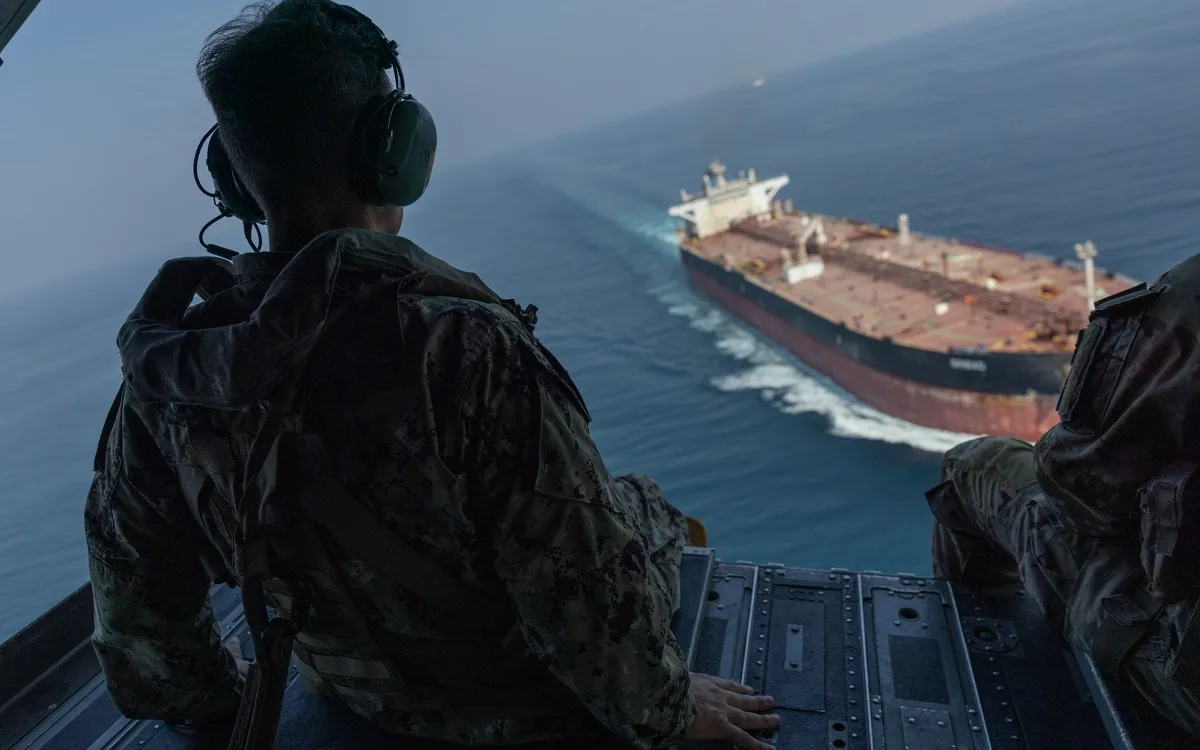
CENTCOM’s reference to its commander was to Adm. Brad Cooper’s visit to the strait on Sunday, when he flew over the waterway in a U.S. Army CH-47 Chinook helicopter and met service members who took part in clearing the shipping lanes of sea mines the command says were laid by the IRGC. Announcing the visit, CENTCOM said U.S. forces have helped Gulf partners export more than 1.5 billion barrels of crude oil through the strait since the summer, that more than 3,000 commercial vessels have transited with American support over the past six months, and that over 95 percent of ships have passed through safely. Those figures are CENTCOM’s own and have not been independently verified.
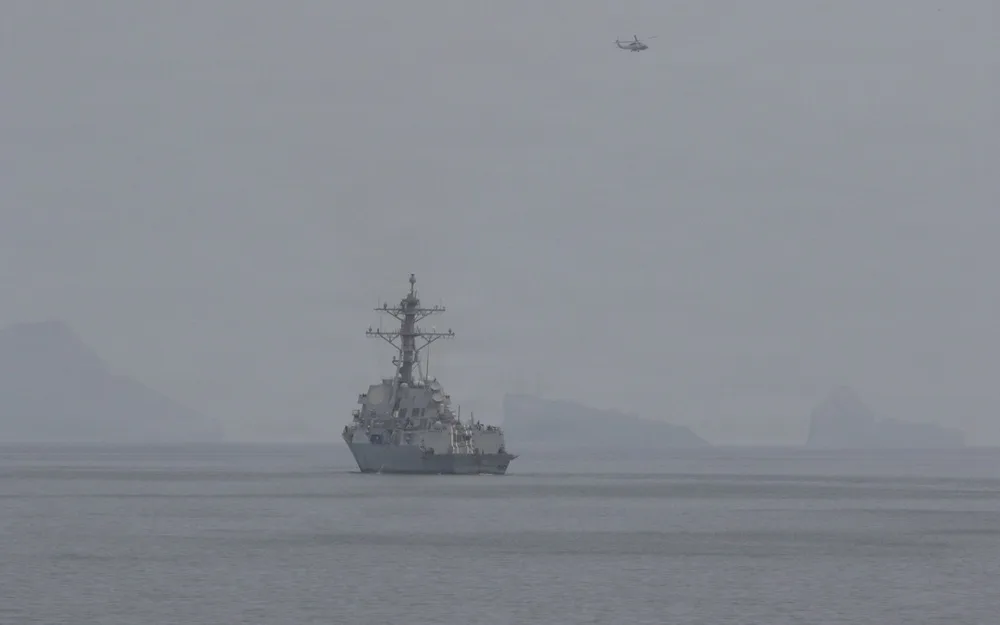
The exchange is the latest in a series of competing claims about control of the waterway, through which about a fifth of the world’s oil normally passes. The distance in the Iranian claim has grown steadily: an IRGC spokesman put the American withdrawal at more than 400 kilometers in early September and at least 500 kilometers on Sept. 29, before Ozamayi raised it to 600 to 700 kilometers last week. None of the Iranian statements has named a vessel or a position, and none has been independently corroborated. CENTCOM has answered with a run of similar fact-check posts in recent weeks, at one point saying the IRGC’s navy commander “has no navy” because American forces sank it.
The claims war is running alongside continuing attacks on shipping. On Monday, the IRGC said an oil tanker had caught fire after striking mines east of the strait — a claim that has not been independently confirmed — while Iran’s Persian Gulf Strait Authority said it would take legal action against tankers belonging to Sinokor, the world’s largest tanker owner, according to Bloomberg. Shipping data cited by Reuters show regional oil exports recovering to at least 16.5 million barrels a day in September, around pre-conflict levels, while no Iranian crude has passed through the strait to China since Washington resumed its blockade of Iranian ports on July 14. Reuters has counted 28 confirmed or reported attacks on commercial vessels in and around the strait in October, the highest monthly total since the conflict began in late February. Brent crude closed just under $115 a barrel on Monday.
Neither side publishes verifiable ship-position data to support its version, and commercial traffic continues to move through the strait under the rival claims.