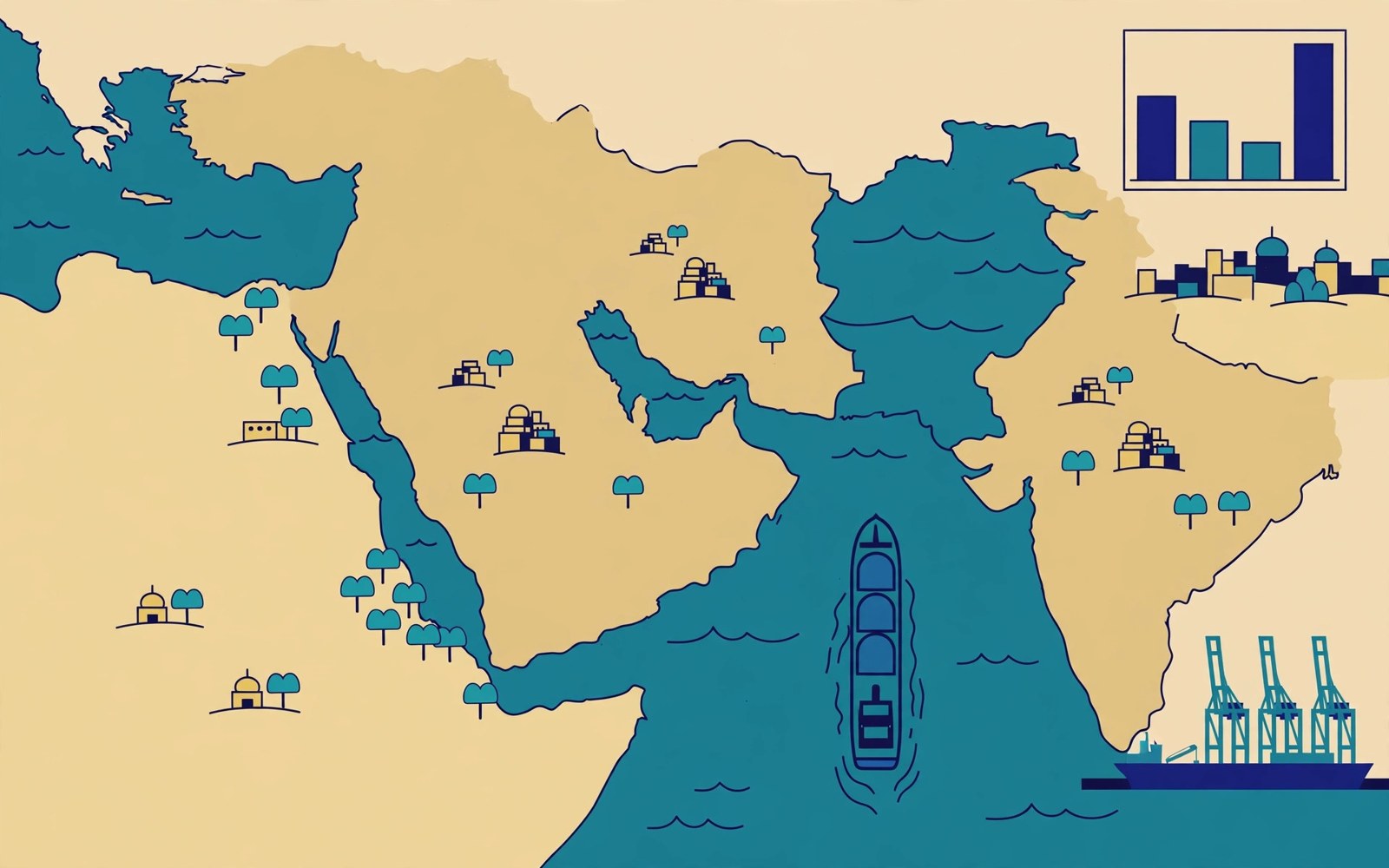
DUBAI — The International Monetary Fund on Thursday forecast that economic output in the Middle East, North Africa and Pakistan region will contract by 1.3% in 2026 as a result of the war’s impact on energy production, shipping, tourism, trade and confidence, before rebounding sharply to growth of 6.6% in 2027, according to Reuters.
The forecast, in the IMF’s regional outlook released in Dubai, follows growth of 3.3% in the region in 2025, according to the Fund’s Middle East and Central Asia director, Jihad Azour. Even with the 2027 rebound, output in those economies would generally stay below pre-war projections, the IMF said. The regional figure is an aggregate: Reuters’ report of the outlook carries no Pakistan-specific growth figure, and Zark News is not attributing one to the Fund.
“The outlook depends critically on how quickly energy production and trade normalize, and on countries’ ability to preserve macroeconomic stability,” Azour told reporters, according to Reuters. Pre-war surpluses, alternative routes, demand adjustments and substantial inventory drawdowns had helped contain the initial energy shock, he said, but “these buffers bought time, but they are finite. Inventories are lower, spare capacity is tighter, and renewed disruption could generate much larger price adjustments.”
The shock has been highly uneven. Oil-exporting countries directly affected by disruptions to energy production and shipping have been hit harder and would see a significant contraction in 2026 followed by a sharp rebound as production normalizes, according to the IMF. Oil-importing countries have proven more resilient, with domestic demand supported by remittances and tourism, favorable financial conditions and policy responses that shield consumers from higher commodity prices. In the Caucasus and Central Asia, growth is projected to slow to 5.2% in 2026 and 5% in 2027, from 6.2% in 2025.
The IMF said its baseline assumes the conflict abates in early 2027 and trade gradually normalizes during the year, but it described the outlook as clouded by “exceptionally high uncertainty.” The main risks, it said, come from further disruption to energy production and trade routes that could drive energy prices higher, as well as the possibility that external financial conditions tighten if investors reassess AI-driven productivity gains and interest rates rise amid concerns about inflation and fiscal positions.
Why it matters: the region’s economies entered the war with very different buffers, and the Fund’s message is that those buffers — inventories, spare capacity and surpluses — are being used up. If energy production and shipping normalize on the Fund’s timetable, 2027 brings a strong, if uneven, rebound; if they do not, the same economies face a second, larger price shock with less room to absorb it.
Read the original reporting in Reuters.