JAKARTA — Indonesia’s stock market suffered its worst day in nearly three decades on Friday after global index provider MSCI said the country no longer merited emerging-market status and began the process of removing it from its benchmarks.
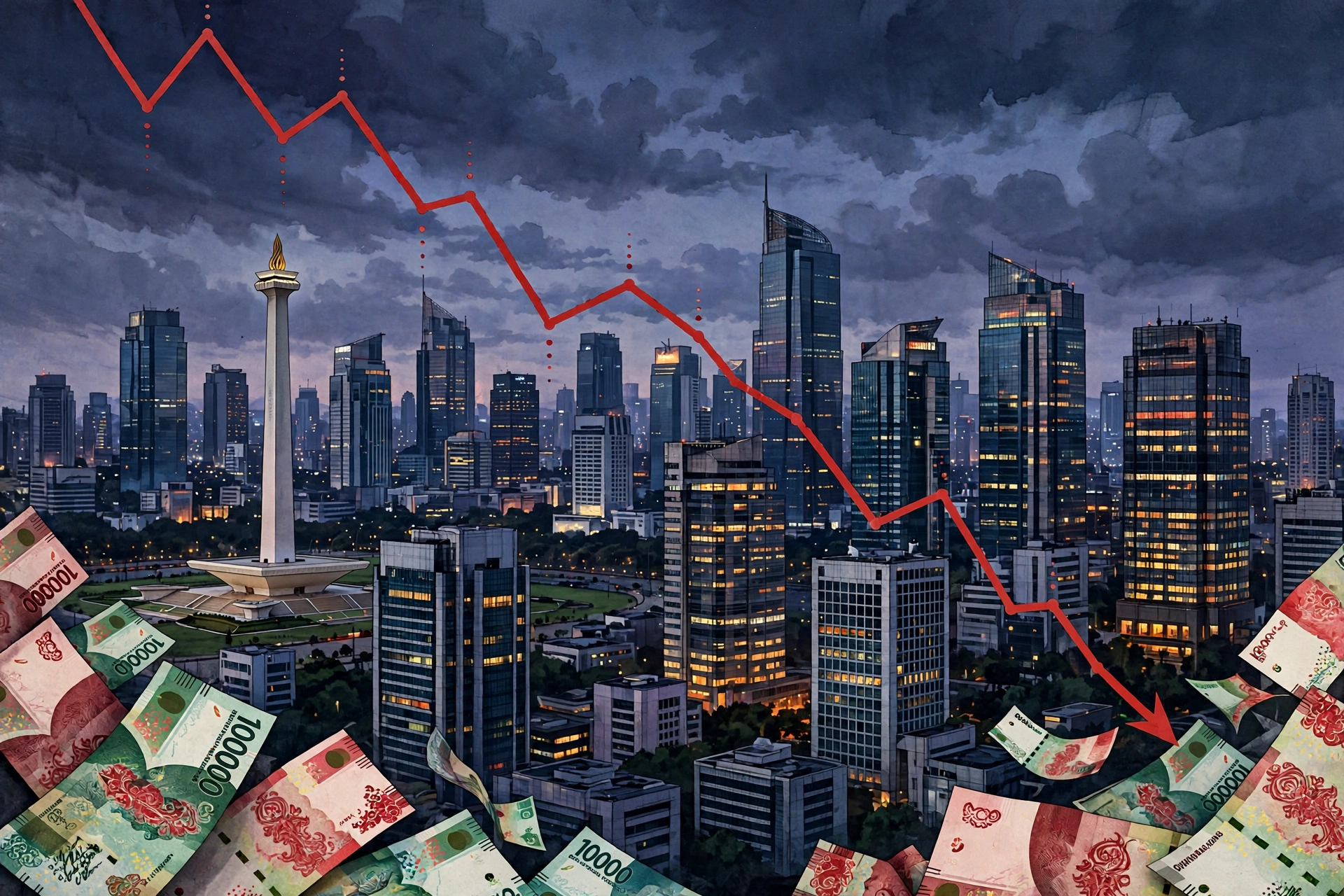
The Jakarta Composite Index plunged 8% at the open, triggering a 30-minute trading halt, before extending losses to more than 11% — the steepest single-day drop since January 1998, Reuters reported. The benchmark has now lost nearly 40% of its value this year, making it the worst-performing major market in the region.
MSCI cites market dysfunction
“MSCI considers Indonesia’s continued classification as an Emerging Market no longer appropriate,” the index provider said, launching a consultation on a proposal to reclassify Indonesia as a “standalone” market. A final decision is expected by the end of June 2027, Reuters reported.
MSCI cited investor concerns about opaque shareholding structures, suspected coordinated trading and weak enforcement, saying “significant concerns remain around market dysfunction.” It said even a downgrade to frontier-market status would not properly reflect the depth of the problems.
The announcement, which came a month ahead of a scheduled review, caught Jakarta officials off guard. Indonesia’s market regulator responded by announcing sanctions against individuals linked to alleged trading manipulation in the shares of three companies.
What it means for investors and ordinary Indonesians
A standalone designation would exclude Indonesian stocks from global indexes tracked by funds worth about $1.4 trillion, forcing passive funds that follow the benchmarks to sell. UBS estimates the move could trigger about $4 billion in passive outflows, with active investors potentially pulling a further $15 billion.
The rupiah weakened to 18,070 per U.S. dollar, its lowest since early August and close to its lifetime low of 18,190, Reuters reported.
For ordinary Indonesians, the fallout is real even for those who own no shares: a weaker rupiah makes imported goods — from fuel to food — more expensive, and a potential exodus of foreign investment threatens growth in Southeast Asia’s largest economy. Global savers with emerging-market index funds will quietly see the mix of countries their retirement money is spread across change.
Sources: Reuters; Reuters Breakingviews.