PESHAWAR — The roof of a private school collapsed during morning classes in Peshawar on Thursday, killing at least 34 children and a teacher and injuring more than 50 other children, hospital and rescue officials said, in one of the deadliest school disasters in Pakistan in years.
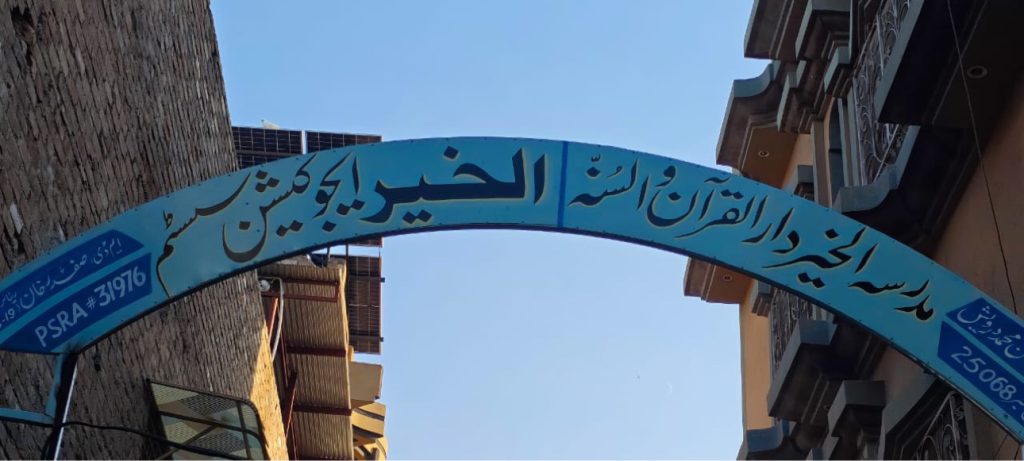
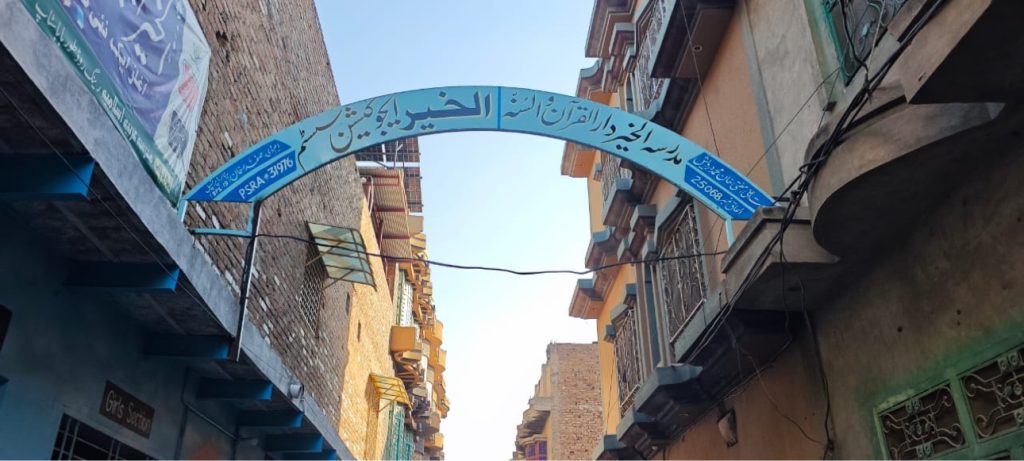
The collapse happened at the Al-Khair Education Centre, a privately run school in Dir Colony, a densely populated neighbourhood of the northwestern city. The school, which teaches children from nursery to grade 5, has about 1,200 students enrolled. Rescue officials said an upper floor gave way and crashed onto the classrooms below, trapping students under the rubble.
What happened
About 110 students were in three classrooms when the structure came down, Peshawar police chief Mian Saeed said. Rescue 1122 teams, police and army personnel pulled children from the debris as ambulances ferried the injured to hospitals. The deputy commissioner later said everyone trapped beneath the rubble had been rescued, and the clearance operation concluded around midday.
Most of the victims were taken to Lady Reading Hospital. Its spokesperson, Mohammad Asim, said the hospital had received the bodies of 32 children and one female teacher, while two more children’s bodies were taken to Naseerullah Khan Babar Memorial Hospital. Most of the dead were under 14. Officials said the toll was still being reconciled and could change.
The hospital’s official patient list, issued by its Bed Management Office, records 53 patients brought to Lady Reading Hospital: 33 died, 17 were discharged after observation and three remained under observation. Five of the dead had still not been identified when the list was issued. The youngest victims were six years old.
Owner and principal arrested
Police arrested the school’s owner and its principal. Saeed said the roof slabs were thin clay tiles known as choka, laid on a weak and overloaded structure: “It was a weak building structure. Its roof was overweight, with construction on a weak structure that caused the collapse.”
The deputy commissioner formed an inquiry committee, and the provincial education secretary directed the Private Schools Regulatory Authority (PSRA) to submit a report within 24 hours. Khyber Pakhtunkhwa Governor Faisal Karim Kundi ordered a safety survey of school buildings across the province.
The safety system, in numbers
The collapse has put the regulation of private schools under immediate scrutiny — including admissions from the regulator itself:
- 11,587 private schools are registered with the KP Private Schools Regulatory Authority, according to the provincial education department.
- 387 unregistered private schools remain affiliated with the province’s exam boards — 196 of them with the Peshawar board alone.
- The PSRA’s managing director, Javed Iqbal, said technical personnel were not present when Al-Khair Education Centre was inspected, and that the school was registered only in March 2026. He also said the authority lacks the power to shut down unregistered schools.
- Registration inspections are supposed to examine classroom numbers, foundation strength and the overall structural condition of a school building.
- About 4.9 million children are out of school in Khyber Pakhtunkhwa, according to the Pakistan Institute of Education — more than 500,000 of them in Peshawar alone — pushing families toward low-cost private schools.
- A provincial monitoring report counted 483 government schools in KP operating without any building at all, and hundreds more in rented premises.
A pattern of deadly collapses
Pakistan has repeatedly mourned children killed in collapsing school buildings. In the 2005 Kashmir earthquake, around 19,000 children died, most of them in schools that caved in. This year alone, a tuition centre roof collapse in Lahore killed 14 children in June, a government school wall collapse near Umerkot killed three girls in July, and another under-construction school roof in Lahore killed one child the same month.
Why it resonates in the United States
The United States has a direct history with school buildings in this very province. After the 2005 earthquake killed around 19,000 Pakistani children, most of them in collapsed schools, Washington funded a reconstruction program worth more than $200 million that rebuilt schools in Khyber Pakhtunkhwa and Kashmir to international earthquake-resistance standards. USAID money later rebuilt 117 more KP schools destroyed during years of militancy.
America’s own school buildings are also old — a Government Accountability Office study found 54 percent of U.S. school districts need to update or replace multiple major building systems, and the average U.S. school building is nearly half a century old. What makes fatal classroom collapses rare in the United States is not new buildings but enforced codes: licensed construction, mandatory inspections and regulators who can close an unsafe school. In Peshawar, the regulator has admitted the opposite happened — an inspection carried out without technical staff, of a school it says it has no power to shut down even when unregistered.
For the large Pakistani-American community, many with family roots in Khyber Pakhtunkhwa, the disaster is also personal: news from Peshawar travels instantly to homes across the United States.
Condolences
President Asif Ali Zardari and Prime Minister Shehbaz Sharif expressed deep sorrow over the deaths. In a statement, UNICEF Representative in Pakistan Pernille Ironside extended the agency’s deepest condolences to the bereaved families, said UNICEF stood ready to provide psycho-social support, and called for all schools to meet building safety standards. “Going to school should never put a child’s life at risk,” the statement said.