October 13 update: Explosions near Aramco headquarters in Dhahran
DHAHRAN, Saudi Arabia, October 13, 2026 — Loud explosions were heard near Saudi Aramco’s headquarters in Dhahran on Tuesday, six sources told Reuters, as missile and drone attacks intensified amid fighting between Yemen’s Houthis and a Saudi-led coalition. The coalition said it intercepted and destroyed a missile over Dhahran and that fragments fell in a residential area.
One source told Reuters that the Aramco headquarters was on fire, and four sources said an evacuation had been ordered. Another source with direct knowledge said the complex had been struck but could not determine whether the impact was direct or caused by falling debris. Aramco has not publicly confirmed a strike, fire or damage to its headquarters. The scale of any damage and whether anyone was hurt remain unclear. Reuters also reported that employees were instructed to work from home Wednesday, citing a source.
Earlier Tuesday, the Saudi-led coalition struck a fuel facility near Yemen’s capital, Sanaa. The coalition said the facility supported Houthi missile and drone operations; the Houthi side disputed that claim and warned of retaliation against Saudi energy facilities. The sequence of events does not independently establish which weapon or group caused any damage at Aramco headquarters.
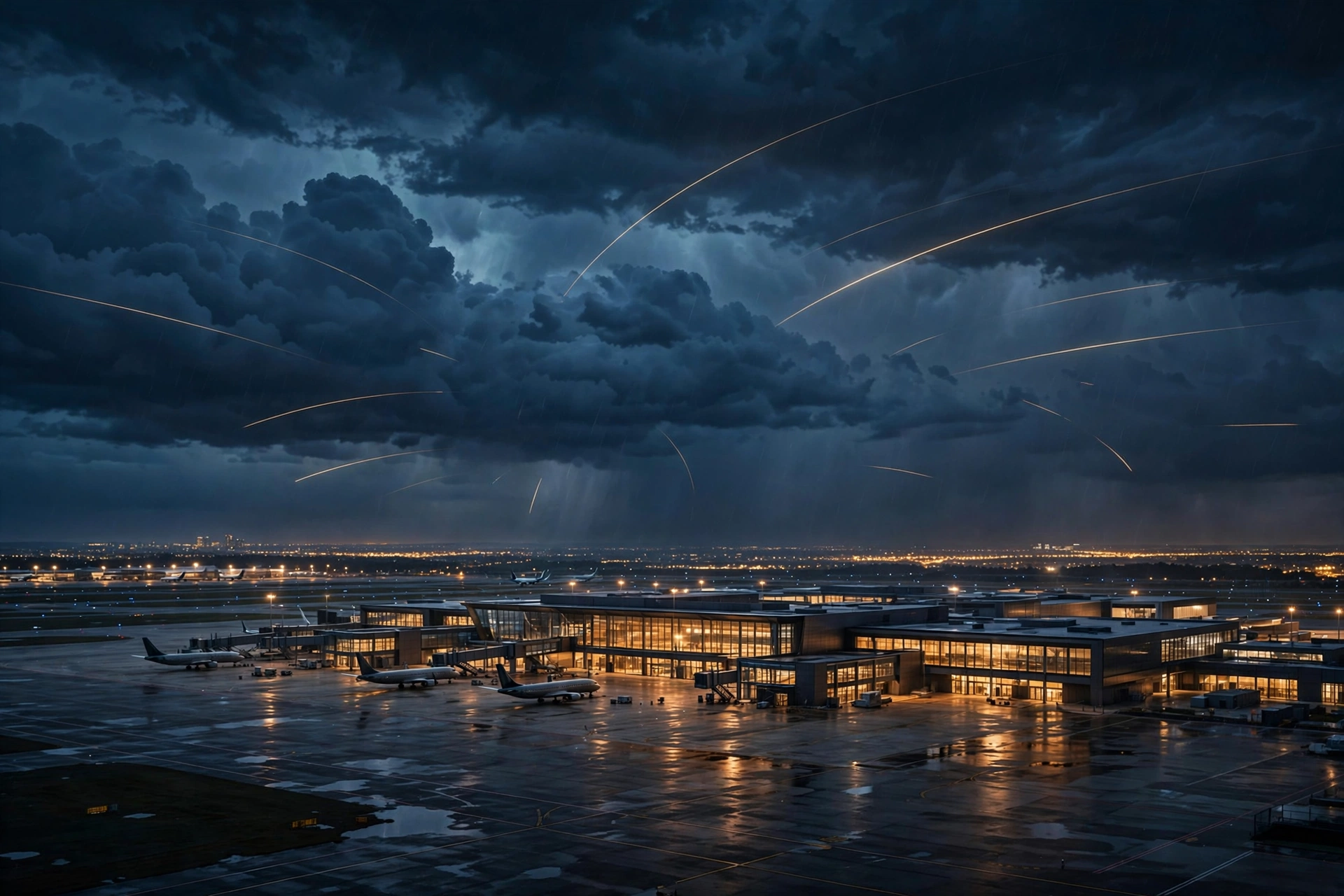
Saudi authorities also reported additional missile or drone interceptions around Riyadh and southern Saudi Arabia. These developments come after attacks on Riyadh’s international airport. Casualty figures for the earlier airport attacks have varied across reports and should be checked against updated official totals rather than treated as final.
Sources: Reuters, October 13; Associated Press, October 13; The Guardian, October 13.
RIYADH — Saudi Arabia’s public missile-warning system stopped issuing alerts days before Houthi strikes on Riyadh’s international airport and gave the public no warning of four attacks in the past week that killed at least 18 people and wounded more than 300, according to a Reuters investigation published Monday — and the government has not explained the silence.
The alerts, issued by Saudi Arabia’s civil defence authority, resumed on Monday for the first time since September 29, hours before air defences intercepted two more missiles over the capital and phones across Riyadh sounded a “hostile aerial threat” warning for the first time in weeks. King Khalid International Airport remained shut, with operations suspended and reports indicating the closure could last until October 17.
The system goes silent
Reuters reported that the kingdom stopped issuing public warnings of imminent military attacks days before the airport strikes, and that no alerts were issued to the public before any of the four Riyadh attacks in the past week. The civil defence authority — the Interior Ministry agency responsible for early-warning alerts — and the Saudi government media office did not respond to Reuters’ questions about why no alerts were issued.
Four Western and Arab officials in the region and political analysts told Reuters the absence of warnings raised questions about the kingdom’s vulnerability and its ability to protect residents and visitors, and reflected an effort to maintain a sense of normalcy. “They want to have it both ways: to launch a military operation and at the same time try to give confidence to the population and external stakeholders,” said Sultan Alamer, a Saudi academic and senior resident fellow at the Middle East Policy Council.
Four attacks in a week
- Earlier in the week: A missile strike on the airport killed one person, The Times reported.
- Thursday: A Houthi missile destroyed a passenger jet on the tarmac, killing a pilot and two other people, according to The Times.
- Saturday: A missile slammed into a departure terminal in the deadliest attack in the kingdom in more than a decade. Saudi officials and news reports said at least 12 people were killed and more than 300 wounded. Saudi authorities later released CCTV footage showing a blast tearing through a departure lounge as travellers waited inside.
- Sunday: Another attack killed one person and injured 11, Saudi authorities said.
Reuters put the total toll from the strikes at at least 18 dead and more than 300 wounded. The Associated Press had earlier reported at least 14 killed and at least 320 wounded; casualty counts have been revised repeatedly as officials update their figures.
Alerts resume as two more missiles are intercepted
On Monday, the civil defence authority issued its first alerts since September 29, warning of potential threats in Riyadh and southern cities, Reuters reported. That evening, mobile phones in the capital received a loud government alert warning of a “hostile aerial threat” shortly before the Saudi-led coalition announced it had intercepted two missiles. The alert — the first use of the phone warning system in Riyadh in weeks — delayed the kickoff of a football match between Al Nassr and Uzbekistan’s Neftchi Fergana. Reuters said it could not determine whether the decision to resume alerts was a response to the airport attacks.
The Houthis claimed Monday evening’s launch. Military spokesman Yahya Saree said the group had targeted King Khalid International Airport with a ballistic missile and a Saudi airbase in Khamis Mushait with drones, and warned that no Saudi airport is safe except those in Mecca and Medina.
Probe asks why there was no early warning
Saudi authorities have opened an investigation into the air defence failure, the Associated Press reported. Two regional officials told AP an initial inquiry found the Houthis first fired multiple drones to pave the way for a mix of cruise and ballistic missiles, some of which can manoeuvre to evade Patriot interceptors. The officials said the probe is also seeking to answer why there was no early warning of an attack whose missiles and drones travelled more than 1,000 kilometres to reach Riyadh.
Saudi Energy Minister Prince Abdulaziz bin Salman told a conference in Riyadh on Monday that recent events had “tested our infrastructure, our institutions, our people, and our resilience,” adding: “The events of recent weeks are serious; our response must be equally serious.”
Airport remains shut
The shutdown is one of the most significant disruptions to Saudi aviation in years. The airport cancelled 99.7% of its scheduled flights on Sunday, according to aviation analytics firm Cirium, and flight trackers showed aircraft avoiding Riyadh on Monday. Lufthansa Group has cancelled all flights to Riyadh through October 16, while Air France-KLM extended its suspension of Riyadh services through the end of October. The U.S. Federal Aviation Administration has advised American carriers to exercise caution flying to or over Saudi Arabia, and the EU aviation safety agency widened its airspace warning. Reports on Monday indicated the airport could remain closed until October 17; Saudi authorities had not publicly confirmed a reopening date as of Monday evening.
Iran, the Houthis’ longtime backer and Riyadh’s regional rival, offered on Monday to mediate between its Houthi allies and the kingdom. “We have repeatedly expressed our readiness to help facilitate dialogue between the parties,” foreign ministry spokesperson Esmaeil Baghaei said. Iran’s foreign minister, Abbas Araghchi, discussed developments with his Saudi counterpart by phone on Sunday, the AP reported.
The Houthi campaign has widened in recent days: in addition to the Riyadh airport, the group has reportedly targeted the city of Khamis Mushait and King Fahd International Airport in Dammam, and has vowed to strike Saudi airports across the country. Saudi Arabia has intensified its airstrikes inside Yemen, including strikes on al-Jawf province reported Monday by Yemeni television. The Times reported that the United States is considering intervention after the strikes on Riyadh.
What remains unanswered
- Why did public alerts stop after September 29, and why was no warning issued before the four attacks? The government has not said.
- Why did air defences fail to intercept the missile that hit the departure terminal on Saturday?
- Will the death toll rise further, given that more than 300 people were wounded?
- When will King Khalid International Airport officially reopen?
- Was the decision to resume alerts on Monday a response to the airport attacks? Reuters could not determine this.
This is a developing story and will be updated. Last updated October 12, 2026.
Sources: Reuters, Associated Press, The Times, The News, TBS News.