ISLAMABAD/BANGKOK, October 12, 2026 — Pakistan expects economic growth to exceed 4% this fiscal year and aims to raise more than $1 billion by privatizing five or six state-owned entities, Finance Minister Muhammad Aurangzeb said Monday, outlining a broader reform push days after an agreement with the International Monetary Fund.
Aurangzeb told Reuters on the sidelines of the IMF and World Bank annual meetings in Bangkok that Pakistan had secured adequate fuel supplies despite elevated oil prices and that agriculture and other critical sectors were holding up. He said officials were monitoring the inflationary impact of higher commodity costs.
Editor’s update: This report was substantially updated on October 12 with the finance minister’s growth forecast, privatization target and comments on proposed U.S. financing. The earlier October 8 report on the IMF staff-level agreement is preserved below.
Government sees growth above 4%
Aurangzeb said he remained confident Pakistan would record growth “north of 4%” in the current fiscal year. That is the government’s outlook, not a guaranteed result, and it comes as Pakistan remains exposed to high energy prices, trade disruptions and tighter global financing conditions.
The new projection is stronger than the IMF’s earlier 3.6% estimate for fiscal 2026 cited in the October 8 staff-level agreement. Differences between government and multilateral forecasts are common and can reflect timing, assumptions and incoming data.
Five or six privatizations targeted
The government has roughly a dozen entities in its privatization pipeline, including state-owned power distribution companies and plans to outsource airport operations, Aurangzeb said. He expects five or six transactions to be completed during the fiscal year and to raise more than $1 billion.
The target follows last year’s privatization of Pakistan International Airlines. The IMF has repeatedly treated state-owned enterprise reform and privatization as important tests of Pakistan’s effort to reduce fiscal losses and improve service delivery. Execution, valuations and investor demand will determine whether the government meets its timetable and revenue goal.
IMF agreement could unlock $1.21 billion
Pakistan and the IMF reached a staff-level agreement last week on reviews of the country’s Extended Fund Facility and Resilience and Sustainability Facility. Subject to approval by the IMF Executive Board, the agreement could make about $1 billion available under the EFF and $210 million under the RSF. No funds have been disbursed under this agreement yet.
PAKISTAN / IMF FINANCING
$1.21 BILLION
Potential access after IMF Executive Board approval
$1.00 billion — Extended Fund Facility
$210 million — Resilience and Sustainability Facility
Source: IMF staff-level agreement, October 7, 2026. Graphic: Zark News.
Talks on proposed $10 billion U.S. facility
Aurangzeb also said discussions were continuing with the United States on a proposed $10 billion exchange-stabilization facility. He gave no timetable and emphasized that the facility was not essential to Pakistan’s market access. Talks are also continuing with the U.S. Export-Import Bank and the U.S. International Development Finance Corporation.
The proposed U.S. facility is under negotiation and should not be treated as approved financing. Pakistan continues to rely on external support to strengthen foreign-exchange reserves and meet debt obligations, leaving the outlook sensitive to energy prices, regional conflict and access to international capital.
What happens next
The IMF Executive Board must approve the pending reviews before Pakistan can draw the proposed $1.21 billion. Separately, the government must complete due diligence, bidding and regulatory steps for each privatization transaction before any sale proceeds are realized.
Sources: Reuters interview with Finance Minister Muhammad Aurangzeb, October 12; IMF staff statement, October 7; Pakistan Finance Division, FY2026 SOE biannual report.
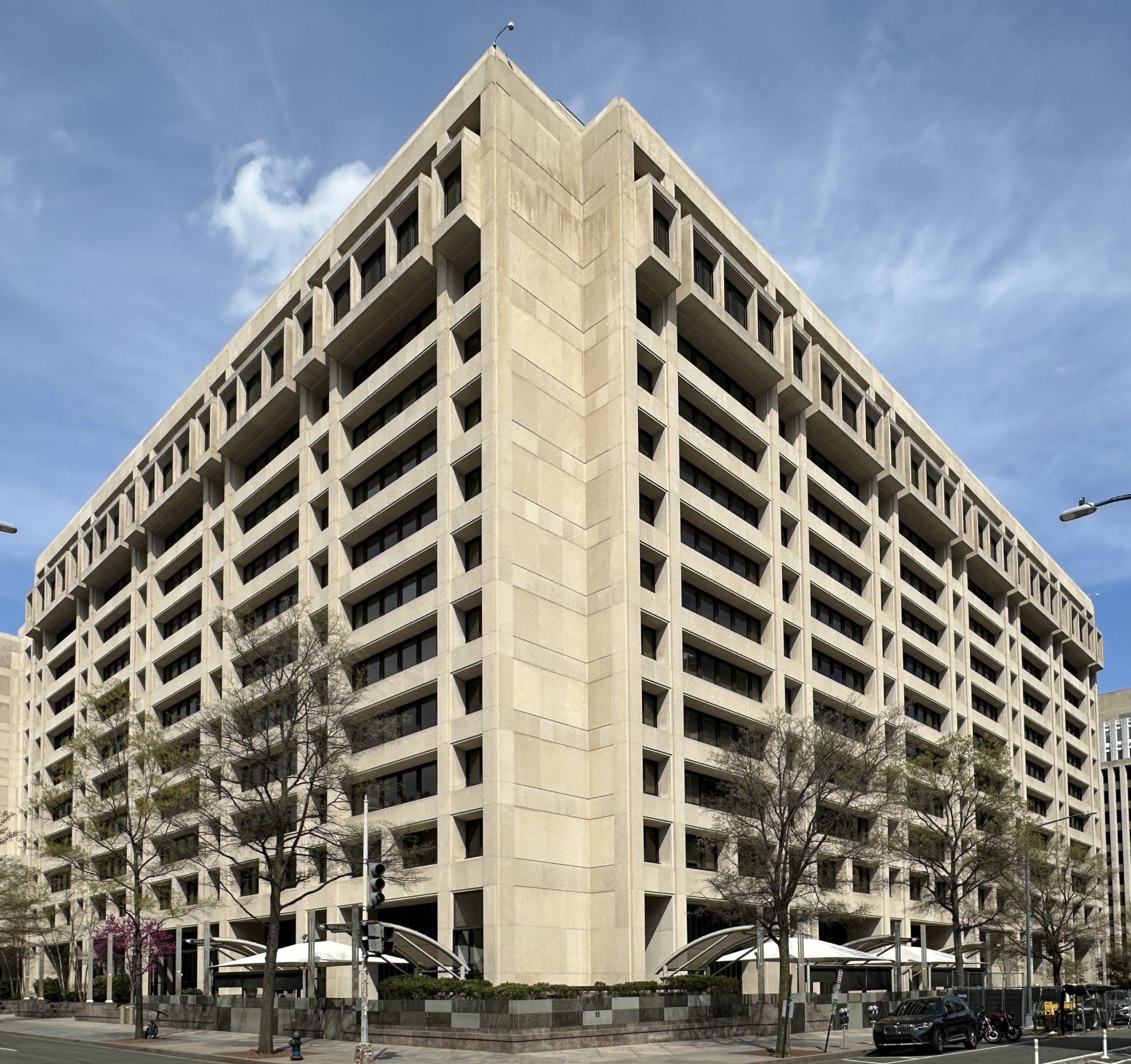
Featured photograph: IMF headquarters, Washington, D.C., photographed March 31, 2026, by APK, via Wikimedia Commons, CC BY 4.0. Image may be cropped for display. The photograph is illustrative and does not depict the Bangkok interview.