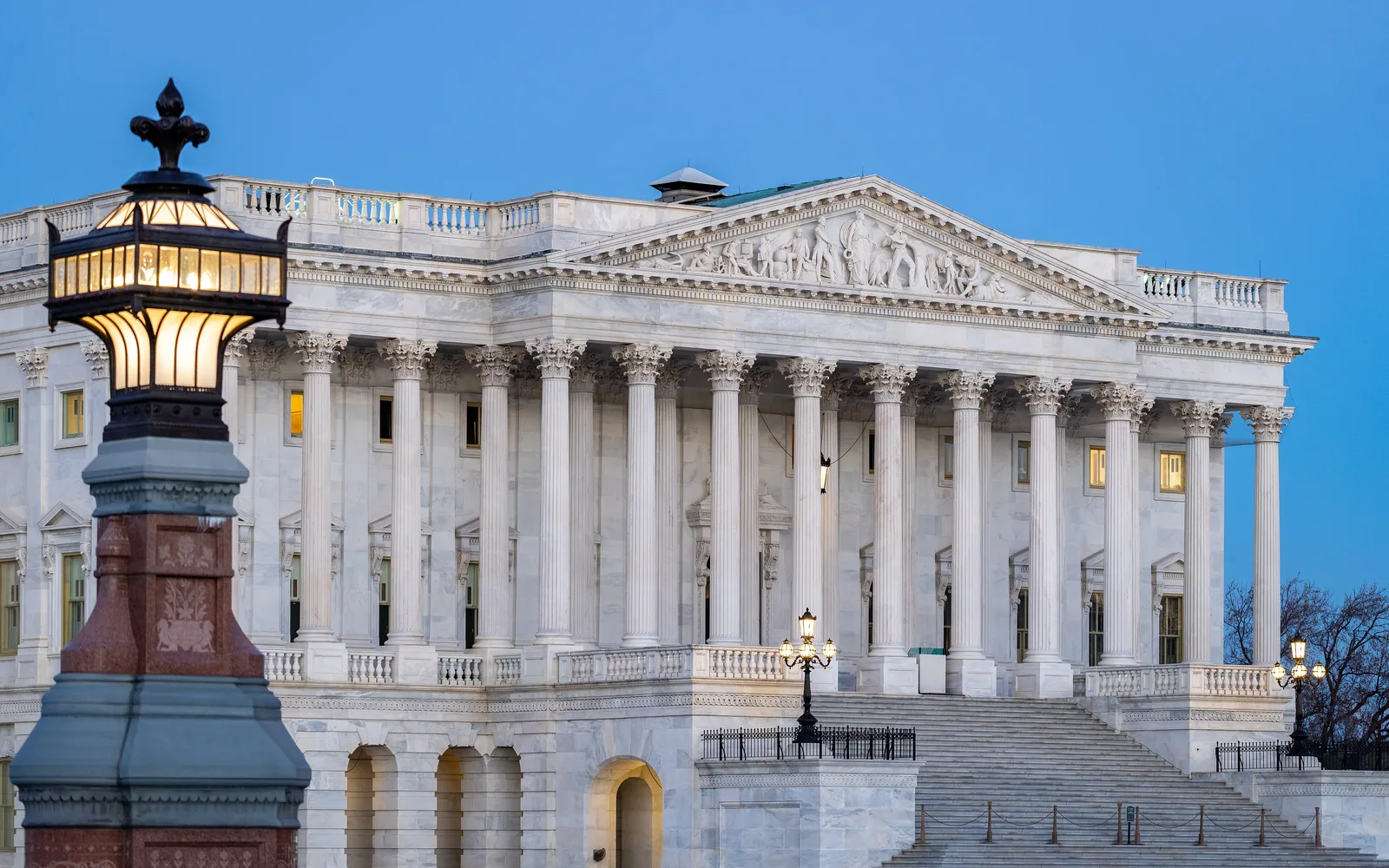
WASHINGTON — The Senate passed a sweeping bipartisan bill on Thursday evening to speed up federal approvals for energy and infrastructure projects, voting 62 to 33 to shorten environmental reviews and narrow the legal challenges that have delayed power plants, transmission lines, mines and data centers for years, according to Reuters.
The measure, the Bipartisan American Affordability and Jobs Act, runs to more than 400 pages. According to the Wall Street Journal, it would streamline federal permitting by shortening the deadlines for many environmental reviews, reducing the window to sue developers over certain environmental concerns and restricting the circumstances in which approvals for a project can be withdrawn. Fourteen Democrats voted for the bill and two Republicans voted against it, the Journal reported.
Supporters in both parties sold the bill as an answer to rising energy costs. Backers say projects that take the best part of a decade to permit push up prices for electricity, fuel and housing, and that the delays fall hardest on the transmission lines and power plants the country needs as demand grows. The bill requires data centers to pay for all of their associated transmission costs, according to Senator John Hoeven of North Dakota, and it folds in measures to simplify oil and gas permitting on some non-federal lands and to expand geothermal development.
“Tonight, the passage of permitting reform in the Senate finally became reality, and we took a major step towards addressing the affordability concerns of the American people,” said Senator Shelley Moore Capito of West Virginia, a co-author of the bill, after the vote. President Donald Trump has endorsed the legislation, according to Senator Kevin Cramer of North Dakota.
The bill overcame concerns among many Democrats that it would weaken environmental protection laws, according to the Wall Street Journal. Some Democratic supporters pointed to what the bill does for clean energy: Senator Jacky Rosen of Nevada said it would make it easier to build solar, wind and geothermal projects in her state, while an effort by Democrats to remove sections changing the National Historic Preservation Act was blocked. Environmental law specialists note the bill also limits judges’ authority to halt construction over federal review violations.
Why it matters: permitting reform has been debated in Congress for years and has repeatedly died between the chambers; a 62-vote Senate majority, with members of both parties, is the strongest position the idea has reached. What happens next is the House, where the bill now heads. Some House Democrats have voiced opposition, and many Republicans are preparing to leave Capitol Hill after losing their seats in the midterm elections, so the bill faces an uncertain future and a shrinking legislative window, according to Reuters and the Wall Street Journal.
Sources: Reuters, November 20, 2026; The Wall Street Journal, November 19, 2026.