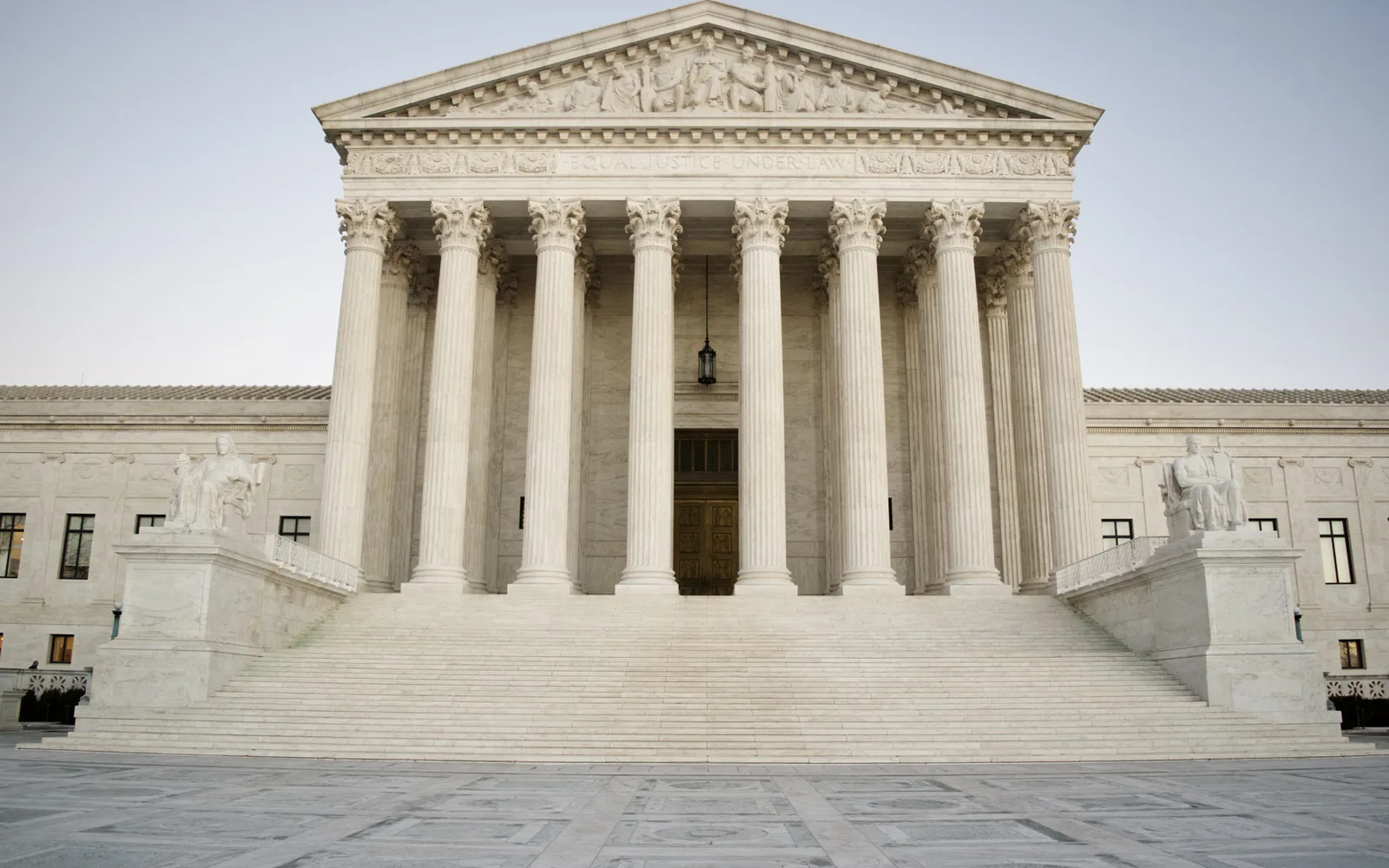
WASHINGTON — The Supreme Court agreed on Friday to decide whether President Donald Trump can bar migrants who cross the southern border from seeking asylum, taking up one of the central legal fights over his immigration agenda.
The case, Mullin v. Refugee and Immigrant Center for Education and Legal Services, No. 26-239, challenges Proclamation 10888, which Trump signed on January 20, 2025, his first day back in office. The proclamation described migration at the southern border as an “invasion,” suspended the entry of migrants crossing between official ports of entry, and barred them from invoking asylum and related protections until the president declares the invasion over.
A federal judge in Washington found the policy unlawful, and a divided panel of the U.S. Court of Appeals for the District of Columbia Circuit upheld that ruling in April 2026, finding that the proclamation and the guidance enforcing it went beyond the president’s authority. The restrictions have stayed in place while the case moves through the courts.
The justices granted the government’s appeal on two questions: whether the proclamation and its implementing guidance are lawful, and whether a lower court can block the policy for everyone covered by it rather than only for the people who sued. They declined to take up a third question about how the class of plaintiffs was defined.
The legal dispute turns on two parts of the Immigration and Nationality Act. The administration relies on provisions that let a president suspend the entry of noncitizens. The challengers, led by the legal aid group RAICES and backed by the American Civil Liberties Union, argue that Congress wrote a separate, specific right into the same law: people who reach the United States may apply for asylum, and a president cannot switch that right off by proclamation.
Solicitor General D. John Sauer filed the government’s petition in August, arguing that the lower courts had stripped the president of a tool Congress gave him to respond to a border emergency. The challengers say the order bypasses protections that Congress passed and that no emergency wording can erase them.
The asylum case joins a crowded immigration docket. The justices are already set to hear arguments on December 9 in a separate dispute over the administration’s policy of deporting migrants to countries other than their own.
Arguments in the asylum case are expected in the spring, with a decision by the end of June or early July. Until then, the policy stays in force, and the ruling, when it comes, will settle a question that reaches beyond this one proclamation: how far a president can go, acting alone, to close legal paths into the country that Congress created.
Sources: Associated Press report on the Supreme Court grant; CNN report on the asylum case.