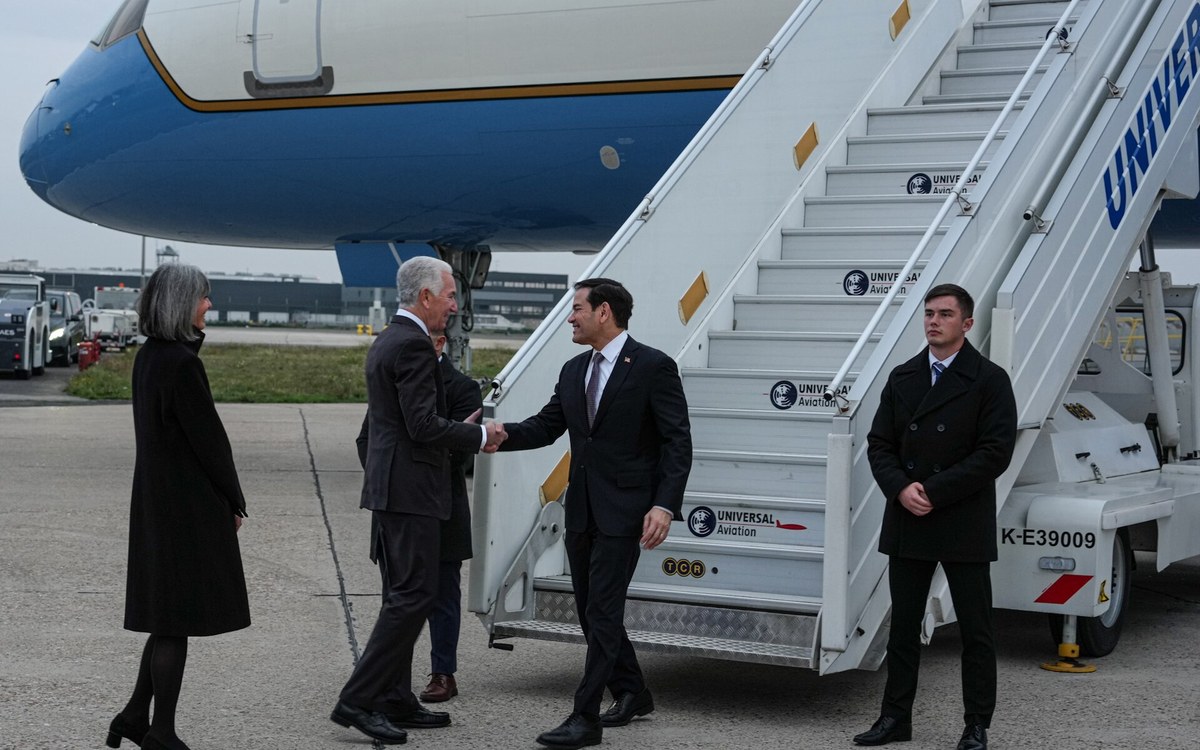
PARIS — For anyone watching fuel prices or worrying that the Iran war could flare up again, Washington's message from Paris on Tuesday was a notable one. Secretary of State Marco Rubio said the United States does not need to resume major combat operations against Iran, because sanctions and a naval blockade are already doing the damage. Iran's top security official answered that American talk of negotiations is a lie.
What Rubio said
Rubio spoke to reporters on Tuesday after two days of meetings with fellow foreign ministers from the Group of Seven wealthy democracies. He said he had told his counterparts that the economic campaign against Iran is working so well that President Donald Trump has no need to order large scale attacks.
"The economic pain that is being inflicted on Iran right now is extraordinary and it compounds. It's growing every day," Rubio said.
He rejected the idea that holding off on strikes amounts to a stalemate, the same word he pushed back on during the Paris meetings a day earlier. "We don't need to conduct military strikes if we're achieving the same objective through economic means and economic pressure. That's not stalemate," he said. "Never has Iran ever faced the inability to sell energy in the global market like they are today."
Rubio warned that the pressure will grow. He said Iran still has a small amount of oil on the water that slipped out during a brief ceasefire period, and that once it is gone, almost all of its oil revenue will dry up. He also kept a military warning in place: if Iran crosses American red lines, which he did not spell out, the U.S. military is ready to act. And he dismissed Iran's negotiating terms. "Iran would love a deal. The problem is, the conditions they continue to place are absurd," he said. "Eventually, you have to eat."
Behind closed doors, four G7 diplomats told Reuters, Rubio said Washington will keep imposing devastating economic costs on Iran and has options beyond restarting the war or accepting Tehran's demands.
Where this follows the president
Rubio's remarks line up with what Trump said a day earlier. On Monday, after White House talks with Qatar's prime minister, Sheikh Mohammed bin Abdulrahman Al Thani, Trump said he plans to hold off on new strikes for now while keeping the naval blockade in place. "Iran militarily is effectively over. We're just keeping it the status quo," Trump told reporters, adding that U.S. forces remain "locked and loaded" if anything changes. Trump has acknowledged that the war, now in its ninth month since U.S. and Israeli strikes opened it on February 28, was part of the reason Republicans lost last week's midterm elections.
Iran answers back
Tehran's public answer on Tuesday was flat rejection. Mohsen Rezaei, the secretary of Iran's Supreme National Security Council, told the Lebanese outlet Al Mayadeen that American claims of continuing negotiations, or of a planned meeting in Qatar, are "a complete lie." He said Washington spreads such claims to ease economic pressure and bring down oil prices, and he denied reports of a planned meeting between him and Vice President JD Vance.
"We are not currently conducting any negotiations with the Americans," Rezaei said. He said Iran has given the United States seven conditions, which include ending the war on all fronts, lifting the blockade, releasing frozen assets and lifting sanctions, and that the Strait of Hormuz will stay closed until all of them are met. Foreign Minister Abbas Araghchi also called the meeting reports "baseless speculations."
Why the wording matters
The two sides are also fighting over what to call the current pause. If it is a stalemate, Washington looks stuck. If it is pressure that grows every month, Washington can argue that time is on its side and that it does not need to choose between a new bombing campaign and a deal on Iran's terms. Rubio also asked the other G7 countries to help protect shipping through the Strait of Hormuz, where vessels still face drone attacks, and admitted he got no takers. "I raised it. I didn't get a response," he said. That silence matters for every country whose oil and goods move through the strait.
Do you think economic pressure alone can force Iran to change course, or will this pause end with either a deal or a return to strikes? Tell us what you think.
Reporting note: This story is based on reporting by Reuters on November 10, 2026, including direct quotes from Secretary Rubio's press remarks in Paris and accounts from four G7 diplomats; the Associated Press report on Rubio's Strait of Hormuz appeal to G7 ministers; the U.S. Department of State's published clips of Rubio's Paris remarks and its November 6 media note on his travel to France; reporting on President Trump's November 9 White House remarks by Reuters and The Hindu BusinessLine; and Iranian statements reported by Press TV, Tasnim News Agency through Anadolu, and the Seoul Economic Daily, including Mohsen Rezaei's interview with Al Mayadeen and Foreign Minister Abbas Araghchi's comments to IRNA.