DUBAI — Iran showed off a new underground missile base on Tuesday and said three tankers had struck naval mines and caught fire in the Strait of Hormuz. If you buy fuel, heat your home, or pay for anything that travels by ship, this narrow waterway matters to you, because about a fifth of the world's oil passes through it and every new attack pushes prices and shipping costs up.
Two maritime reports lent weight to a day of rising danger, though not to Iran's mine claim itself. A British security agency confirmed that a projectile hit a tanker near Oman, and the United Arab Emirates' state oil company confirmed that one of its own vessels was damaged in an attack inside UAE waters.
What Iran displayed
Iranian state television broadcast video of the chief of the general staff of the armed forces, General Ali Abdollahi, touring a vast underground complex filled with ballistic and cruise missiles on launchers. The commander of the Revolutionary Guards Aerospace Force, Brigadier General Majid Mousavi, joined the visit.
The video was heavily edited and partly blurred. It did not say where the base is, when the visit took place, or how many missiles it holds. The Guards call such sites "missile cities." A Guards spokesman, Brigadier General Hossein Mohebbi, said Iran has moved parts of its missile and drone production underground so that factories can keep working even under bombardment.
Iran has shown similar bases before. Tuesday's broadcast, during the Aerospace Force's annual week of events, was meant to signal that its missile forces survived the war that began in late February and that production continues out of reach of airstrikes.
What happened in the strait
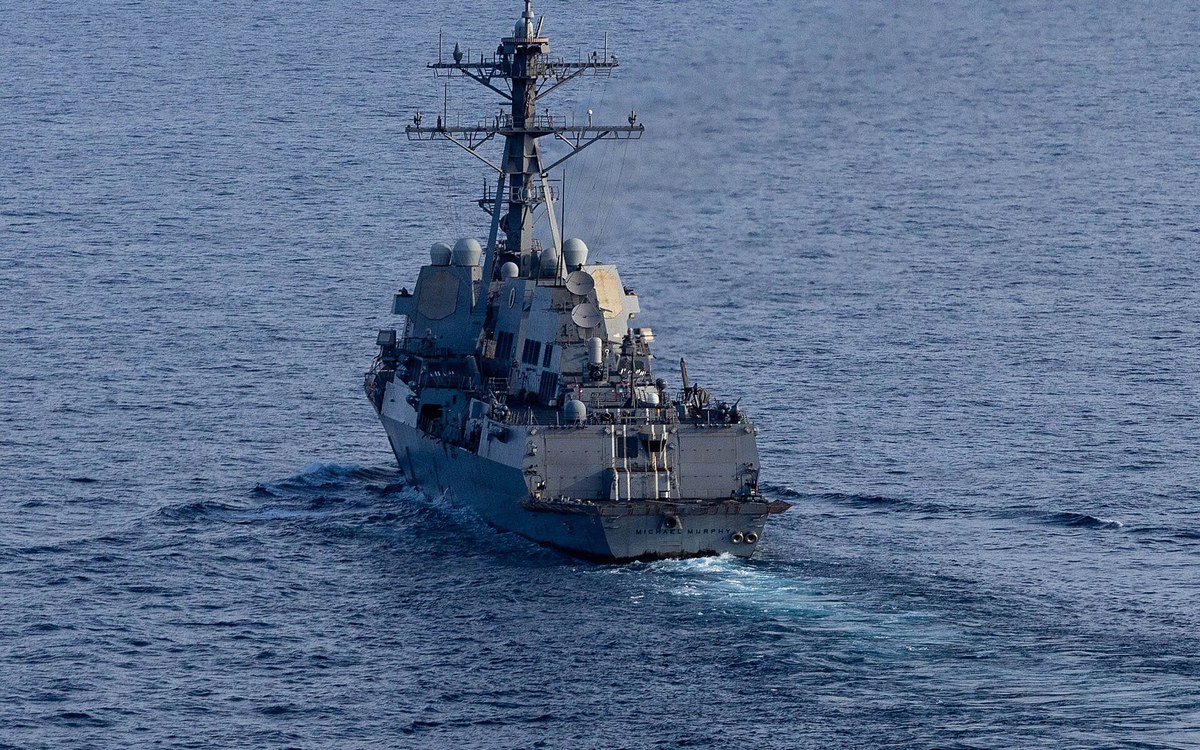
The Revolutionary Guards Navy said three vessels struck naval mines and caught fire on Tuesday while using a route through the strait that Tehran calls unauthorized. It said one was a supertanker and that another was crossing under the protection of the U.S. military. The claims could not be independently verified. Iran named none of the ships and gave no word on crews or casualties, and its tanker count has shifted from one statement to the next.
Two incidents, however, are confirmed by sources outside Iran. The United Kingdom Maritime Trade Operations center said an unidentified projectile struck a tanker 19 nautical miles northeast of Lima, Oman, at 1338 GMT on Tuesday. The ship's master reported that all crew were safe and that there was no environmental damage. Separately, ADNOC Logistics and Services, the shipping arm of Abu Dhabi's state oil company, said one of its vessels was damaged in an attack in UAE territorial waters in the Arabian Gulf on Tuesday afternoon. The company named no vessel, described no damage, and blamed no one. It is not clear whether the two reports describe the same ship.
The wider pattern is not in doubt. Reuters reported that 37 ships were attacked in and around the strait in October, the highest monthly total since the war began, with attacks continuing into November. Oil prices rose on Wednesday.
What the United States says
U.S. Central Command rejects Iran's account of the waterway. Captain Tim Hawkins, a CENTCOM spokesman, said on Wednesday that traffic through the strait "continues to flow" and that U.S. forces cleared mines from the main shipping lanes several weeks ago. He said American forces have helped move more than 900 million barrels of crude through the strait since early May, while redirecting more than 100 ships that tried to break the U.S. naval blockade of Iranian ports. U.S. officials have called Iranian mine strike reports false.
In Paris on Tuesday, Secretary of State Marco Rubio said Iran is "bleeding economically" and that no major new military action is needed. He dismissed Iran's terms for ending the standoff as "absurd." Mohsen Rezaei, secretary of Iran's Supreme National Security Council, answered that the war has "wrecked" the United States and that it is time for Washington to accept Iran's terms, which include lifting the blockade. Tehran says the strait stays shut until the United States meets seven conditions it has set out.
Why this waterway matters
The Strait of Hormuz, between Iran and Oman, is the only sea route out of the Gulf for much of the world's oil and liquefied natural gas. In normal times about a fifth of global oil supply moves through it. Since February, Iran has restricted traffic, laid mines, and attacked ships, while the United States has blockaded Iranian ports and escorted commercial vessels. Even a political deal would not reopen the strait at once, analysts note, because mines must be cleared, insurance costs must fall, and shipowners must be willing to send their crews back in.
Have you felt the war at the fuel pump or in your household bills, and do you think the strait can be reopened without a wider deal between Washington and Tehran? Tell us what you think.
Reporting note: This story is based on reporting by the Associated Press and Reuters; statements from the Islamic Revolutionary Guard Corps Navy and Iranian state media carried by IRIB and Tasnim; the United Kingdom Maritime Trade Operations warning 201-26 of November 10, 2026; the ADNOC Logistics and Services operational update of November 10, 2026; and comments by U.S. Central Command spokesman Captain Tim Hawkins and Secretary of State Marco Rubio. Iran's mine strike claims are reported as claims. No independent source had confirmed them at the time of publication.