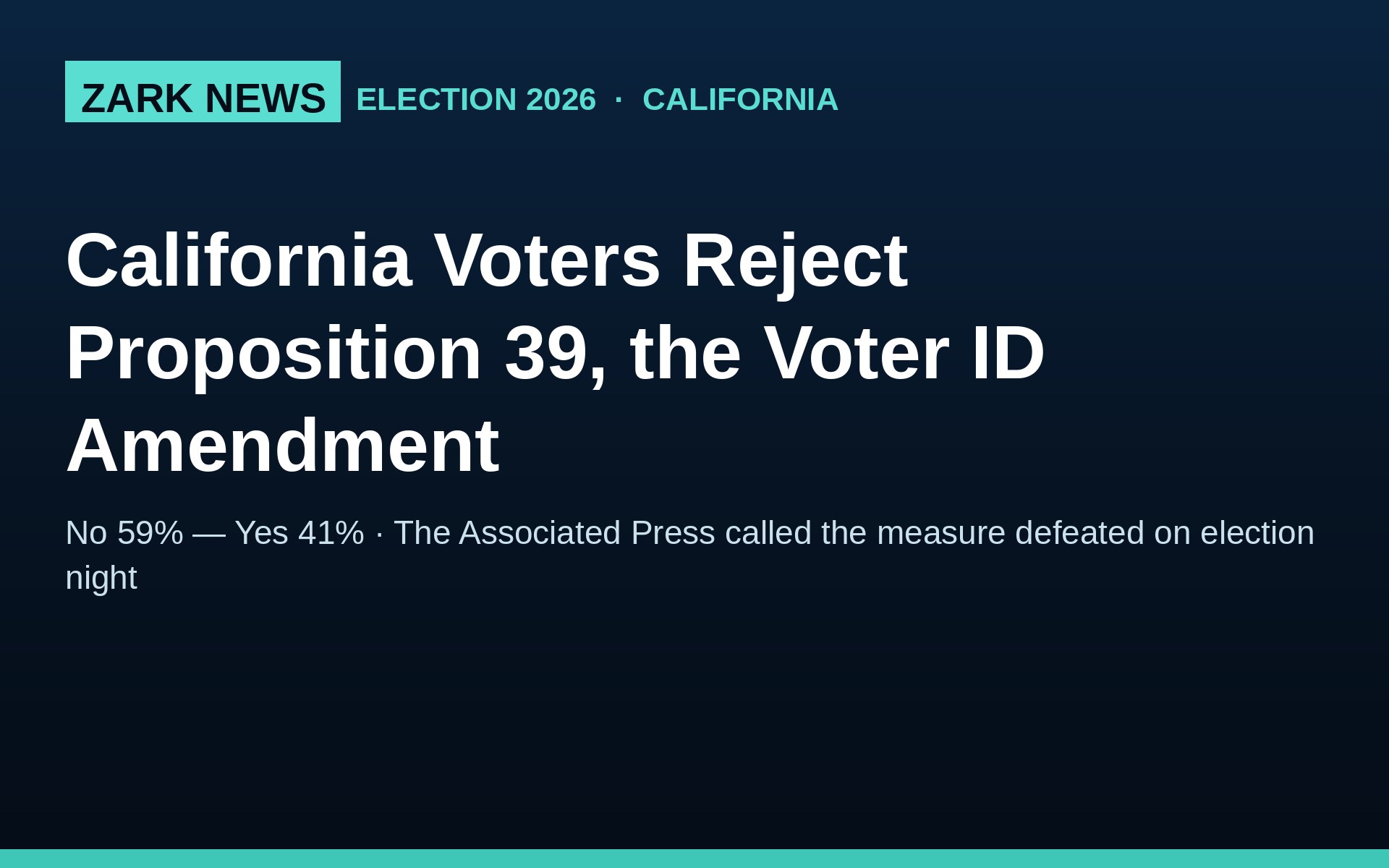
SACRAMENTO, Calif. — California voters have rejected Proposition 39, a proposed change to the state constitution that would have required voters to show government-issued identification at the polls.
The Associated Press called the measure defeated on election night. With about 63 percent of precincts reporting on Thursday, the No side led with 4,862,479 votes, about 59 percent, against 3,360,201 votes for Yes. The results are unofficial; California certifies its election results in December.
Proposition 39 would have set some of the strictest voting rules in the country. People voting in person would have had to present a government-issued photo ID. People voting by mail would have had to write the last four digits of a designated government ID number on the ballot envelope — a ballot mailed without the number would not have counted. The measure also would have required election officials to check voters’ citizenship using government records and to report each county’s verification rate every year, and it would have required the state to issue a free voter ID card to anyone who asked.
The measure was placed on the ballot by voters’ signatures, in a campaign led by Assemblyman Carl DeMaio and his group Reform California. Supporters, who also included the Transparency Foundation and the Howard Jarvis Taxpayers Association, argued the rules would strengthen election security and public trust in the results.
Opponents, including ACLU California Action, Common Cause and the League of Women Voters of California, argued the requirements would create new barriers for eligible voters — including people whose names or records do not match across government databases — and could have kept lawful votes from being counted, especially mail ballots missing the ID number.
The result leaves California’s current voting rules in place.
California was one of six states where voters decided ballot measures on Tuesday that would have created or expanded voter ID requirements in state constitutions. According to Ballotpedia, voters approved three of the measures and defeated three.