
STOCKHOLM — Oct. 6, 2026 — Francis Halzen has won the 2026 Nobel Prize in Physics for helping turn Antarctic ice into an observatory for particles arriving from deep space.
The Royal Swedish Academy of Sciences announced the award Tuesday, recognizing the University of Wisconsin–Madison physicist’s contributions to IceCube and the discovery of high-energy neutrinos of astrophysical origin.
A different way to observe the universe
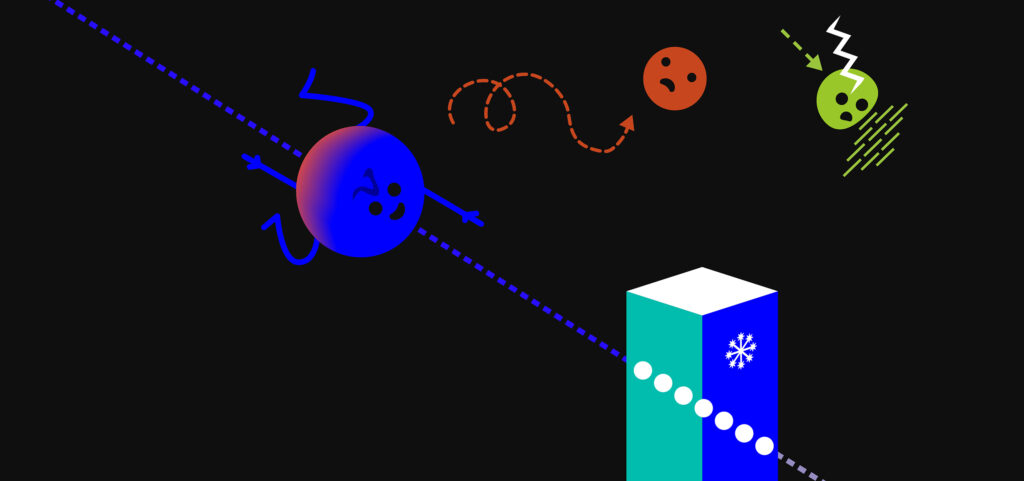
Neutrinos rarely interact with matter. IceCube’s sensors watch for light produced by those rare interactions within a cubic kilometre of ice at the South Pole.
Unlike charged particles, neutrinos are not deflected by magnetic fields. Their arrival directions can therefore help researchers investigate the distant cosmic environments that produced them.
Halzen proposed using the South Pole’s ice in 1988. IceCube was completed in 2011, and its subsequent observations opened a new route to studying energetic processes beyond the solar system, the academy said.
Reuters and AP independently reported the award.
Sources: Royal Swedish Academy announcement and explanation; Reuters; AP.
Illustration: ©Johan Jarnestad/The Royal Swedish Academy of Sciences. Reproduced unchanged under the academy’s permission for media reporting about the Nobel Prizes.